
Step-by-Step Guide to DGCA Operator Certification
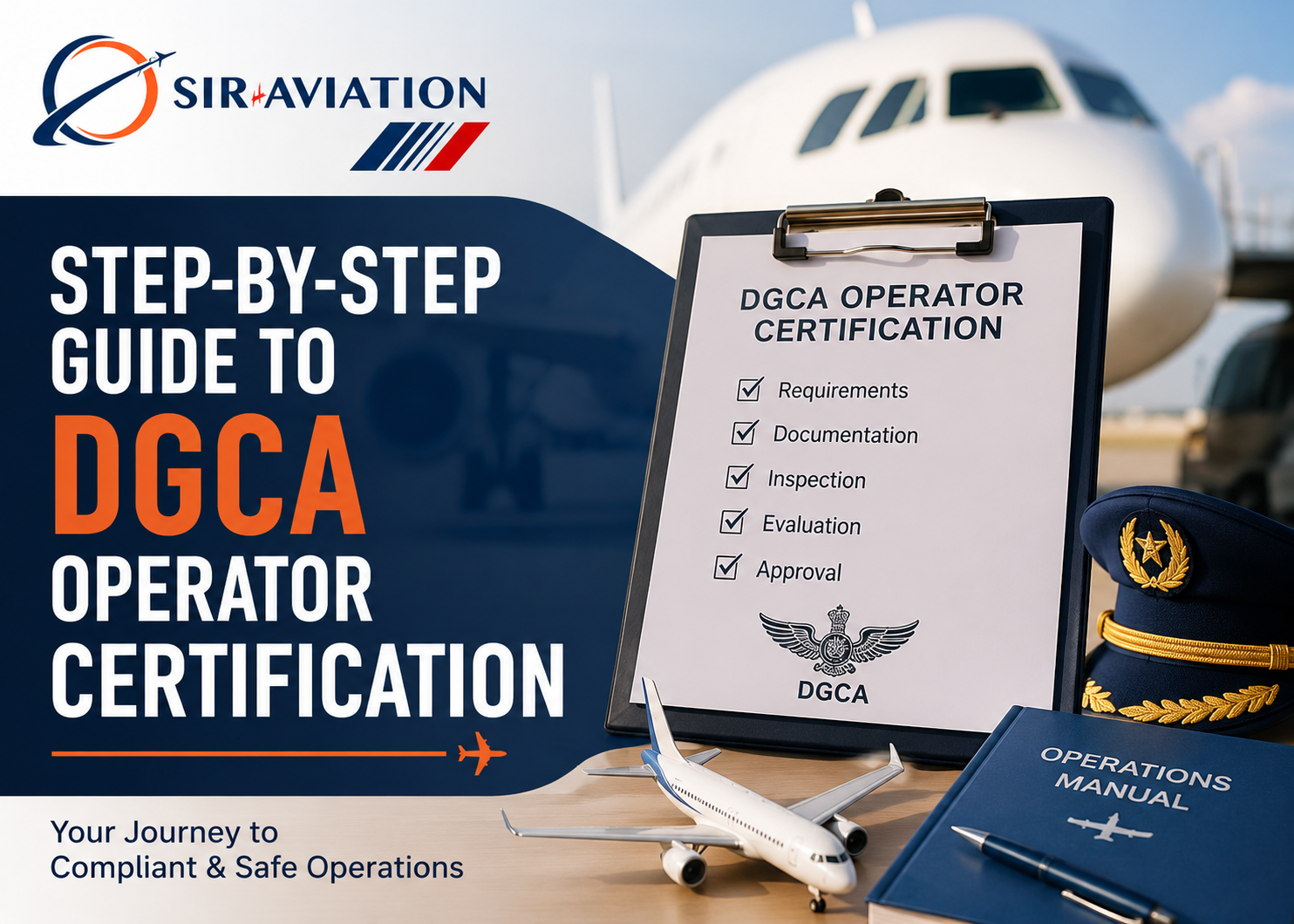
India’s aviation sector continues to expand with increasing demand for charter services, non-scheduled operations, aerial work, cargo transportation, and specialized aviation solutions. For any aviation organization planning to operate legally and efficiently, obtaining operator certification DGCA approval is one of the most important milestones.
The Directorate General of Civil Aviation (DGCA) serves as India’s regulatory authority responsible for maintaining safety standards, operational compliance, and aviation regulations. Whether an organization intends to launch a charter airline, helicopter service, air ambulance operation, or cargo aviation business, securing the appropriate operator certification is mandatory before commencing commercial activities.
At SIR Aviation, we regularly assist aviation businesses in navigating regulatory requirements, preparing documentation, and meeting certification standards. This detailed resource explains every stage involved in obtaining DGCA operator certification and achieving operational readiness.
What Is DGCA Operator Certification?
DGCA Operator Certification is an official approval granted by the Directorate General of Civil Aviation that authorizes an aviation organization to conduct specific air operations in compliance with national aviation regulations.
The certification confirms that the operator has:
- Adequate management systems
- Qualified personnel
- Approved aircraft
- Safety management procedures
- Maintenance arrangements
- Operational manuals
- Regulatory compliance systems
Without this approval, commercial aviation operations cannot legally be conducted in India.
Why Operator Certification Is Essential
Operator certification serves multiple purposes beyond regulatory compliance.
Safety Assurance
Certification ensures that operators follow established aviation safety standards and best practices.
Legal Authorization
Organizations require DGCA approval before offering commercial aviation services.
Industry Credibility
Certified operators gain greater trust among clients, investors, and aviation stakeholders.
Operational Standardization
Certification establishes structured procedures for flight operations, maintenance, training, and safety management.
Business Expansion
Many corporate clients, government agencies, and international partners prefer working only with certified aviation operators.
Types of Operators Requiring DGCA Certification
Several aviation sectors require certification from DGCA.
Non-Scheduled Air Operators
These include:
- Charter aircraft services
- Business aviation operators
- Corporate flight departments
Scheduled Airlines
Passenger airlines operating fixed routes and schedules require operator certification and additional approvals.
Helicopter Operators
Helicopter charter services, offshore transportation, tourism flights, and medical evacuation operators must obtain certification.
Cargo Operators
Companies transporting goods by air require operational approval from DGCA.
Air Ambulance Providers
Medical aviation services must comply with specialized operational standards.
Aerial Work Operators
Organizations conducting activities such as:
- Survey flights
- Photography missions
- Mapping projects
- Infrastructure inspections
must obtain relevant certification.
Key Regulatory Framework
Several aviation regulations govern the certification process.
Important regulatory references include:
- Civil Aviation Requirements (CAR)
- Aircraft Rules
- Aircraft Act
- DGCA Operational Directives
- Safety Management System Requirements
- Maintenance Regulations
Applicants must familiarize themselves with applicable requirements before initiating certification procedures.
Preliminary Business Planning Stage
Before approaching DGCA, organizations should establish a clear operational framework.
Define Operational Scope
Determine:
- Type of operation
- Aircraft category
- Target market
- Service area
- Operational base
Develop Business Structure
Organizations should establish:
- Legal entity registration
- Ownership structure
- Financial planning
- Corporate governance framework
Assess Financial Capability
DGCA evaluates whether the applicant possesses sufficient financial resources to sustain safe operations.
Financial planning should cover:
- Aircraft acquisition
- Maintenance costs
- Crew salaries
- Insurance
- Regulatory compliance expenses
- Infrastructure requirements
Step 1: Initial Consultation and Pre-Application Preparation
The certification journey begins with extensive preparation.
Applicants should review all applicable DGCA requirements and conduct internal assessments.
Key preparation activities include:
- Identifying certification requirements
- Building management teams
- Establishing compliance procedures
- Creating operational policies
- Selecting aircraft
Many operators engage aviation consultants during this phase to minimize delays and improve documentation quality.
Step 2: Formation of Key Management Personnel
DGCA requires operators to appoint qualified post holders responsible for critical functions.
Typical management positions include:
Accountable Manager
Responsible for overall organizational compliance and resource allocation.
Head of Flight Operations
Oversees flight operations, crew management, and operational procedures.
Chief Pilot
Responsible for pilot supervision and operational standards.
Head of Continuing Airworthiness Management
Ensures aircraft airworthiness and maintenance compliance.
Safety Manager
Manages safety programs and risk management activities.
Quality Manager
Monitors compliance and quality assurance processes.
Each individual must meet DGCA qualification and experience requirements.
Step 3: Preparation of Operational Documentation
Documentation forms the foundation of operator certification.
DGCA carefully reviews all submitted manuals and procedures.
Operations Manual
The operations manual outlines:
- Flight procedures
- Crew responsibilities
- Emergency actions
- Operational limitations
Safety Management Manual
This document explains:
- Hazard identification processes
- Risk assessments
- Safety reporting systems
- Corrective actions
Training Manual
Training manuals describe:
- Crew training programs
- Recurrent training
- Emergency procedures training
- Competency evaluations
Maintenance Control Manual
The maintenance manual covers:
- Inspection procedures
- Maintenance scheduling
- Defect reporting
- Airworthiness controls
Security Program
Operators must establish security procedures aligned with aviation security requirements.
Step 4: Aircraft Acquisition and Compliance
Aircraft selection plays a significant role in certification.
Operators must ensure aircraft:
- Meet regulatory requirements
- Have valid airworthiness status
- Possess complete maintenance records
- Comply with operational specifications
Documentation generally includes:
- Aircraft registration records
- Airworthiness certificates
- Lease agreements
- Maintenance history
DGCA reviews aircraft suitability before granting operational approval.
Step 5: Infrastructure Development
Operators must establish suitable operational facilities.
Required infrastructure may include:
Operational Control Center
Supports flight planning, dispatch, and operational oversight.
Office Facilities
Administrative offices for management and compliance functions.
Maintenance Arrangements
Approved maintenance facilities and technical support systems.
Training Facilities
Resources for crew training and competency management.
Record-Keeping Systems
Secure systems for operational and maintenance records.
Step 6: Formal Application Submission
Once preparations are complete, the operator submits a formal application to DGCA.
The application package generally includes:
- Organizational information
- Management structure
- Operational plans
- Manuals
- Financial documentation
- Aircraft details
- Infrastructure information
DGCA performs an initial review to verify completeness.
Incomplete submissions often result in delays and additional review cycles.
Step 7: Documentation Evaluation
DGCA specialists conduct detailed assessments of submitted materials.
Areas reviewed include:
- Operational procedures
- Safety management systems
- Maintenance arrangements
- Training programs
- Emergency response plans
- Compliance structures
Applicants may receive observations requiring revisions.
Prompt responses help maintain certification timelines.
Step 8: Demonstration and Inspection Phase
After documentation approval, DGCA proceeds with inspections and demonstrations.
Inspectors evaluate:
Operational Readiness
Verification of operational systems and procedures.
Personnel Competency
Assessment of management and operational personnel.
Facility Inspections
Review of operational infrastructure and support systems.
Aircraft Inspections
Physical verification of aircraft condition and documentation.
Emergency Procedures
Evaluation of emergency preparedness capabilities.
This phase demonstrates that written procedures can be effectively implemented in practice.
Step 9: Proving Flights and Operational Demonstrations
Certain operators must conduct proving flights.
These flights allow DGCA inspectors to observe:
- Crew performance
- Operational procedures
- Safety compliance
- Communication systems
- Flight planning processes
Successful demonstrations confirm operational readiness.
Step 10: Resolution of Findings
During inspections, DGCA may identify findings requiring corrective actions.
Common findings include:
- Documentation inconsistencies
- Training deficiencies
- Procedural gaps
- Infrastructure improvements
- Compliance issues
Operators must submit corrective action plans and evidence of implementation.
Timely resolution significantly accelerates certification approval.
Step 11: Issuance of Operator Certificate
Once all requirements are satisfied, DGCA issues the operator certificate.
The certificate defines:
- Authorized operations
- Aircraft types
- Operational limitations
- Geographic scope
- Special approvals
The organization can then begin commercial operations within approved parameters.
Responsibilities After Certification
Certification is not a one-time achievement.
Operators must maintain continuous compliance through:
Safety Monitoring
Ongoing hazard identification and risk management.
Crew Training
Regular recurrent training and competency checks.
Aircraft Maintenance
Scheduled inspections and maintenance activities.
Internal Audits
Periodic evaluations of operational effectiveness.
Regulatory Reporting
Submission of required reports and notifications.
Continuous Improvement
Updating procedures to reflect changing operational needs and regulatory expectations.
Common Challenges During Certification
Organizations often encounter obstacles during certification.
Incomplete Documentation
Missing information can significantly delay approvals.
Resource Constraints
Insufficient staffing or financial resources may affect readiness.
Regulatory Misinterpretation
Incorrect interpretation of requirements often results in revisions.
Training Deficiencies
Personnel qualifications must align with regulatory expectations.
Safety System Gaps
Weak safety management frameworks frequently require corrective action.
Early planning helps avoid these challenges.
Best Practices for Faster Certification
Organizations can improve certification success by following proven practices.
Start Planning Early
Preparation often requires several months of coordinated effort.
Build Experienced Teams
Qualified aviation professionals strengthen compliance readiness.
Prioritize Documentation Quality
Well-structured manuals reduce review cycles.
Establish Strong Safety Culture
Safety should be embedded throughout the organization.
Conduct Internal Reviews
Mock audits help identify deficiencies before regulatory inspections.
Seek Professional Support
Experienced aviation consultants can streamline certification efforts.
How SIR Aviation Supports Operators
At SIR Aviation, we assist aviation organizations throughout the certification lifecycle.
Our support includes:
- Regulatory consultation
- Documentation development
- Compliance planning
- Safety management implementation
- Operational readiness assessments
- Certification project management
- Regulatory coordination
Our industry expertise helps operators navigate complex certification requirements efficiently while maintaining the highest safety and compliance standards.
Final Thoughts
Obtaining DGCA operator certification represents a significant achievement for any aviation organization. The process requires careful planning, regulatory knowledge, operational discipline, and a strong commitment to safety.
From business planning and documentation development to inspections and operational demonstrations, every phase contributes to building a reliable aviation operation capable of meeting national safety standards.
Organizations that invest in preparation, compliance, and professional expertise are better positioned to achieve certification successfully and establish a strong foundation for sustainable aviation operations. With the right strategy and regulatory support, the path to operator certification becomes significantly more efficient and rewarding.