
Why Helicopters for Aerial Cinematography Are Essential for Professional Film Shoots
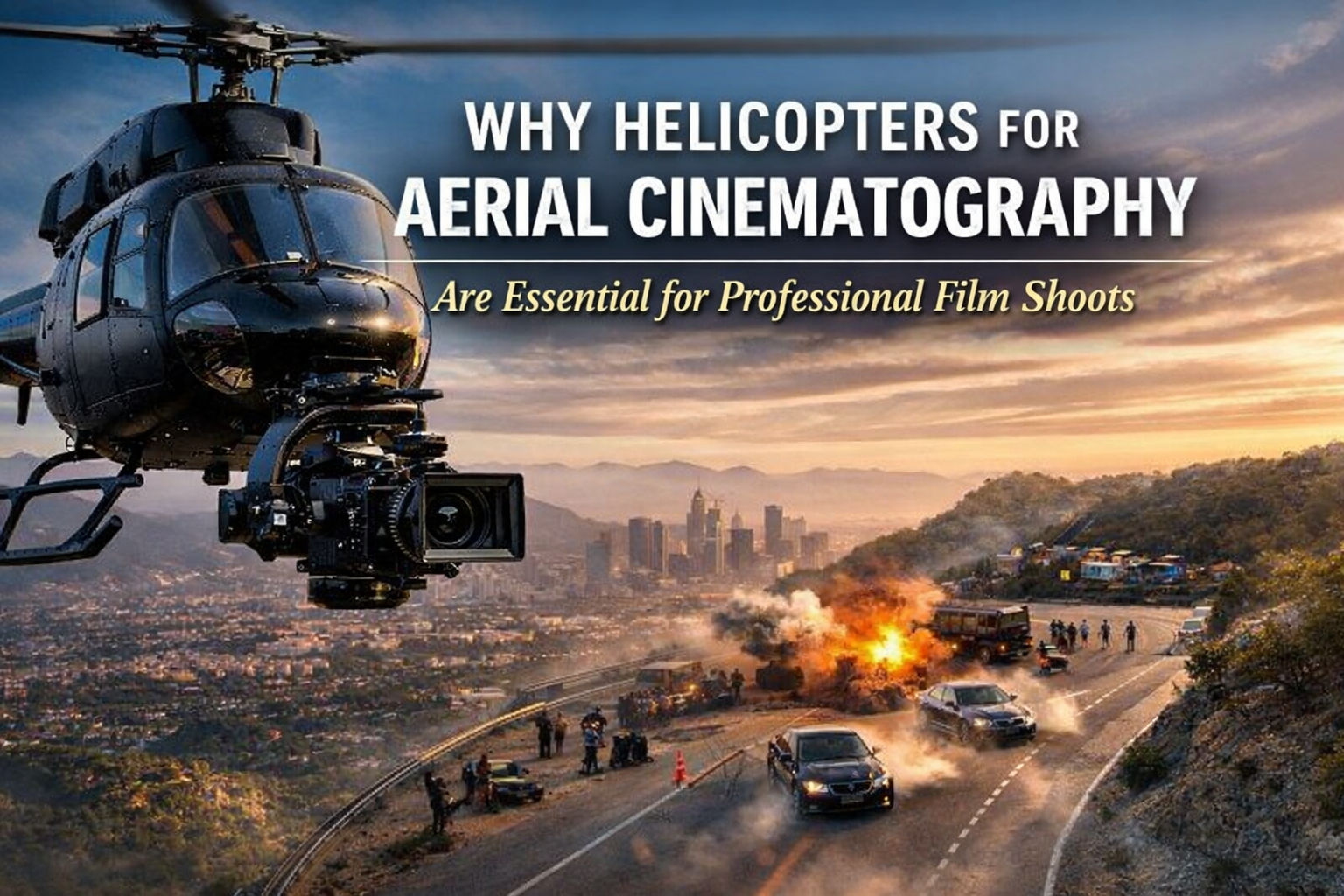
Visual storytelling thrives on perspective. A director frames emotion, scale, and motion through carefully chosen camera angles. Ground cameras capture intimacy, while aerial shots add grandeur and cinematic depth. Film productions rely on aerial cinematography to establish landscapes, follow high-speed action, and create breathtaking visual transitions that elevate storytelling.
Helicopters for Aerial Cinematography remain the most trusted platform for capturing large-scale aerial visuals in professional film shoots. Filmmakers rely on helicopters because they provide unmatched flexibility, speed, and camera stability when compared to other aerial tools. From sweeping landscape reveals to intense chase sequences, helicopters allow cinematographers to achieve dramatic visual storytelling with precision.
The Evolution of Aerial Filming
Aerial shots once required complex rigging, cranes, or expensive aircraft systems that limited movement and shot variety. Filmmakers gradually adopted helicopters as the most reliable solution for capturing moving aerial sequences with fluid camera motion.
Helicopters transformed cinematography because they allow filmmakers to position cameras anywhere in three-dimensional space. Directors can shoot wide panoramas, fly close to mountains, track vehicles, or circle landmarks smoothly. This freedom allows production teams to translate ambitious visual concepts into reality.
Modern camera stabilization technology, combined with experienced pilots and cinematographers, has further refined aerial filming. High-resolution cinema cameras mounted on gyro-stabilized systems deliver crystal-clear visuals even during complex maneuvers.
Cinematic Perspective That Ground Cameras Cannot Achieve
Ground-based filming limits perspective. Even with cranes and drones, many cinematic sequences demand wider movement and extended flight paths.
Helicopters provide a broader visual canvas. Directors use them to create sweeping shots that emphasize scale and movement. Aerial perspectives establish context, reveal geography, and immerse viewers in the environment.
For instance:
-
Opening sequences showcasing expansive landscapes
-
Action scenes involving fast-moving vehicles
-
Tracking sequences across large terrains
-
Dramatic reveals of cities, mountains, or coastlines
These shots create visual impact that standard filming methods cannot replicate.
Precision Movement for Complex Shots
Film production requires careful choreography between camera movement and on-screen action. Helicopters offer unmatched control during aerial tracking shots.
Pilots coordinate closely with directors and cinematographers to maintain exact speed, altitude, and angle. This coordination allows camera operators to capture smooth, cinematic footage that aligns perfectly with scripted sequences.
Key advantages include:
-
Smooth lateral tracking
-
Controlled circling shots around subjects
-
Dynamic rise-and-fall movement
-
Long-distance pursuit shots
Such flexibility helps filmmakers capture natural motion without abrupt cuts or artificial transitions.
Stability That Enhances Visual Quality
Professional film production demands visual clarity. Even minor camera vibrations can ruin high-budget footage.
Helicopters equipped with advanced gyro-stabilized camera mounts maintain remarkable stability during flight. These mounts isolate the camera from aircraft vibrations, producing smooth cinematic motion.
This stabilization supports:
-
High-resolution cinema cameras
-
Long lens shooting
-
Slow-motion aerial sequences
-
Continuous tracking shots
As a result, production teams achieve consistent footage suitable for large cinema screens and high-end streaming platforms.
Access to Remote and Challenging Locations
Many film productions take place in environments that remain difficult to access by road. Mountains, deserts, dense forests, and coastal regions often require aerial filming solutions.
Helicopters provide direct access to such landscapes without complex logistics. They allow crews to capture visuals from locations that would otherwise remain unreachable.
Examples of remote filming scenarios include:
-
Mountain ranges for adventure films
-
Ocean coastlines for dramatic scenes
-
Forest regions for wildlife productions
-
Desert landscapes for historical or action films
This accessibility expands creative possibilities and reduces production limitations.
Dynamic Action Sequences
Action cinema relies heavily on aerial shots. Helicopters excel at capturing high-speed sequences involving vehicles, boats, and large-scale movement.
Directors often use aerial filming to create tension and excitement. Helicopters follow vehicles across highways, hover above intense scenes, or fly alongside moving subjects to maintain visual continuity.
Popular cinematic sequences include:
-
Car chases through highways
-
Military or rescue operations
-
High-speed boat pursuits
-
Large crowd or stadium scenes
These visuals contribute to immersive storytelling that keeps audiences engaged.
Versatility Across Film Genres
Aerial cinematography supports multiple genres, making helicopters a valuable production asset.
Filmmakers across various sectors rely on aerial shots to enhance narrative depth.
Common applications include:
Feature Films
Large-scale action scenes, location reveals, and cinematic transitions.
Television Series
Establishing shots of cities or landscapes to set the scene.
Documentaries
Nature, wildlife, and environmental storytelling through expansive visuals.
Travel Productions
Showcasing destinations through breathtaking aerial views.
Commercial Advertising
High-impact visuals that elevate brand storytelling.
This versatility makes helicopters indispensable for professional filming.
Creative Freedom for Directors
Directors value tools that allow creative flexibility. Helicopters provide the ability to adapt shots during filming without major equipment changes.
If a scene requires a wider angle, the aircraft simply gains altitude. If the director wants a dramatic close pass over a subject, the pilot adjusts flight positioning accordingly.
This flexibility supports spontaneous creativity on set. Production teams often capture additional shots during the same flight, maximizing filming efficiency.
Supporting Large Camera Systems
Professional cinema cameras often require substantial mounting equipment. Many aerial filming platforms struggle to carry heavy payloads.
Helicopters easily accommodate:
-
Large cinema cameras
-
Stabilized camera rigs
-
Specialized lenses
-
Broadcast equipment
This capability allows cinematographers to maintain high production standards without compromising visual quality.
Safety and Professional Coordination
Film production prioritizes safety for both crew members and equipment. Helicopter operations follow strict aviation protocols that ensure secure aerial filming.
Professional coordination between pilots, camera operators, and production teams allows every shot to occur within controlled parameters.
Key safety considerations include:
-
Flight planning before filming
-
Weather monitoring
-
Airspace permissions
-
Communication between ground and air teams
Such measures ensure smooth filming operations without compromising safety.
Expanding Storytelling Possibilities
Aerial cinematography enriches storytelling by adding movement, scale, and atmosphere to visual narratives.
Directors often rely on aerial shots to:
-
Establish the location of a scene
-
Transition between story segments
-
Build dramatic tension
-
Highlight environmental beauty
These visuals influence audience perception and emotional engagement. A powerful aerial sequence often becomes one of the most memorable moments in a film.
Efficiency in Large-Scale Productions
Time plays a critical role during film production. Helicopters allow crews to capture multiple shots within a short period, reducing logistical delays.
Instead of relocating large camera setups across difficult terrain, production teams simply reposition the helicopter.
Benefits include:
-
Faster shooting schedules
-
Reduced ground equipment movement
-
Efficient scene coverage
-
Multiple shot variations during a single flight
Such efficiency proves invaluable for large productions operating under tight timelines.
Contribution to High-End Cinematic Standards
Cinema audiences expect immersive visuals that match modern production quality. Aerial cinematography plays a major role in delivering those visuals.
Helicopters enable filmmakers to produce shots that convey grandeur and scale. From sweeping landscapes to dynamic chase sequences, these visuals enhance the cinematic experience.
Directors, cinematographers, and producers often rely on aerial filming to add visual depth that distinguishes premium productions.
Aerial Filming in Modern Production Environments
Modern film crews integrate aerial filming seamlessly into production planning. Directors storyboard aerial sequences alongside ground shots to maintain narrative continuity.
Helicopters allow crews to execute these sequences with precision. Camera teams capture high-resolution footage that integrates smoothly with other production elements.
This integration supports visual storytelling across feature films, television productions, documentaries, and commercial campaigns.
Frequently Asked Questions
1. Why do filmmakers prefer helicopters for aerial cinematography?
Filmmakers prefer helicopters because they provide stability, flexibility, and long flight durations. Helicopters carry heavy camera systems while maintaining smooth motion. Pilots coordinate with cinematographers to achieve complex aerial shots, making them ideal for professional film productions requiring large-scale visuals and controlled camera movement.
2. Are helicopters better than drones for film shoots?
Helicopters handle large cinema cameras and fly longer distances than drones. They maintain stability at high speeds and altitudes, making them suitable for large productions. Drones work well for smaller setups, while helicopters deliver superior performance for large-scale cinematic sequences.
3. What types of scenes benefit most from aerial cinematography?
Large landscapes, action sequences, vehicle chases, and city reveals benefit greatly from aerial filming. Directors use aerial shots to establish location, track movement, and add cinematic depth. These visuals help audiences grasp scale and context within the narrative.
4. How do helicopters maintain camera stability during filming?
Helicopters use gyro-stabilized camera mounts that isolate the camera from aircraft vibration. These systems allow smooth footage even during turns or altitude changes. Cinematographers can operate high-resolution cameras while maintaining sharp, cinematic visuals throughout the sequence.
5. Do helicopter film shoots require special permissions?
Yes. Film crews must obtain aviation and local authority permissions before conducting aerial filming. Production teams coordinate with aviation regulators, local authorities, and pilots to ensure compliance with safety regulations and airspace rules.
6. Can helicopters film in remote locations?
Helicopters easily access mountains, forests, coastlines, and deserts. This ability allows filmmakers to capture visuals in areas where ground equipment cannot reach. Such accessibility expands creative possibilities and allows productions to film in visually dramatic environments.
7. How long can aerial cinematography flights last?
Flight duration depends on the helicopter model and filming requirements. Many helicopters operate for several hours with fuel planning. Production teams schedule flights carefully to maximize shooting efficiency while maintaining safety and operational limits.
8. What equipment is used for helicopter filming?
Professional aerial filming uses cinema cameras, gyro-stabilized mounts, high-performance lenses, and monitoring systems. Camera operators control equipment remotely while pilots maintain flight stability. This setup ensures high-quality cinematic footage suitable for film and television productions.
9. Are helicopter shoots safe for film crews?
Yes, professional aerial filming follows strict aviation safety protocols. Pilots, cinematographers, and production teams coordinate carefully before each flight. Detailed planning, communication systems, and safety checks ensure secure filming operations.
10. How does aerial cinematography enhance storytelling?
Aerial visuals add scale, movement, and atmosphere to storytelling. Directors use these shots to establish locations, transition between scenes, and emphasize dramatic moments. A well-executed aerial sequence often becomes one of the most visually powerful elements of a film.