
Why Passenger Charter Service in India is the Future of Luxury & Business Travel
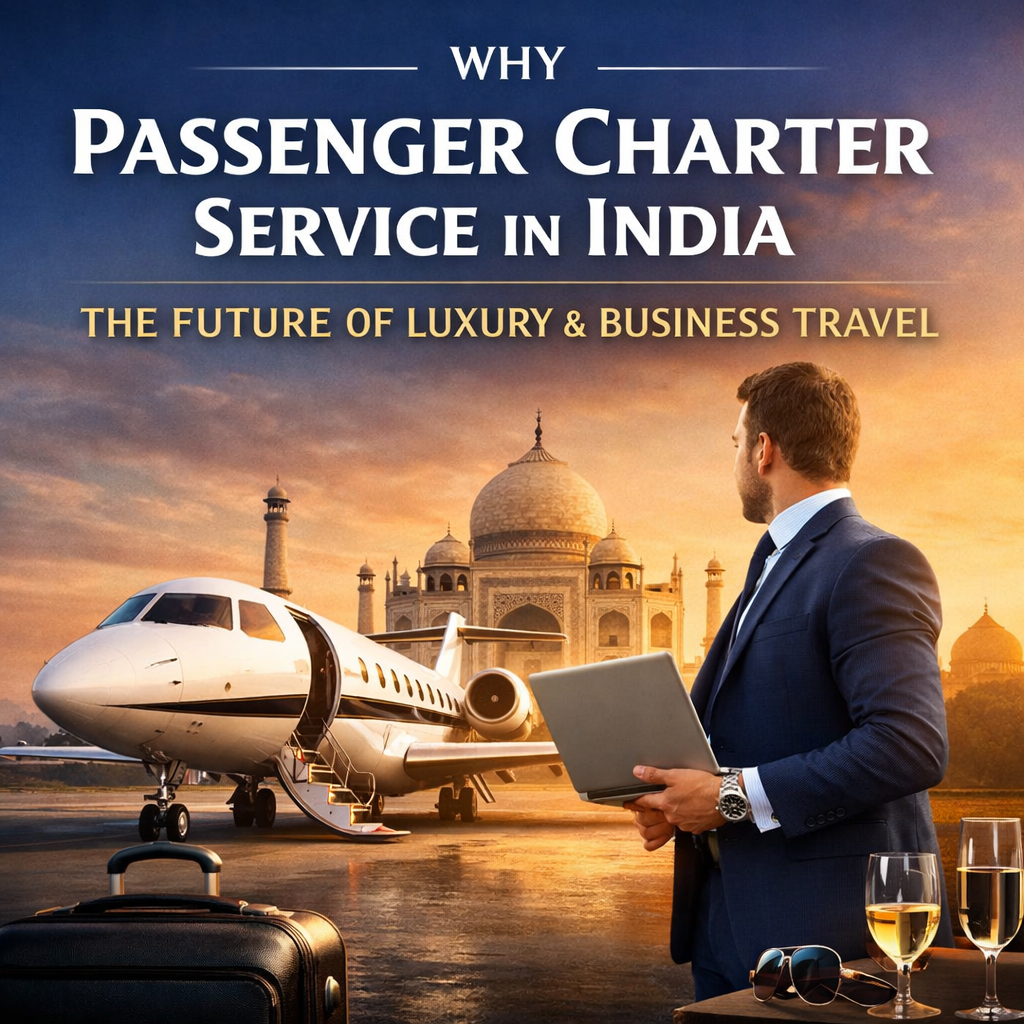
India’s travel landscape continues to evolve as professionals, entrepreneurs, and high-net-worth individuals demand faster, more efficient mobility. Commercial flights often involve rigid schedules, crowded terminals, and long waiting times. Business leaders and luxury travelers increasingly seek alternatives that offer privacy, flexibility, and time efficiency. Charter aviation answers these expectations by delivering a travel experience designed entirely around passenger needs.
A growing number of executives, celebrities, and corporate groups rely on Passenger Charter Service in India to move between cities without delays or unnecessary complications. This mode of travel allows passengers to control schedules, select aircraft based on requirements, and depart from smaller airports that commercial airlines rarely serve. Such advantages make charter aviation a preferred option for individuals who value time, comfort, and exclusivity.
The Rise of Private Air Mobility in India
India’s expanding economy creates a stronger need for rapid business mobility. Corporate leaders frequently travel between financial hubs such as Mumbai, Delhi, Bengaluru, and Hyderabad. Conventional flights cannot always support tight schedules or last-minute changes.
Charter aviation fills this gap by allowing passengers to fly directly between cities without relying on fixed airline routes. Business leaders can attend multiple meetings across regions in a single day. This level of efficiency dramatically improves productivity and reduces travel fatigue.
Luxury tourism also drives charter aviation demand. India attracts high-end travelers seeking customized experiences across heritage destinations, island retreats, and mountain resorts. Charter flights allow seamless access to remote destinations while maintaining privacy and comfort.
Why Luxury Travelers Prefer Charter Flights
Luxury travel emphasizes exclusivity, personalization, and convenience. Charter aviation delivers these qualities without compromise. Travelers enjoy complete control over the entire journey, including aircraft selection, catering, departure timing, and onboard services.
Passengers no longer need to navigate crowded airport terminals or long security queues. Instead, they experience private lounges, quick boarding procedures, and direct access to aircraft.
Key reasons luxury travelers prefer charter flights include:
-
Total privacy during the journey
-
Customized in-flight services
-
Flexible departure schedules
-
Direct access to smaller airports
-
Superior comfort and space
-
Personalized travel experiences
These benefits create a travel experience that aligns with the expectations of high-profile individuals and premium travelers.
Business Efficiency Through Charter Aviation
Time represents one of the most valuable assets in the corporate sector. Business executives cannot afford delays caused by missed connections or flight cancellations. Charter aviation removes such limitations by placing the travel schedule entirely in the passenger’s hands.
Executives often visit multiple locations for negotiations, inspections, or investor meetings. Charter flights allow seamless travel between cities that lack direct airline routes.
Business advantages of charter aviation include:
-
Rapid travel between multiple cities
-
Reduced waiting time at airports
-
Private environment for confidential discussions
-
Enhanced productivity during flights
-
Reliable schedules aligned with business commitments
Companies increasingly view charter aviation as a strategic investment rather than a luxury expense.
Expanding Airport Infrastructure in India
India continues to develop new airports and upgrade existing ones. This infrastructure expansion significantly strengthens the charter aviation sector. Smaller regional airports can now handle private aircraft operations, which increases accessibility across the country.
Charter flights benefit from this network because they can land at locations where commercial airlines do not operate frequently. This capability shortens travel time and improves regional connectivity.
Business travelers can reach industrial zones, mining regions, manufacturing hubs, and emerging cities without complex travel plans. The expansion of aviation infrastructure therefore plays a major role in the future of charter aviation.
Privacy and Security Advantages
High-profile travelers often require strict privacy and security during travel. Commercial flights expose passengers to crowded terminals, public scrutiny, and unpredictable interactions.
Charter aviation solves these challenges by offering a controlled environment. Passengers board privately, interact with minimal airport staff, and travel in a secure setting.
Security advantages include:
-
Limited passenger access
-
Private boarding areas
-
Confidential travel schedules
-
Dedicated security protocols
-
Reduced exposure to crowds
Such measures make charter aviation especially attractive for government officials, celebrities, and corporate leaders.
Customization That Commercial Airlines Cannot Match
Commercial airlines operate on standardized procedures designed for mass transportation. Charter aviation focuses on personalization instead.
Travelers can select aircraft types according to passenger count, route length, and luxury requirements. Interior seating arrangements, onboard entertainment, and catering menus can also reflect personal preferences.
Examples of customization include:
-
Gourmet dining experiences on board
-
Private meeting spaces
-
Luxury seating configurations
-
Special entertainment systems
-
Tailored cabin environments
This level of personalization transforms air travel into a highly refined experience rather than a routine journey.
Faster Access to Remote Destinations
India features diverse landscapes ranging from mountain ranges and coastal regions to wildlife reserves and historical towns. Many such destinations lack frequent commercial flight connections.
Charter aviation enables direct travel to remote airports closer to these locations. Tourists can reach Himalayan regions, desert resorts, island destinations, and cultural sites quickly.
Travel planners often design customized itineraries combining multiple destinations within a short time frame. Charter flights make such itineraries practical and efficient.
Corporate Group Travel Benefits
Large organizations frequently arrange travel for leadership teams, investors, and project groups. Coordinating multiple commercial flights can create logistical challenges and scheduling conflicts.
Charter aviation simplifies group travel by accommodating everyone on a single aircraft. Teams travel together, maintain privacy, and reach destinations simultaneously.
Advantages for corporate groups include:
-
Streamlined travel coordination
-
Improved team productivity
-
Private environment for meetings
-
Flexible return schedules
-
Reduced logistical complexity
Such benefits encourage companies to adopt charter aviation for critical business travel.
Time-Saving Advantages That Transform Travel
Time efficiency remains the strongest reason many professionals choose charter aviation. Traditional airline travel involves long security queues, boarding delays, and limited flight timings.
Charter flights operate according to passenger schedules, significantly reducing waiting time.
Key time-saving factors include:
-
Direct flights without layovers
-
Faster boarding procedures
-
Immediate departure after arrival at the airport
-
Flexible scheduling adjustments
-
Efficient luggage handling
These advantages convert travel hours into productive time rather than wasted waiting.
Growing Demand from High-Net-Worth Individuals
India’s rising population of high-net-worth individuals influences luxury travel trends. Entrepreneurs, investors, and celebrities frequently travel for business and leisure across domestic and international destinations.
Charter aviation offers the exclusivity these travelers expect. It allows them to maintain privacy, travel with family or colleagues comfortably, and avoid crowded public terminals.
Luxury travel agencies and aviation operators report consistent growth in charter flight bookings, particularly during holiday seasons, corporate events, and destination weddings.
Charter Aviation and Event Travel
India hosts numerous large-scale events including international conferences, film festivals, sports tournaments, and luxury weddings. Such occasions often involve travel for large groups of VIP guests.
Charter flights simplify transportation for these events. Organizers can transport guests directly to event locations without complex travel arrangements.
Event planners benefit from:
-
Efficient group transportation
-
Flexible departure times
-
Direct access to regional airports
-
Enhanced guest experience
These benefits strengthen charter aviation’s role in high-profile events.
Environmental Considerations and Future Technology
Aviation technology continues to evolve with stronger environmental awareness. Aircraft manufacturers design modern jets with improved fuel efficiency and lower emissions.
Charter aviation operators increasingly adopt newer aircraft models that reduce environmental impact. Sustainable aviation fuels and improved engine technologies contribute to greener travel.
Future developments in electric and hybrid aircraft could further transform private aviation by lowering operational costs and environmental footprints.
The Economic Impact of Charter Aviation
Charter aviation contributes significantly to regional economic development. Increased air connectivity attracts tourism, investment, and business expansion.
Local economies benefit from:
-
Increased tourism revenue
-
Growth in hospitality sectors
-
Business expansion opportunities
-
Improved regional connectivity
As more destinations become accessible through charter flights, regional economies gain new opportunities for growth.
Technology Driving Charter Aviation Growth
Digital platforms simplify charter flight bookings and flight management. Advanced technology allows travelers to request aircraft, compare options, and finalize travel plans quickly.
Real-time tracking systems also enhance safety and transparency. Passengers receive accurate updates regarding flight schedules, weather conditions, and arrival times.
Technology therefore plays a critical role in making charter aviation more accessible and efficient for travelers.
Luxury Experience That Redefines Air Travel
Charter aviation transforms flying into a premium lifestyle experience rather than a routine transportation method. Spacious cabins, personalized service, and quiet interiors create a relaxing atmosphere.
Passengers can work, dine, or relax without interruption. Business executives conduct meetings during flights while families enjoy private travel experiences.
This unique blend of efficiency and luxury continues to attract travelers seeking a refined travel environment.
The Road Ahead for Charter Aviation in India
India’s aviation sector continues to expand rapidly. Economic growth, rising wealth, infrastructure development, and changing travel expectations all contribute to charter aviation’s future.
Businesses require efficient mobility across multiple cities, while luxury travelers demand exclusivity and comfort. Charter aviation fulfills both requirements effectively.
As airport networks expand and aviation technology advances, charter flights will likely become an even more prominent component of India’s travel ecosystem.
Frequently Asked Questions
1. What is a passenger charter service?
A passenger charter service allows individuals or groups to rent an entire aircraft for private travel. Travelers choose departure times, routes, and aircraft types according to their needs. This arrangement provides flexibility, privacy, and personalized service that commercial airline travel cannot easily deliver.
2. Who typically uses charter aviation in India?
Business executives, entrepreneurs, celebrities, government officials, and luxury travelers frequently choose charter flights. Corporate teams and event organizers also rely on charter aircraft for group travel, especially when schedules demand flexibility or destinations lack frequent commercial airline connections.
3. How does charter aviation save time for business travelers?
Charter flights reduce waiting time through private terminals, quicker security procedures, and flexible departure schedules. Passengers avoid long queues and unnecessary layovers. Direct routes between cities also shorten travel time, allowing executives to attend meetings and return efficiently.
4. Are charter flights suitable for group travel?
Yes. Charter aircraft accommodate corporate teams, wedding guests, sports groups, and event attendees. Travelers fly together on one aircraft, simplifying logistics and ensuring everyone arrives simultaneously. Group travel through charter aviation also enhances privacy and coordination.
5. Can charter flights access smaller airports in India?
Charter aircraft can often land at regional airports where commercial airlines operate limited routes. This capability allows passengers to reach remote destinations faster and reduces additional ground transportation time.
6. What types of aircraft are used for charter travel?
Charter aviation includes a wide range of aircraft such as light jets, midsize jets, heavy jets, and turboprops. Each aircraft category serves different travel distances, passenger capacities, and luxury preferences.
7. Is charter aviation safe?
Charter aviation follows strict aviation safety regulations and maintenance standards. Operators maintain aircraft regularly and employ trained flight crews. Safety protocols, aircraft inspections, and regulatory oversight ensure secure operations.
8. How does charter aviation support luxury tourism?
Charter flights provide direct access to exclusive destinations and allow travelers to create customized itineraries. Luxury tourists enjoy privacy, personalized service, and flexible schedules while traveling between resorts, cultural landmarks, and scenic regions.
9. Can passengers work during charter flights?
Yes. Charter aircraft cabins provide quiet environments suitable for business discussions and work. Executives often conduct meetings, prepare presentations, and communicate with teams during flights without interruptions common on commercial airlines.
10. Why is charter aviation considered the future of premium travel?
Charter aviation combines speed, flexibility, privacy, and comfort. As business mobility increases and luxury travel expectations evolve, more travelers choose personalized aviation experiences. This growing demand positions charter flights as a major component of premium travel in India.