
24/7 Air Ambulance Services in India
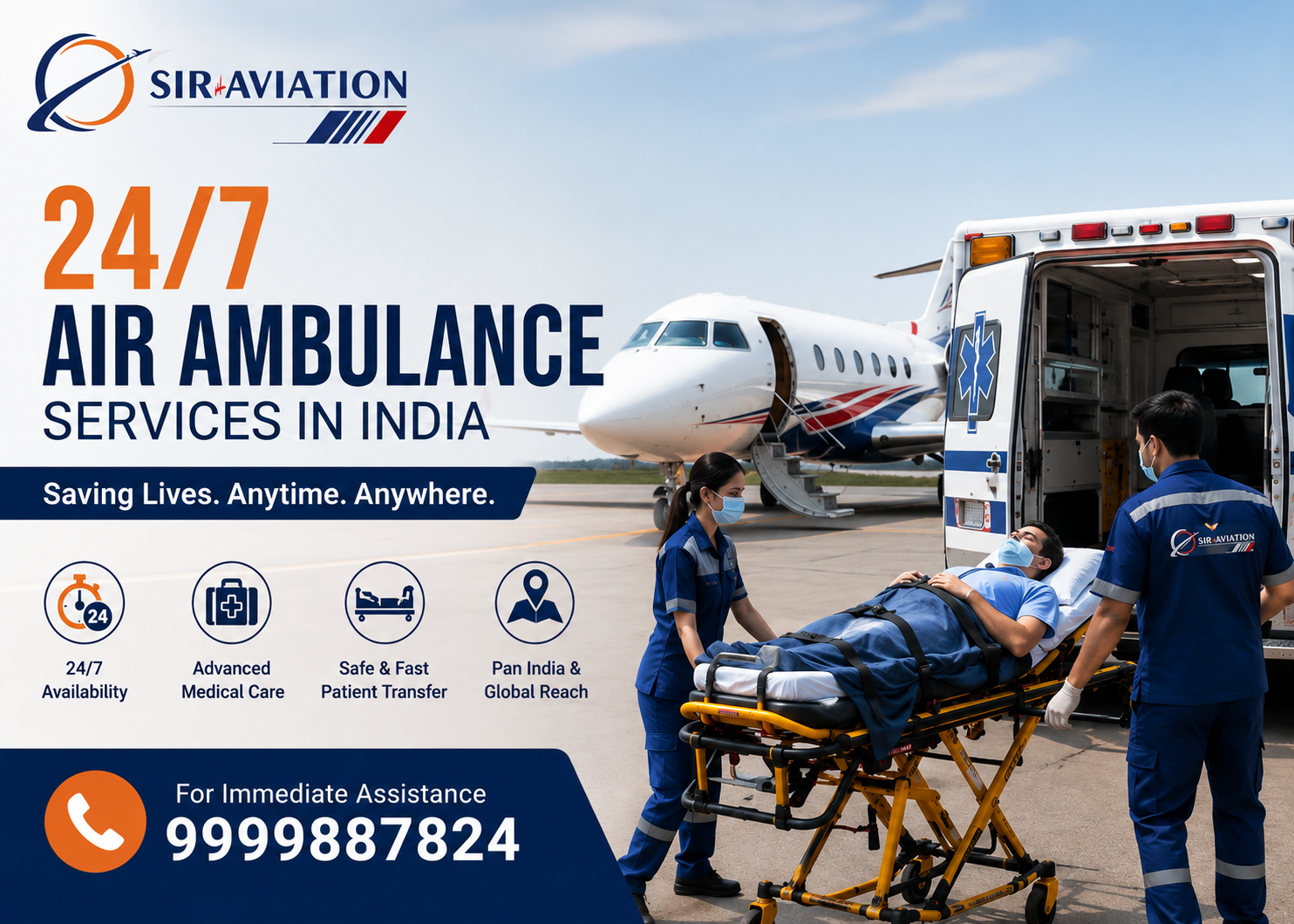
Medical emergencies can happen without warning, making every minute critical. When a patient requires immediate transfer to another city, state, or specialized medical facility, Air Ambulance Services become an essential solution for saving valuable time. Whether it involves a severe accident, organ transportation, neonatal care, cardiac emergencies, or critical illness, fast medical aviation bridges the gap between patients and advanced healthcare facilities. At SIR Aviation, every mission is planned with precision, ensuring patients receive timely medical transportation supported by experienced healthcare professionals and advanced life-support equipment.
Why Air Ambulance Services Matter During Medical Emergencies
Road traffic, geographical barriers, and long travel distances often delay access to specialized treatment. In many situations, these delays can significantly affect a patient’s recovery.
Air ambulance transportation provides rapid movement between hospitals, cities, and even remote locations where conventional transportation may not be practical. The ability to reduce travel time allows patients to reach advanced medical centers quickly while remaining under continuous medical supervision.
Unlike standard passenger flights, medical aircraft are specially configured to accommodate critically ill or injured patients. They carry sophisticated medical equipment comparable to that found in intensive care units, enabling medical teams to stabilize patients throughout the journey.
Families also gain peace of mind knowing that healthcare professionals continuously monitor the patient’s condition until arrival.
What Are Air Ambulance Services?
Air ambulance transportation refers to medically equipped aircraft designed specifically for emergency and non-emergency patient transfers. These aircraft function as flying intensive care units capable of supporting patients with varying medical conditions.
The service generally includes:
- Bed-to-bed patient transfer
- ICU-level medical monitoring
- Advanced life support
- Ventilator support
- Cardiac monitoring
- Oxygen management
- Emergency medication administration
- Specialized medical escort teams
- Coordination with referring and receiving hospitals
Each mission is carefully coordinated to minimize delays while ensuring patient safety at every stage.
Situations That Require Immediate Air Medical Transportation
Several medical situations demand urgent transportation where commercial travel or road ambulances may not be suitable.
Severe Trauma Cases
Victims of road accidents, industrial incidents, falls, or other traumatic injuries often require immediate transfer to trauma centers equipped with specialized surgical teams.
Cardiac Emergencies
Patients suffering from heart attacks, complex cardiac complications, or requiring emergency cardiac surgery benefit from rapid transportation to advanced heart hospitals.
Stroke Patients
Brain stroke treatment follows strict time-sensitive protocols. Faster transportation increases the chances of successful intervention while minimizing long-term neurological damage.
Organ Transplant Transportation
Organ transplantation depends heavily on time. Air medical transport enables rapid movement of organs, transplant teams, and recipients across different regions.
Neonatal and Pediatric Care
Premature babies and critically ill infants often require highly specialized neonatal intensive care. Dedicated neonatal transport units ensure safe transfers while maintaining constant monitoring.
High-Risk Pregnancy
Complicated pregnancies requiring tertiary medical care may need immediate transfer to specialized maternity hospitals capable of managing both mother and child safely.
Respiratory Failure
Patients dependent on ventilators or advanced respiratory support require continuous medical supervision throughout transportation.
Burn Injuries
Severe burn victims often need treatment at dedicated burn centers unavailable in smaller cities.
Cancer Patient Transfers
Patients requiring specialized oncology procedures or post-operative intensive care frequently require safe long-distance medical transportation.
Infectious Disease Management
Certain infectious conditions require specially managed transportation with strict infection-control protocols to protect both patients and medical personnel.
How 24/7 Air Ambulance Services Operate
Medical aviation involves much more than simply arranging an aircraft. Every transfer requires careful planning involving healthcare professionals, aviation experts, hospitals, and emergency coordinators.
The process usually begins when family members, hospitals, or physicians request medical transportation.
The patient’s medical history, diagnosis, stability, and transportation requirements are evaluated before selecting the appropriate aircraft and medical crew.
Medical professionals determine the level of care needed during transit, including ventilator support, medications, cardiac monitoring, or specialized interventions.
The operations team then secures airport permissions, flight clearances, ground ambulances, and hospital coordination.
Throughout the journey, continuous communication remains active between the medical crew, referring hospital, receiving hospital, and family members.
Once the aircraft lands, ground ambulance teams immediately transport the patient to the destination healthcare facility, completing the bed-to-bed transfer.
Medical Equipment Available Inside Modern Air Ambulances
A properly equipped medical aircraft functions similarly to a mobile intensive care unit.
Common onboard equipment includes:
- Advanced cardiac monitors
- Multi-parameter patient monitoring systems
- Defibrillators
- Mechanical ventilators
- Infusion pumps
- Portable suction units
- Oxygen cylinders
- Emergency medications
- Airway management tools
- Syringe pumps
- Portable ultrasound in selected aircraft
- Emergency trauma kits
- Neonatal transport incubators when required
This equipment enables continuous treatment while the aircraft remains airborne.
Highly Skilled Medical Teams Make the Difference
Technology alone cannot save lives without qualified professionals.
Medical teams generally include:
Critical Care Doctors
These physicians specialize in handling critically ill patients requiring advanced monitoring and emergency interventions.
Flight Nurses
Flight nurses possess expertise in emergency medicine, intensive care, trauma management, and patient stabilization during transportation.
Paramedics
Experienced paramedics provide immediate emergency response while assisting physicians throughout the mission.
Respiratory Therapists
Patients requiring ventilator support often travel with respiratory specialists responsible for maintaining airway stability.
Neonatal Specialists
Premature infants and newborns needing specialized transport receive dedicated neonatal care throughout the journey.
Every medical professional undergoes extensive aviation-related emergency training to manage complications that may arise during flight.
Advantages of 24/7 Air Ambulance Services
Round-the-clock availability plays a significant role in emergency healthcare.
Immediate Response
Emergencies rarely occur during convenient hours. Continuous availability allows rapid deployment regardless of time.
Faster Access to Specialized Hospitals
Patients can reach advanced medical centers without unnecessary delays caused by long-distance road travel.
Continuous Intensive Care
Medical treatment continues throughout transportation without interruption.
Safe Long-Distance Transfers
Patients who cannot tolerate commercial travel receive customized medical transportation suited to their condition.
Reduced Travel Stress
Medical teams handle patient care while family members receive regular updates regarding transportation progress.
Better Coordination
Professional air ambulance providers coordinate hospitals, aviation authorities, airport operations, and ground transportation efficiently.
Air Ambulance Services Across India
India’s vast geography creates unique healthcare challenges.
Mountainous regions, islands, remote villages, densely populated cities, and difficult terrain often increase transportation time during emergencies.
Air ambulance operations connect major healthcare hubs such as:
- Delhi
- Mumbai
- Chennai
- Bengaluru
- Hyderabad
- Kolkata
- Ahmedabad
- Pune
- Kochi
- Lucknow
- Jaipur
- Guwahati
- Chandigarh
- Bhubaneswar
- Nagpur
Patients from smaller cities and remote districts can also be transported to advanced tertiary hospitals whenever specialized treatment becomes necessary.
Domestic and International Medical Transfers
Certain patients require treatment beyond state boundaries or even outside India.
International medical transportation requires careful planning involving:
- Medical clearances
- Immigration documentation
- Airport permissions
- International flight coordination
- Medical visas
- Hospital admission planning
- Ground ambulance arrangements
- Cross-border medical communication
Professional coordination minimizes administrative delays during highly sensitive medical transfers.
Fixed-Wing Aircraft and Helicopter Ambulances
Different medical situations require different aviation solutions.
Fixed-Wing Air Ambulances
These aircraft are suitable for:
- Long-distance transfers
- Interstate transportation
- International missions
- ICU patient movement
- Organ transportation
They provide larger cabin space for advanced medical equipment and additional healthcare professionals.
Helicopter Ambulances
Helicopters serve situations requiring:
- Short-distance transportation
- Mountain rescues
- Disaster response
- Offshore evacuations
- Remote area access
- Urban emergency transfers
Their ability to land closer to accident sites significantly reduces transportation time.
Hospital-to-Hospital Patient Transfers
Many patients begin treatment at local hospitals before requiring specialized procedures unavailable nearby.
Hospital transfers commonly involve:
- Neurosurgery
- Cardiac surgery
- Liver transplantation
- Kidney transplantation
- Oncology treatment
- Pediatric intensive care
- Burn management
- Trauma surgery
Medical teams ensure patient stability before departure while maintaining uninterrupted treatment until arrival.
Organ Transportation and Time-Critical Missions
Organ transplantation follows strict preservation timelines.
Aircraft help transport:
- Donor organs
- Surgical teams
- Transplant coordinators
- Blood products
- Medical supplies
Efficient aviation logistics increase transplant success by minimizing transportation delays.
Safety Standards Followed During Medical Flights
Patient safety remains the highest priority throughout every mission.
Strict protocols generally include:
- Aircraft maintenance inspections
- Medical equipment testing
- Infection control measures
- Flight risk assessments
- Patient stability evaluations
- Weather monitoring
- Emergency contingency planning
- Crew readiness verification
Every stage follows established aviation and healthcare procedures to ensure reliable medical transportation.
Factors Considered Before Every Patient Transfer
Each medical mission is unique.
Medical coordinators evaluate:
- Patient diagnosis
- Current medical stability
- Required medical equipment
- Distance to destination
- Weather conditions
- Airport accessibility
- Physician recommendations
- ICU requirements
- Oxygen consumption
- Family preferences
- Receiving hospital readiness
These assessments help determine the safest transportation strategy.
Choosing the Right Air Ambulance Provider
Selecting an experienced provider can make a significant difference during critical situations.
Important considerations include:
Medical Expertise
Look for providers with qualified critical care physicians, flight nurses, and emergency specialists.
Aircraft Readiness
Well-maintained aircraft equipped with modern ICU systems ensure safer transportation.
Response Capability
Rapid mobilization is essential during emergencies requiring immediate patient movement.
Nationwide Reach
A provider capable of operating across multiple cities offers greater flexibility during urgent transfers.
Bed-to-Bed Coordination
Complete logistical management reduces stress for families and healthcare providers.
Transparent Communication
Families should receive clear updates regarding scheduling, patient condition, transportation progress, and arrival timelines.
Why Families Trust SIR Aviation
Medical emergencies demand experience, coordination, and compassion. SIR Aviation focuses on delivering dependable air medical transportation supported by trained healthcare professionals, advanced onboard medical equipment, and efficient operational planning. Every transfer receives individualized attention based on the patient’s medical condition, ensuring appropriate care from departure to destination. Whether the requirement involves emergency evacuation, interstate patient movement, ICU transfer, neonatal transportation, or international medical evacuation, the objective remains the same—providing safe, timely, and medically supervised transportation whenever it is needed.
The Future of Emergency Medical Aviation in India
Healthcare infrastructure continues to expand across the country, increasing the demand for rapid medical transportation between hospitals and specialized treatment centers.
Advancements in aircraft technology, communication systems, onboard medical equipment, and critical care training are enhancing patient safety during medical flights. Improved coordination among hospitals, emergency responders, and aviation operators is also streamlining medical transfers, allowing patients to receive specialized treatment faster than traditional transportation methods.
As healthcare networks grow and medical facilities become more specialized, air medical transportation will continue playing a vital role in connecting patients with the right care at the right time.
Conclusion
When every second matters, rapid access to specialized healthcare can significantly influence patient outcomes. Air Ambulance Services provide a dependable solution for emergency medical transportation by combining advanced aviation capabilities with intensive medical care throughout the journey. Whether responding to trauma, cardiac emergencies, neonatal transfers, organ transportation, or long-distance hospital transfers, professional medical aviation ensures patients travel safely under expert supervision. With experienced medical teams, modern aircraft, and coordinated logistics, SIR Aviation remains committed to supporting patients and healthcare providers with reliable 24/7 emergency air medical transportation across India.
FAQs
When should Air Ambulance Services be used?
Air Ambulance Services are ideal for medical emergencies such as severe trauma, cardiac emergencies, stroke, neonatal transfers, organ transportation, critical care transfers, and long-distance patient transportation.
Are Air Ambulance Services available 24/7 in India?
Yes. SIR Aviation offers 24/7 Air Ambulance Services across India to ensure patients receive timely medical transportation during emergencies, regardless of the time or location.
What medical equipment is available onboard an air ambulance?
Most air ambulances are equipped with ventilators, cardiac monitors, defibrillators, infusion pumps, oxygen support, emergency medications, and advanced life-support systems to provide ICU-level care during transport.
Why choose SIR Aviation for Air Ambulance Services?
SIR Aviation provides experienced medical teams, medically equipped aircraft, bed-to-bed patient transfer, nationwide coverage, and round-the-clock coordination to ensure safe and efficient medical transportation.