
How Do Approved Training Organisation Services Help Aviation Training Providers Meet Regulatory Standards?
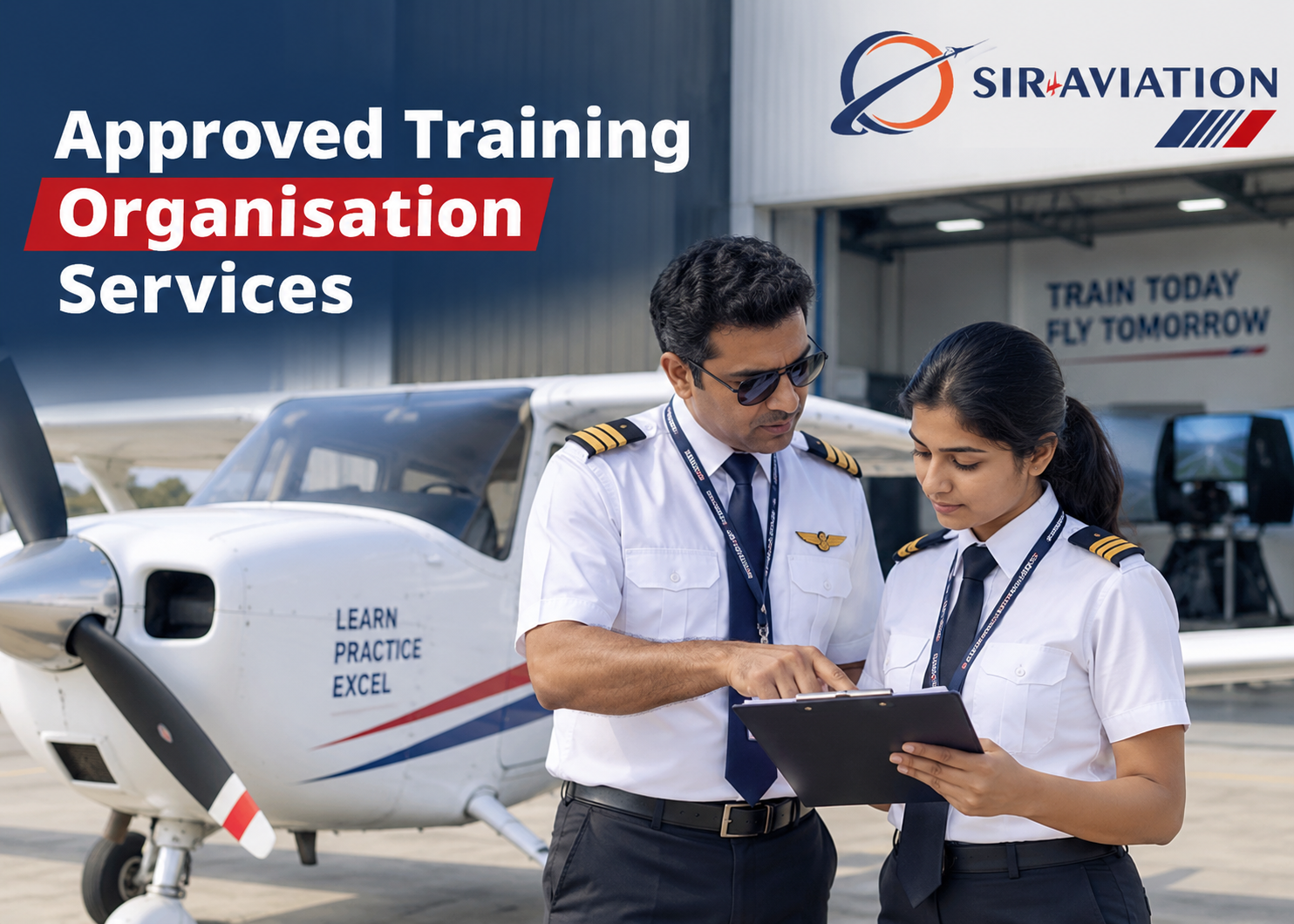
Establishing an aviation training organisation involves far more than hiring instructors and developing courses. Approved Training Organisation Services help providers interpret regulatory requirements, create compliant systems, prepare accurate documentation and demonstrate operational readiness to the relevant civil aviation authority. This structured support can reduce approval delays, prevent avoidable findings and build a training environment in which safety, competence and regulatory accountability remain central to every activity.
What Is an Approved Training Organisation?
An Approved Training Organisation, commonly called an ATO, is a training provider authorised by a competent aviation authority to deliver specified aviation training programmes. Depending on its approval scope, an organisation may train pilots, flight instructors, aircraft maintenance personnel, cabin crew, air traffic services personnel, remote pilots or other aviation professionals.
Approval is not a general permission to provide every type of aviation course. It normally identifies the courses, aircraft, simulators, facilities, locations and privileges accepted by the authority. The organisation must operate within this approved scope unless it receives formal permission for a change.
In India, aviation training organisations may fall under different regulatory provisions administered by the Directorate General of Civil Aviation. Applicable requirements depend on the proposed activity. For instance, the requirements governing flying training may differ from those applicable to aircraft type training, synthetic flight training devices, maintenance training or remote pilot training.
DGCA’s regulatory framework includes specific provisions for training organisations under Section 7, Series D of the Civil Aviation Requirements. It also publishes approval manuals and related material for defined training activities.
Why Regulatory Approval Matters
Aviation training directly affects operational safety. An inadequately trained pilot, engineer, instructor or technical professional may make decisions that place aircraft, passengers, employees and infrastructure at risk. Regulatory approval therefore provides formal assurance that a provider has established acceptable training, assessment and oversight arrangements.
The approval process examines whether the organisation can deliver its proposed courses consistently. Regulators may assess governance, instructor competence, facilities, training equipment, course content, examination controls, safety management, quality assurance and record-keeping practices.
Approval also protects students and aviation employers. It helps them confirm that the training is delivered through an authorised system and may be accepted for the intended licence, rating, certificate or professional qualification. Indian rules specify that relevant licences must be acquired through flying training organisations approved or recognised by the Director General.
However, obtaining an approval certificate is only the beginning. The organisation must continue meeting the applicable requirements throughout the validity period and whenever its operations change.
How Approved Training Organisation Services Support Applicants
Professional support converts complex regulatory requirements into an organised approval programme. It allows promoters and management teams to identify what must be completed, who is responsible and what evidence the authority is likely to examine.
1. Determining the Correct Approval Category
A provider must first determine which approval applies to its planned training activities. Choosing the wrong category can result in unsuitable documents, incorrect infrastructure decisions and considerable rework.
The assessment may consider:
- The aviation personnel to be trained
- The licences, ratings or certificates connected with the course
- Whether practical, theoretical, simulator or flight training will be delivered
- The proposed aircraft or training devices
- The intended training location
- The organisation’s ownership and management structure
- The applicable DGCA requirements, manuals and circulars
Consultants can create an approval applicability matrix linking each proposed activity with its regulatory basis. This gives promoters a clearer view of the approval scope before they invest heavily in aircraft, equipment, premises or staffing.
2. Conducting a Regulatory Gap Assessment
A gap assessment compares the organisation’s existing arrangements with the applicable regulatory requirements. It identifies what already meets the expected standard and what must be created, corrected or strengthened.
The review may cover infrastructure, personnel, course design, aircraft availability, equipment, manuals, safety processes, document control and internal surveillance. Each shortfall can then be assigned an owner, completion date and required form of evidence.
This exercise is particularly useful for established academies seeking to add courses, aircraft types or training locations. It reveals whether existing systems can support the expanded scope or require revision before an application is submitted.
A well-prepared gap report also helps management distinguish mandatory requirements from desirable enhancements. Resources can then be directed towards issues that affect approval readiness and operational safety.
Developing Regulatory Manuals and Documents
Documentation is one of the most demanding parts of an ATO approval project. Regulators expect manuals to describe how the organisation will actually operate, not merely repeat regulatory wording.
Depending on the approval category, documentation may include:
- Training and procedures manuals
- Operations manuals
- Quality manuals
- Safety management documentation
- Course syllabi and lesson plans
- Instructor and examiner procedures
- Student assessment policies
- Document-control procedures
- Emergency response arrangements
- Record-retention policies
- Organisation charts and responsibility statements
- Aircraft or simulator operating procedures
Approved Training Organisation Services assist with developing these documents around the organisation’s real structure, resources and intended activities. Every procedure should identify responsibilities, workflow, records and control measures.
Copied templates often create problems because they may refer to unavailable personnel, unsuitable aircraft or processes that the applicant cannot demonstrate. A manual must align with actual operations. If inspectors find a significant difference between written procedures and workplace practices, confidence in the entire compliance system may be weakened.
Creating a Suitable Organisational Structure
Regulators need assurance that responsibility and authority are clearly assigned. An ATO normally requires accountable leadership and qualified personnel for training, operations, safety and quality functions.
Support specialists can help define:
- Reporting lines
- Management responsibilities
- Required qualifications
- Delegated authority
- Independence of oversight functions
- Procedures for absence or replacement
- Communication between operational departments
- Escalation of safety and compliance concerns
Job titles alone do not establish compliance. Each nominated person must know what decisions they can make, what records they must maintain and when an issue must be reported to senior management or the regulator.
The proposed structure must also suit the organisation’s size. A smaller provider may combine certain duties where regulations permit, but potential conflicts of interest must be controlled. A larger academy may need dedicated personnel across several bases or departments.
Supporting Course and Syllabus Development
A compliant training syllabus must convert regulatory outcomes into logical learning stages. It should define what students will study, how instruction will be delivered and how competence will be measured.
Specialist support can help providers establish:
- Entry requirements
- Learning objectives
- Theoretical and practical content
- Training hours
- Course sequencing
- Instructor-to-student ratios
- Progress checks
- Examinations and skill assessments
- Remedial training procedures
- Completion standards
- Credit for previous training, where permitted
Course material should reflect the intended licence or competency standard. It must also remain consistent across lesson plans, instructor notes, student records and examination systems.
Competency-based training requires particular care. It should assess whether a trainee can apply knowledge and skills to the required performance standard rather than merely complete a fixed number of hours. ICAO training procedures state that ATOs covered by the relevant Annex 1 provisions are required to establish a quality assurance system to support the achievement of training standards.
Verifying Instructor and Examiner Competence
Qualified instructors are fundamental to approval. Regulators may examine licences, ratings, technical knowledge, instructional ability, operational experience, recurrent training and recent activity.
ATO support can help establish a controlled process for:
- Verifying licences and certificates
- Checking instructor privileges
- Maintaining qualification records
- Completing induction training
- Standardising instructional methods
- Monitoring instructor performance
- Scheduling recurrent training
- Recording competency assessments
- Managing expired or restricted qualifications
Instructor standardisation is especially important when several instructors deliver the same course. Students should receive consistent instruction and be assessed against the same criteria.
Examiner independence must also be considered. Assessment arrangements should prevent conflicts of interest, protect examination material and ensure that pass or fail decisions are supported by reliable evidence.
Establishing Quality Assurance
Quality assurance verifies whether approved processes are being followed and whether the training system is producing acceptable results. It is an ongoing control mechanism rather than an activity performed only before an inspection.
An effective quality system may include:
- Planned internal audits
- Course and instructor observations
- Findings and corrective-action records
- Root-cause analysis
- Follow-up verification
- Student feedback
- Training performance indicators
- Management reviews
- Control of documents and records
- Periodic review of regulatory changes
Approved Training Organisation Services can help create an audit schedule based on operational risk. High-risk or frequently changing activities may require greater attention than stable administrative functions.
A finding should not be closed merely because a document has been corrected. The organisation should identify why the problem occurred, take proportionate action and verify that the solution remains effective. This approach reduces repeated non-compliance and improves confidence during regulatory surveillance.
Integrating Safety Management into Training Operations
Safety management should influence daily decisions across flight operations, maintenance support, ramp activity, simulator use and classroom instruction. ICAO describes safety management provisions as part of a proactive approach to managing aviation safety risks.
Depending on the approval scope and applicable regulations, an ATO may need systems for:
- Hazard reporting
- Risk assessment
- Occurrence reporting
- Safety performance monitoring
- Emergency response
- Management of change
- Safety communication
- Staff safety training
- Protection of safety information
- Corrective and preventive action
Aviation consultants can help connect these processes with training operations. For example, repeated unstable approaches during instructional flights may indicate a need to examine syllabus design, instructor standardisation, student progression criteria or local operating conditions.
A positive reporting culture is equally important. Staff and trainees should know how to report hazards without fear of unfair treatment while remaining accountable for deliberate violations.
Preparing Facilities, Aircraft and Training Equipment
The approval team may inspect classrooms, briefing rooms, operational offices, examination areas, libraries, records storage and student facilities. Where applicable, it may also assess aircraft, simulators, maintenance arrangements and flight-planning resources.
ATO specialists can conduct readiness inspections to check whether facilities support the proposed student capacity and course scope. They may examine:
- Classroom size and environment
- Training aids and reference material
- Security of examination areas
- Accessibility of current manuals
- Aircraft documentation
- Simulator qualification status
- Equipment serviceability
- Fire and emergency arrangements
- Communication systems
- Controlled storage of records
Infrastructure should be assessed as an integrated system. Having suitable aircraft is insufficient if instructor availability, maintenance support, weather limitations or aerodrome capacity prevents the planned training schedule from being delivered safely.
Strengthening Training and Operational Records
Regulators rely on records to verify that students completed authorised training and met the required standards. Missing, inconsistent or unauthorised entries may create doubts about the validity of training.
A controlled records system should capture enrolment information, attendance, flight time, simulator sessions, examinations, progress checks, instructor authorisations and course completion. It should also control corrections, access, storage, retention and retrieval.
Electronic systems can improve traceability, but software alone does not establish compliance. User permissions, backups, data validation and change histories must be addressed. Paper-based records require equivalent protection against loss, damage or unauthorised alteration.
Specialist assistance can align record formats with manual procedures and regulatory expectations. Sample records can also be tested before formal operations begin.
Managing the Application and Inspection Process
An approval application usually passes through document review, technical evaluation, inspections, demonstrations and closure of findings. Weak coordination can cause repeated submissions and extended delays.
Support services can help create an application index, evidence register and response tracker. They can also prepare management and operational personnel for interviews without encouraging rehearsed or misleading answers.
Before the formal assessment, a mock audit can test whether:
- Manuals match actual practices
- Personnel know their responsibilities
- Records can be retrieved promptly
- Facilities are ready
- Training demonstrations meet approved procedures
- Previous observations have been resolved
- Changes are properly controlled
If the authority raises findings, responses should include correction, root cause, corrective action, responsible person, target date and supporting evidence. Vague assurances rarely demonstrate sustainable compliance.
Maintaining Approval After Certification
Regulatory compliance does not end when approval is issued. Authorities may conduct scheduled inspections, surveillance visits or focused audits. Organisations must remain prepared to show continued conformity.
Ongoing support can assist with manual amendments, internal audits, renewal applications, staff changes and expansion of approval scope. It can also monitor relevant regulatory publications so that management can assess whether procedures, courses or resources require revision.
Changes involving ownership, key personnel, premises, aircraft, simulators, course content or training locations may require prior approval or notification. Implementing a significant change without following the prescribed process can place the organisation’s approval at risk.
A formal management-of-change process allows the provider to identify regulatory and safety consequences before implementation.
How SIR Aviation Can Support Training Providers
SIR Aviation can assist aviation training organisations through approval planning, regulatory assessment, documentation development, operational preparation and audit support. The service can be adapted for a new applicant, an established provider seeking renewal or an organisation expanding its approved scope.
The engagement may cover regulatory mapping, manual preparation, syllabus review, quality and safety processes, inspection readiness, finding closure and post-approval compliance support. Final approval, however, remains subject to the relevant authority’s assessment and the applicant’s ability to satisfy every applicable requirement.
By creating systems that employees can follow consistently, an organisation moves beyond short-term inspection preparation. It develops a reliable operating structure that supports safe training, dependable records and continual regulatory conformity.
Conclusion
ATO approval demands alignment between regulations, people, courses, facilities, equipment and documented procedures. Structured professional support helps training providers identify gaps, prepare credible evidence and build systems capable of withstanding regulatory scrutiny. When compliance becomes part of routine operations rather than a last-minute exercise, an aviation academy is better positioned to maintain approval, protect training quality and support safer professional development.
Frequently Asked Questions
Can Approved Training Organisation Services guarantee DGCA approval?
No consultant can guarantee DGCA approval. The authority makes its decision after reviewing the applicant’s documents, personnel, facilities, equipment and demonstrated capability. Professional support can improve application quality and readiness, but the training provider remains responsible for meeting every applicable requirement.
When should a training provider seek ATO approval support?
Support is most valuable during initial planning, before major spending commitments are made. It can also assist organisations facing renewal, regulatory findings, management changes, new courses, additional aircraft, revised facilities or expansion to another training location.
Do Approved Training Organisation Services continue after certification?
Yes. Post-approval assistance may include internal audits, manual amendments, regulatory monitoring, staff-change management, renewal preparation and support during surveillance inspections. Continuing oversight helps ensure that approved procedures remain aligned with actual operations and current requirements.