
Medical Evacuation Flights India: Process, Cost & Benefits
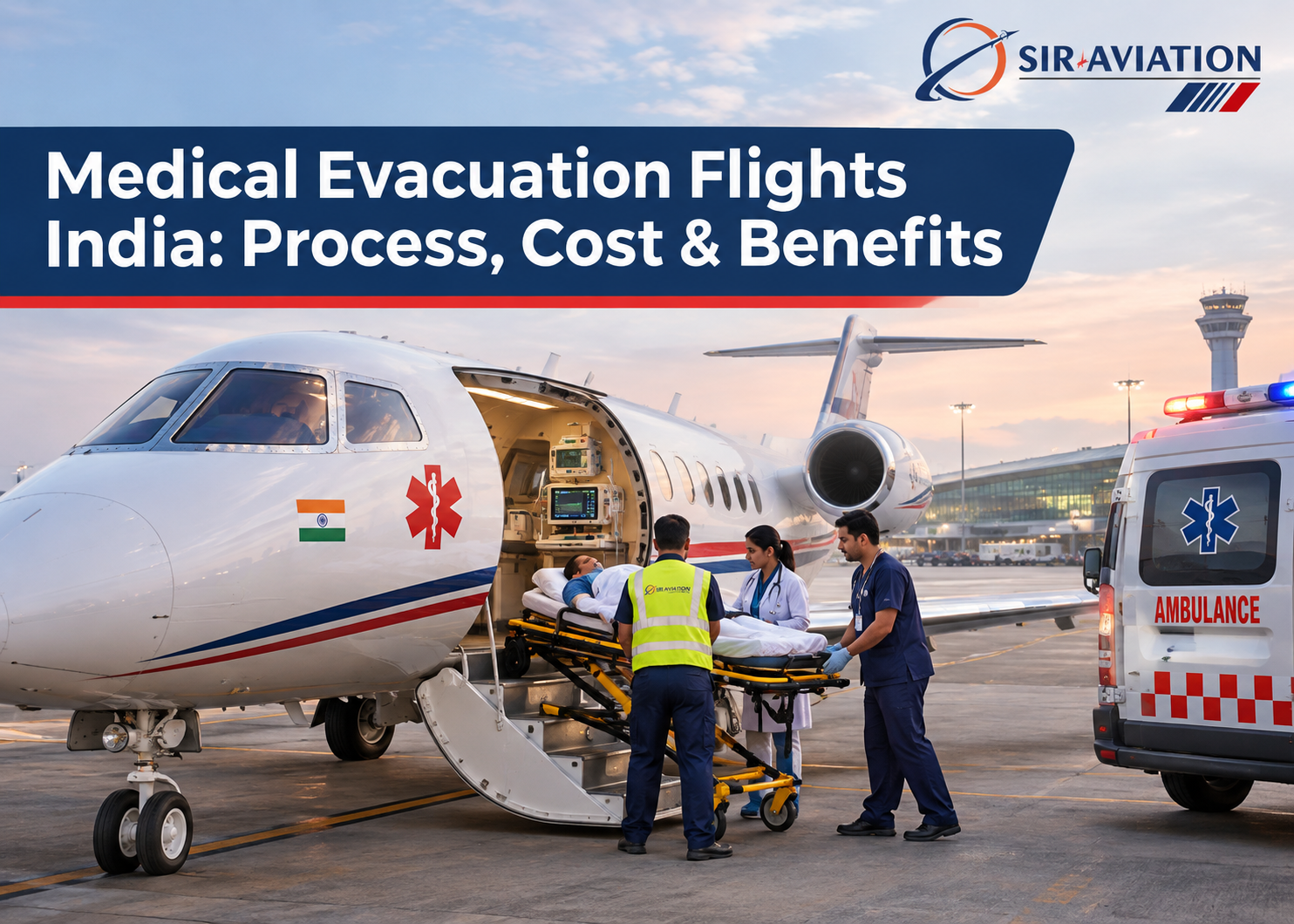
Medical emergencies require quick decisions, especially when patients need specialised treatment unavailable at their current location. Medical evacuation flights India provide a reliable transportation option for critically ill or injured patients who require medical supervision during long-distance transfers. These services use specially equipped aircraft, trained healthcare professionals and coordinated hospital arrangements to support patient safety throughout the journey. From emergency intercity transfers to international medical repatriation, air evacuation helps patients reach appropriate healthcare facilities while receiving essential medical care in transit.
What Are Medical Evacuation Flights in India?
Medical evacuation flights are specially arranged air transport services that move patients between healthcare facilities when their medical condition, treatment requirements or geographical location make conventional transportation unsuitable.
Unlike ordinary passenger flights, dedicated medical evacuation aircraft can accommodate stretchers, medical equipment, oxygen systems and healthcare professionals who provide continuous patient monitoring.
These services support patients who require urgent treatment, advanced medical procedures, intensive care or specialised rehabilitation at another medical facility.
Medical evacuation generally involves three essential components:
-
Medical assistance: Qualified healthcare professionals monitor the patient’s condition and administer necessary treatment during transportation.
-
Aviation coordination: The aviation team arranges suitable aircraft, flight routes, airport permissions and operational requirements.
-
Hospital coordination: Healthcare facilities manage patient discharge, clinical documentation, admission arrangements and medical handovers.
The primary objective is to maintain continuity of care while transferring patients to facilities equipped to meet their medical needs.
When Are Medical Evacuation Flights Necessary?
Not every medical emergency requires an aircraft. Doctors recommend air evacuation when the anticipated clinical benefits justify the transport risks and when road or conventional air travel cannot adequately meet the patient’s requirements.
1. Critical Medical Emergencies
Patients experiencing severe cardiac complications, respiratory failure or other life-threatening conditions may require advanced treatment at specialised hospitals.
Medical evacuation aircraft can accommodate essential life-support equipment and qualified medical personnel when the clinical team considers air transportation appropriate.
2. Serious Accidents and Trauma
Major road accidents, industrial injuries and traumatic incidents sometimes require immediate access to specialist surgical facilities.
Patients with severe injuries may benefit from medically supervised air transfers when ground transportation involves substantial delays.
3. Transfers Between Hospitals
Some hospitals lack advanced neurological, cardiac, neonatal or critical care facilities.
Medical evacuation services help transfer patients from smaller healthcare centres to tertiary hospitals that offer the required treatment.
4. Medical Emergencies in Remote Areas
Mountainous regions, islands and locations with limited road infrastructure can create significant transportation difficulties.
Helicopter evacuation may provide an alternative where suitable landing facilities, weather conditions and aviation permissions allow operations.
5. International Medical Repatriation
Patients who experience serious illnesses or injuries while travelling abroad may require transportation to India or another country.
International medical evacuation involves coordinating medical clearance, immigration documentation, aviation permissions and hospital admission.
Types of Medical Evacuation Flights Available in India
Healthcare requirements, geographical conditions and travel distances determine the most suitable medical evacuation option.
Fixed-Wing Air Ambulance
Fixed-wing aircraft serve patients who require medium- or long-distance transportation between cities or countries.
These aircraft can accommodate medical stretchers, monitoring systems, oxygen supplies and other essential equipment, depending on their configuration.
Fixed-wing ambulances commonly support intercity hospital transfers, critical care transportation and international medical repatriation.
Helicopter Medical Evacuation
Helicopters offer transportation options for locations with difficult geographical conditions or limited access to conventional airports.
They can support emergency evacuations from mountainous regions, remote communities and disaster-affected locations.
However, operations depend on suitable landing areas, weather conditions, aircraft capabilities and regulatory permissions.
Commercial Airline Medical Escort
Some medically stable patients can travel on scheduled commercial flights with professional medical assistance.
A qualified doctor or nurse accompanies the patient and provides appropriate monitoring during the journey.
Depending on medical requirements and airline approval, arrangements may include supplementary oxygen, wheelchair assistance or approved stretcher facilities.
How Does the Medical Evacuation Flight Process Work?
Step-by-step medical evacuation procedure
Every successful medical evacuation requires coordination between healthcare professionals, aviation operators, hospitals and ground transportation teams.
Step 1: Initial Medical Evacuation Request
The process begins when a family member, hospital representative or authorised individual requests medical transportation.
The coordination team collects essential information, including the patient’s diagnosis, current hospital, destination, medical condition and transportation urgency.
Accurate information helps the team identify suitable evacuation arrangements.
Step 2: Medical Assessment and Clearance
The treating doctor evaluates whether the patient can safely undergo air transportation.
Medical professionals review vital signs, oxygen requirements, existing treatment, potential complications and necessary life-support arrangements.
A patient may require stabilisation before departure. Doctors may also recommend postponing the transfer when aviation-related risks outweigh the expected benefits.
Step 3: Aircraft Selection and Flight Planning
The aviation team identifies an appropriate aircraft based on the patient’s medical requirements, travel distance and airport accessibility.
Flight planning considers aircraft availability, cabin configuration, weather conditions, operating restrictions and necessary permissions.
Medical and aviation teams coordinate arrangements to accommodate essential equipment and patient care requirements.
Step 4: Hospital Coordination
The sending hospital prepares medical records, discharge documentation and clinical handover information.
Meanwhile, the receiving hospital confirms its ability to accept the patient and provide appropriate treatment.
This coordination reduces the risk of unnecessary delays after arrival.
Step 5: Ground Ambulance Arrangement
Ground transportation connects the sending hospital with the departure airport.
Where necessary, an appropriately equipped ambulance provides continuous medical supervision during this journey.
Another ambulance transfers the patient from the destination airport to the receiving hospital.
Step 6: In-Flight Medical Monitoring
Medical professionals monitor the patient’s condition throughout the flight.
Depending on clinical requirements, they assess oxygen saturation, blood pressure, heart rhythm, respiratory function and medication administration.
The medical team also remains prepared to manage potential complications using the equipment available on board.
Step 7: Arrival and Hospital Handover
After landing, the ground ambulance team transports the patient to the designated healthcare facility.
Medical personnel communicate relevant clinical observations, treatment administered during transportation and any changes in the patient’s condition.
The receiving healthcare team then assumes responsibility for further treatment.
What Is the Cost of Medical Evacuation Flights in India?
Medical evacuation flight costs vary considerably because each mission involves different aircraft, medical requirements and operational arrangements.
Dedicated domestic air ambulance transfers may cost approximately ₹5 lakh to ₹20 lakh or more. Certain shorter helicopter missions may cost around ₹2 lakh to ₹10 lakh, although complex operations can exceed these estimates.
These figures represent broad market estimates, not fixed tariffs or confirmed SIR Aviation quotations.
Key Factors Affecting Medical Evacuation Costs
| Cost factor | How it affects pricing |
|---|---|
| Travel distance | Longer routes increase flying time and fuel requirements. |
| Aircraft category | Helicopters, turboprops and jets have different operating costs. |
| Medical personnel | Specialist doctors and additional healthcare staff may increase charges. |
| Medical equipment | Ventilators, intensive care systems and specialised equipment affect costs. |
| Aircraft positioning | Bringing an aircraft from another airport can add expenses. |
| Airport operations | Handling charges, permissions and extended operating hours may affect pricing. |
| Ground transportation | Ambulance transfers between hospitals and airports may carry additional charges. |
International evacuation costs also depend on destination, flight permissions, medical arrangements and cross-border documentation.
Families should request an itemised quotation that clearly identifies included services, exclusions and potential additional charges.
Does Health Insurance Cover Medical Evacuation Flights?
Some health insurance policies provide emergency air ambulance benefits, subject to policy conditions, medical necessity and coverage limits.
However, insurers may exclude certain transportation arrangements or require prior authorisation.
Patients and families should confirm eligibility, reimbursement requirements, documentation and applicable financial limits directly with their insurance provider before booking whenever circumstances permit.
What Are the Major Benefits of Medical Evacuation Flights?
Medical evacuation offers several practical advantages when doctors consider air transportation appropriate.
Faster Access to Specialised Hospitals
Air transportation can reduce travel time across long distances, particularly when road travel involves substantial delays.
This advantage may help patients access specialist medical facilities more promptly.
Continuous Medical Supervision
Dedicated medical evacuation flights allow qualified healthcare professionals to monitor patients throughout transportation.
Appropriate equipment and trained personnel support ongoing treatment and clinical observation.
Access to Remote Locations
Helicopters can serve certain locations where roads or conventional airport infrastructure present transportation challenges.
This capability supports medical access in geographically difficult regions.
Personalised Transportation Arrangements
Medical teams can tailor evacuation planning to the patient’s condition, required equipment and level of clinical support.
Individual assessment helps determine whether a dedicated aircraft or another medically supported transportation method is appropriate.
Coordinated Hospital Transfers
Medical evacuation arrangements can connect ambulance services, aviation teams and healthcare facilities.
Effective coordination promotes continuity of care and helps reduce avoidable administrative and transportation delays.
What Medical Equipment Is Available During Air Evacuation?
Medical equipment varies according to the aircraft configuration and the patient’s clinical requirements.
A suitably equipped medical aircraft may carry:
-
Portable ventilators and respiratory support equipment
-
Multiparameter patient monitors
-
Oxygen delivery systems
-
Defibrillators and emergency resuscitation equipment
-
Infusion and syringe pumps
-
Suction devices and airway management equipment
-
Essential emergency medications
-
Specialised neonatal transportation equipment, when required
The medical team must assess equipment availability, compatibility, oxygen capacity and backup arrangements before departure.
Not every aircraft carries every device. Patients requiring advanced support need individual assessment and an appropriately configured medical transport service.
Important Safety Considerations Before Medical Evacuation
Patient safety depends on medical assessment, operational planning and effective communication.
Doctors must consider how cabin pressure, oxygen availability, flight duration and patient movement could affect the individual’s condition.
Certain medical conditions may create additional risks during flight. Consequently, healthcare professionals should assess clinical stability and determine whether specialised precautions are necessary.
The aviation and medical teams should also verify equipment functionality, essential medication supplies, patient restraint arrangements and emergency procedures.
Aircraft must operate through appropriately authorised aviation operators, following applicable safety and operational requirements.
A medical evacuation flight should proceed only when the responsible clinical and aviation teams consider the proposed transportation appropriate and feasible.
How to Choose a Medical Evacuation Flight Provider in India
Selecting a suitable medical aviation service requires more than comparing prices.
Families and healthcare representatives should evaluate the provider’s ability to coordinate clinical care, aviation operations and hospital transportation.
Important considerations include qualified medical personnel, suitable aircraft configurations, operational authorisations, emergency communication arrangements and transparent pricing.
A reliable coordination process should also identify potential complications, discuss realistic departure arrangements and clarify which services the quotation includes.
Before confirming transportation, families should establish whether ground ambulance services, specialist equipment, airport handling and medical escorts form part of the proposed package.
Why Consider SIR Aviation for Medical Evacuation Flights?
SIR Aviation provides medical aviation coordination services for patients requiring specialised air transportation within India and internationally.
The company assists with evaluating transportation requirements, identifying suitable aviation arrangements and coordinating medical evacuation logistics according to the patient’s circumstances.
Its services focus on connecting aviation planning with healthcare requirements, including medical support, aircraft selection and transportation coordination.
Patients, families and hospital representatives can contact SIR Aviation to discuss medical evacuation requirements and request a mission-specific quotation.
Conclusion
Medical evacuation flights provide an important transportation option for patients who require specialised healthcare beyond their current location. Their effectiveness depends on appropriate medical assessment, suitable aircraft, qualified personnel and coordinated hospital arrangements.
Although transportation costs vary, careful planning helps families make informed decisions about patient safety and medical requirements. SIR Aviation supports medical evacuation coordination across domestic and international routes, helping patients and healthcare providers arrange suitable air transportation according to individual circumstances.
Frequently Asked Questions
How much do medical evacuation flights cost in India?
Dedicated domestic medical evacuation flights may cost approximately ₹5 lakh to ₹20 lakh or more, depending on the route, aircraft and medical requirements. Shorter helicopter transfers may have lower starting costs. Patients should obtain a detailed quotation that includes medical personnel, equipment, airport charges and ground transportation requirements.
Can medical evacuation flights transport ventilator-dependent patients in India?
Yes. Appropriately equipped air ambulance aircraft can transport certain ventilator-dependent patients with qualified medical professionals. Doctors must evaluate the patient's clinical stability, ventilation requirements and potential flight-related risks. The transportation team must ensure that suitable equipment, oxygen supplies and backup systems are available.
How quickly can medical evacuation flights be arranged in India?
Arrangement times vary according to the patient's condition, aircraft availability, medical staffing, airport permissions, weather and hospital readiness. Some urgent transfers can be organised within a few hours under favourable circumstances, but operators cannot guarantee immediate departure. Medical assessment and aviation safety requirements remain essential throughout the process.