
Aircraft for Film Shooting in India: Types, Rental Costs, Permissions and Booking Process
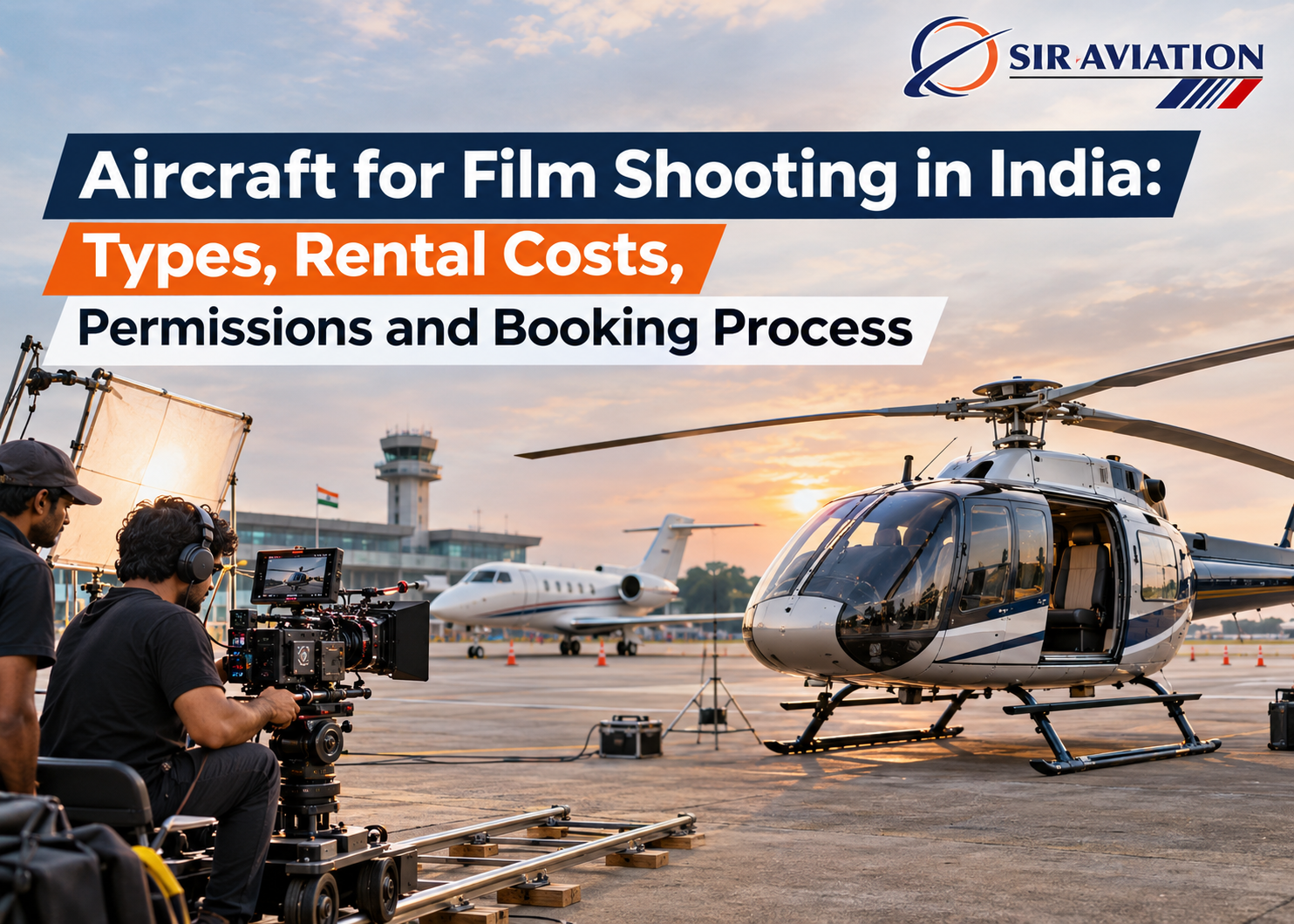
The demand for aircraft for film shooting in India continues to grow as filmmakers seek cinematic aerial sequences, realistic aviation scenes and impressive visual storytelling. From Bollywood productions and OTT series to television commercials and documentaries, aircraft play an important role in creating memorable footage. However, selecting a suitable aircraft requires careful consideration of rental costs, filming permissions, operational safety and technical requirements. Professional aviation service providers such as SIR Aviation help production teams coordinate aircraft selection, charter arrangements and the operational requirements associated with aviation-based filming.
What Is Aircraft Rental for Film Shooting?
Aircraft rental for film shooting involves hiring helicopters, aeroplanes, private jets or other aviation equipment for cinematography and production requirements.
Depending on the production, filmmakers may use aircraft for aerial photography, action sequences, passenger cabin scenes, airport sequences or promotional advertisements.
Some productions require an operational aircraft capable of performing approved flights, while others need a stationary aircraft for interior or exterior filming.
Professional aviation rental arrangements may include aircraft sourcing, flight crew, operational planning, airport coordination and assistance with relevant permissions.
The selection depends on the shooting location, production budget, number of crew members and the type of footage required.
For example, a helicopter may suit an aerial sequence over a coastline, while a private jet could provide a realistic setting for a luxury travel scene.
Choosing the appropriate aircraft helps production teams achieve the required visual results while maintaining safety and controlling expenses.
Why Do Film Production Companies Rent Aircraft in India?
Aircraft provide filmmaking opportunities that conventional cameras and ground-based equipment cannot always replicate.
Realistic Aviation Scenes
Filmmakers frequently require authentic aircraft interiors, cockpit environments and aviation-related settings.
Using a real aircraft helps create convincing scenes involving business travel, emergency operations, political movements and luxury experiences.
High-Quality Aerial Cinematography
Helicopters and aeroplanes can carry approved professional camera systems to capture landscapes, mountains, coastlines and urban environments.
These platforms allow filmmakers to record cinematic footage across extensive geographical areas.
Action and Adventure Sequences
Aircraft can support approved aviation sequences involving take-offs, landings, flight operations and coordinated action scenes.
Every manoeuvre must remain within the aircraft’s certified operating limitations and applicable aviation requirements.
Commercial Advertising
Luxury brands, travel companies, automobile manufacturers and tourism businesses frequently incorporate aircraft into advertising campaigns.
Aircraft can communicate exclusivity, mobility, adventure and premium experiences.
Documentary Productions
Documentary filmmakers may use aircraft to capture environmental landscapes, geographical features and large-scale infrastructure.
Professional aviation arrangements help production companies access suitable aerial platforms for approved filming activities.
Types of Aircraft Available for Film Shooting in India
Different aviation platforms serve different cinematic requirements. Production teams should evaluate their shooting objectives before choosing an aircraft.
1. Helicopters for Aerial Film Shooting
Helicopters rank among the most versatile options for aerial cinematography because they offer flexible positioning and controlled flight operations.
They may support filming over approved landscapes, coastal areas and other suitable locations.
Popular helicopter categories include:
-
Light single-engine helicopters
-
Twin-engine helicopters
-
Utility helicopters
-
Executive helicopters
-
Specialised aerial filming helicopters
Depending on aircraft suitability and operator approval, some helicopters can accommodate professional stabilised camera systems.
Helicopters work particularly well for landscape footage, cinematic establishing shots, tourism promotions and aviation sequences.
Their suitability depends on payload capacity, camera configuration, airspace restrictions, weather and operational limitations.
2. Private Jets for Film Shooting
Private jets provide sophisticated interiors and realistic aviation settings for premium productions.
Filmmakers often use them for corporate dramas, luxury advertisements, celebrity scenes and international travel sequences.
Private jets can offer:
-
Premium passenger cabins
-
Executive seating arrangements
-
Realistic aviation interiors
-
Exterior aircraft filming opportunities
-
Professional business travel settings
Production companies should confirm whether the aircraft owner permits filming, interior modifications or specialised lighting arrangements.
Stationary cabin filming may prove more practical than airborne filming when a scene requires extensive equipment and multiple camera angles.
3. Fixed-Wing Aircraft for Cinematography
Fixed-wing aeroplanes can support aerial footage across large geographical areas.
These aircraft may suit documentaries, infrastructure filming, landscape cinematography and other approved aerial operations.
Turboprop aircraft can offer useful endurance and operating flexibility, depending on their configuration.
Camera placement, aircraft modifications and equipment installation require assessment and appropriate authorisation.
Fixed-wing aircraft may also support cinematic sequences featuring regional aviation, business travel and airport operations.
4. Small Aircraft for Film Productions
Smaller aeroplanes can provide cost-effective solutions for suitable filming requirements.
These aircraft may work well for scenes involving pilot training, private aviation, regional travel or adventure stories.
Their suitability depends on available cabin space, payload limitations, crew requirements and filming equipment.
Small aircraft generally cannot accommodate large production teams, making detailed technical planning essential.
5. Stationary Aircraft for Ground Shooting
Not every production requires an aircraft to fly.
Stationary aircraft can support cockpit scenes, passenger interactions, boarding sequences and exterior shots.
Ground-based filming may offer greater control over lighting, sound and camera positioning.
Depending on the location and circumstances, producers may arrange parked aircraft, hangar facilities or specially constructed aviation sets.
Airport access and security permissions may still apply, even when the aircraft remains stationary.
Aircraft Rental Cost for Film Shooting in India
Aircraft rental costs depend on aircraft category, flight duration, shooting location, equipment requirements and operational arrangements.
Published charter rates provide useful budgeting benchmarks, although specialist cinematography missions may require separate commercial quotations.
Helicopter Rental Charges
Indicative helicopter charter rates in India include:
-
Single-engine helicopters: Approximately ₹1.2 lakh to ₹2.75 lakh per flying hour.
-
Twin-engine helicopters: Approximately ₹2.5 lakh to ₹5.5 lakh per flying hour.
-
Specialised utility helicopters: Higher charges may apply according to aircraft capacity and mission requirements.
These ranges reflect published charter-market estimates rather than guaranteed filming quotations.
SAFE FLY AVIATION+1
Private Jet Rental Charges
Indicative private jet charter prices include:
-
Light private jets: ₹2.7 lakh to ₹4.2 lakh per flying hour.
-
Midsize private jets: ₹4.2 lakh to ₹7.5 lakh per flying hour.
-
Heavy private jets: ₹7.5 lakh to ₹12 lakh or more per flying hour.
Fixed-Wing Aircraft Rental Charges
Turboprop aircraft may cost approximately ₹1.6 lakh to ₹2.6 lakh per flying hour, depending on their model and operating arrangements.
Actual filming quotations may differ substantially from ordinary passenger charter rates.
Safe Fly Aviation
Additional Expenses Affecting Aircraft Rental
Production companies should consider expenses beyond the advertised hourly rate.
These may include aircraft positioning, fuel adjustments, airport handling, parking, landing arrangements, camera equipment, crew accommodation and applicable taxes.
Specialised camera mounts and additional technical personnel may increase the total expenditure.
For example, two billable flying hours at ₹2.5 lakh per hour would produce a base flying charge of ₹5 lakh. Positioning, permissions, equipment and other expenses would increase the final amount.
A detailed written quotation helps producers avoid unexpected charges.
What Factors Influence Aircraft Rental Prices?
Several operational and production requirements determine the final rental cost.
Aircraft Type and Capacity
Larger aircraft generally involve higher operating expenses because of fuel consumption, maintenance requirements and crew arrangements.
Shooting Duration
Longer filming schedules increase aircraft utilisation and associated expenses.
Some operators also apply minimum daily flying-hour commitments.
Shooting Location
Remote locations may require additional positioning flights, ground arrangements and technical support.
Camera Equipment
Professional aerial cinematography may involve gyrostabilised cameras, specialist mounting systems and approved equipment configurations.
These requirements affect aircraft compatibility and operating costs.
Weather Conditions
Poor visibility, strong winds and unsuitable weather may disrupt shooting schedules.
Production teams should include reasonable contingency provisions.
Airport and Landing Charges
Airport handling, parking, landing arrangements and ground-service charges vary by location.
Aircraft Availability
Demand, positioning distance and aircraft availability can influence rental quotations.
Early planning may improve the range of suitable aircraft options.
What Permissions Are Required for Aircraft Film Shooting in India?
Filming with aircraft in India may involve aviation, airport, security and location-specific approvals.
The exact requirements depend on whether filming occurs inside an aircraft, at an airport, on the ground or during an actual flight.
DGCA and Aviation Requirements
The Directorate General of Civil Aviation (DGCA) regulates civil aviation safety in India.
Production companies should work with appropriately authorised operators and confirm whether their proposed filming activity requires specific aviation approvals.
Aircraft operations must follow applicable flight rules, airspace restrictions and air traffic control instructions.
Hiring an aircraft does not automatically authorise every proposed filming manoeuvre.
Airport Filming Permissions
Commercial filming inside airport premises generally requires permission from the relevant authorities.
India Cine Hub identifies the DGCA’s eGCA portal as an application route for airport ground photography. Its official information recommends applying at least two months before airport filming or relevant aerial-filming activities.
Airport operators may also impose separate conditions, fees and access requirements.
India Cine Hub+1
Security and Restricted Area Permissions
Filming near military establishments, sensitive government facilities, international borders or restricted areas may require additional clearances.
Production teams must verify location-specific restrictions before scheduling flights.
Local Administration Permissions
Police authorities, district administrations, landowners and local agencies may require separate permissions for certain filming activities.
Applicable requirements depend on location, public access and the nature of the production.
Drone Filming Permissions
Drone cinematography follows a different regulatory framework from manned aircraft operations.
Drone operators must check the applicable Digital Sky requirements, airspace restrictions and operating conditions.
Drone permission does not replace the authorisation required for a manned aircraft operation.
Documents Required for Aircraft Film Shooting
Production companies should prepare the necessary documents before requesting aircraft availability or filming permissions.
Common requirements may include a production company profile, shooting schedule, filming location details, proposed flight routes and a description of the intended aerial sequences.
Authorities or operators may request script extracts, crew identification, equipment specifications, insurance documents and technical camera details.
Foreign productions may face additional documentation and clearance requirements.
India Cine Hub explains that filming permissions are generally tied to specific dates and locations rather than issued as unrestricted blanket approvals.
Government of India
The aircraft operator should separately verify aircraft documentation, crew qualifications, applicable operational authorisations and technical suitability.
Preparing accurate documentation early helps prevent avoidable delays.
Step-by-Step Process to Book Aircraft for Film Shooting in India
A structured booking process helps filmmakers coordinate creative requirements, operational planning and regulatory compliance.
Step 1: Identify the Filming Requirement
Define the type of scene, aircraft appearance, shooting location, production schedule and intended camera angles.
Determine whether the aircraft must operate in flight or remain stationary.
Step 2: Select the Appropriate Aircraft
Compare helicopters, turboprops, private jets and other available aircraft according to the production’s technical requirements.
Consider cabin size, equipment compatibility, flight performance and operating restrictions.
Step 3: Contact an Aviation Service Provider
Approach an aviation coordination provider such as SIR Aviation with the production brief.
Share the proposed dates, locations, aircraft preferences and approximate budget.
Step 4: Request a Detailed Quotation
Obtain a written estimate covering aircraft charges, positioning, minimum flying hours, operational support and additional services.
Clarify payment terms, cancellation conditions and weather-related arrangements.
Step 5: Confirm Permissions
Identify the authorities responsible for the proposed filming activity.
The relevant applications should be completed before the planned operation.
Step 6: Finalise Technical Requirements
Coordinate aircraft configuration, camera equipment, crew numbers and communication procedures with the operator.
Any equipment installation must receive the necessary technical approval.
Step 7: Conduct Operational Planning
Review weather conditions, flight scheduling, location access and emergency arrangements.
The aircraft operator and pilot retain responsibility for determining whether the proposed flight can proceed safely.
Step 8: Execute the Filming Schedule
Conduct the approved filming activity according to the agreed operational plan.
Maintain communication between the production team, aviation personnel and relevant ground authorities.
Important Safety Considerations for Aerial Film Shooting
Safety must remain a central priority during every aviation-based production.
Film crews should never assume that cinematic requirements override aviation operating limitations.
Qualified Aviation Personnel
Only suitably qualified and authorised personnel should operate the aircraft.
Production teams should verify that the operator can legally undertake the intended activity.
Approved Camera Installations
Camera equipment must not interfere with aircraft controls, safety systems, emergency exits or normal operations.
Specialist installations require appropriate technical assessment and approval.
Weather Assessment
Pilots must evaluate weather conditions before and during flight operations.
A production schedule cannot justify operating in unsuitable conditions.
Passenger and Equipment Limits
The combined weight of passengers, equipment and other loads must remain within approved aircraft limitations.
Emergency Preparedness
Production teams should coordinate emergency communication procedures, medical arrangements and ground safety measures.
Clear responsibilities help prevent confusion during unexpected situations.
Insurance Coverage
Producers should verify the insurance arrangements covering the aircraft operation, filming activity, personnel and equipment.
Additional production insurance may be necessary depending on contractual requirements.
How to Choose the Right Aircraft Rental Service for Film Shooting
Selecting a suitable aviation service provider involves more than comparing hourly rental prices.
Production companies should evaluate the provider’s ability to coordinate specialised filming requirements.
Aviation Coordination Capabilities
Choose a provider that can assess aircraft suitability and communicate operational requirements clearly.
Aircraft Options
Access to different aircraft categories helps filmmakers match technical requirements with production budgets.
Transparent Pricing
A reliable quotation should explain applicable charges, exclusions and cancellation conditions.
Permission Support
Aviation coordination can help production teams identify relevant authorities and documentation requirements.
However, permissions remain subject to the decisions of the responsible authorities.
Operational Planning
Effective coordination between filmmakers, aircraft operators and ground personnel helps reduce scheduling conflicts.
Communication and Support
A responsive coordination process becomes particularly valuable when locations, schedules or equipment requirements change.
Benefits of Booking Aircraft Through SIR Aviation
SIR Aviation offers a professional point of contact for production companies seeking aviation-related filming arrangements in India.
Filmmakers can discuss aircraft requirements, shooting locations, technical needs and budget considerations to identify suitable charter options.
Aircraft Selection Assistance
Production teams can seek support in identifying aircraft categories suited to their filming objectives.
Rental Coordination
SIR Aviation can serve as a contact for discussing aircraft charter requirements, commercial quotations and related arrangements.
Filming Requirement Assessment
Providing clear information about the proposed sequence helps determine whether the requested aircraft configuration is practical.
Permission Planning
Production companies can discuss the approvals that may be relevant to their intended filming locations and aviation activities.
Production-Focused Communication
Coordinating aircraft requirements early helps production managers align aviation arrangements with the broader shooting schedule.
The final aircraft availability, operational arrangements and necessary approvals must be confirmed for each project.
Practical Tips to Reduce Aircraft Filming Costs
Film production companies can control aviation expenses through careful scheduling and realistic technical planning.
First, finalise the shot list before requesting aircraft quotations. A clear filming plan helps minimise unnecessary aircraft utilisation.
Second, consider whether stationary aircraft filming can replace certain airborne sequences without compromising the production’s creative objectives.
Third, group compatible aerial shots into an efficient schedule, subject to operational approval.
Fourth, evaluate aircraft positioning requirements. An aircraft based closer to the filming location may reduce additional flying expenses.
Finally, maintain contingency provisions for weather disruptions, technical limitations and scheduling changes.
Cost savings should never compromise aircraft safety, legal compliance or operational readiness.
Conclusion
Hiring an aircraft for film shooting in India requires careful coordination of aircraft selection, rental costs, permissions and operational safety. Helicopters, private jets and fixed-wing aeroplanes offer different possibilities for cinematic productions. Choosing the right option depends on filming objectives, technical requirements and budget.
SIR Aviation provides a point of contact for filmmakers seeking aviation-related shooting arrangements. Production companies can discuss their requirements with SIR Aviation to assess suitable aircraft options and plan their aviation needs.
Frequently Asked Questions
Is DGCA permission required for aircraft film shooting in India?
DGCA-related requirements depend on the aircraft operation and filming activity. Airport filming, aerial cinematography and operations involving restricted airspace may require different permissions. Production companies should coordinate with authorised aircraft operators and the relevant authorities before filming. Additional airport, security and local permissions may also apply.
Which aircraft is best for aerial film shooting in India?
Helicopters are often suitable for aerial cinematography because they offer flexible positioning and can accommodate approved stabilised camera installations. Fixed-wing aircraft may suit extensive landscape coverage, while private jets are useful for luxury aviation scenes. The best option depends on the intended footage, shooting location, budget and technical requirements.
How can I book an aircraft for film shooting in India?
Production companies can contact SIR Aviation with their proposed shooting dates, locations, aircraft preferences and technical requirements. The next steps involve assessing suitable aircraft options, obtaining commercial quotations, confirming operational arrangements and identifying required permissions. Final bookings depend on aircraft availability, applicable approvals and agreed contractual terms.