
Aeromedical Emergency Services in India: How They Work, Benefits, Costs, Aircraft Types and Emergency Booking Process
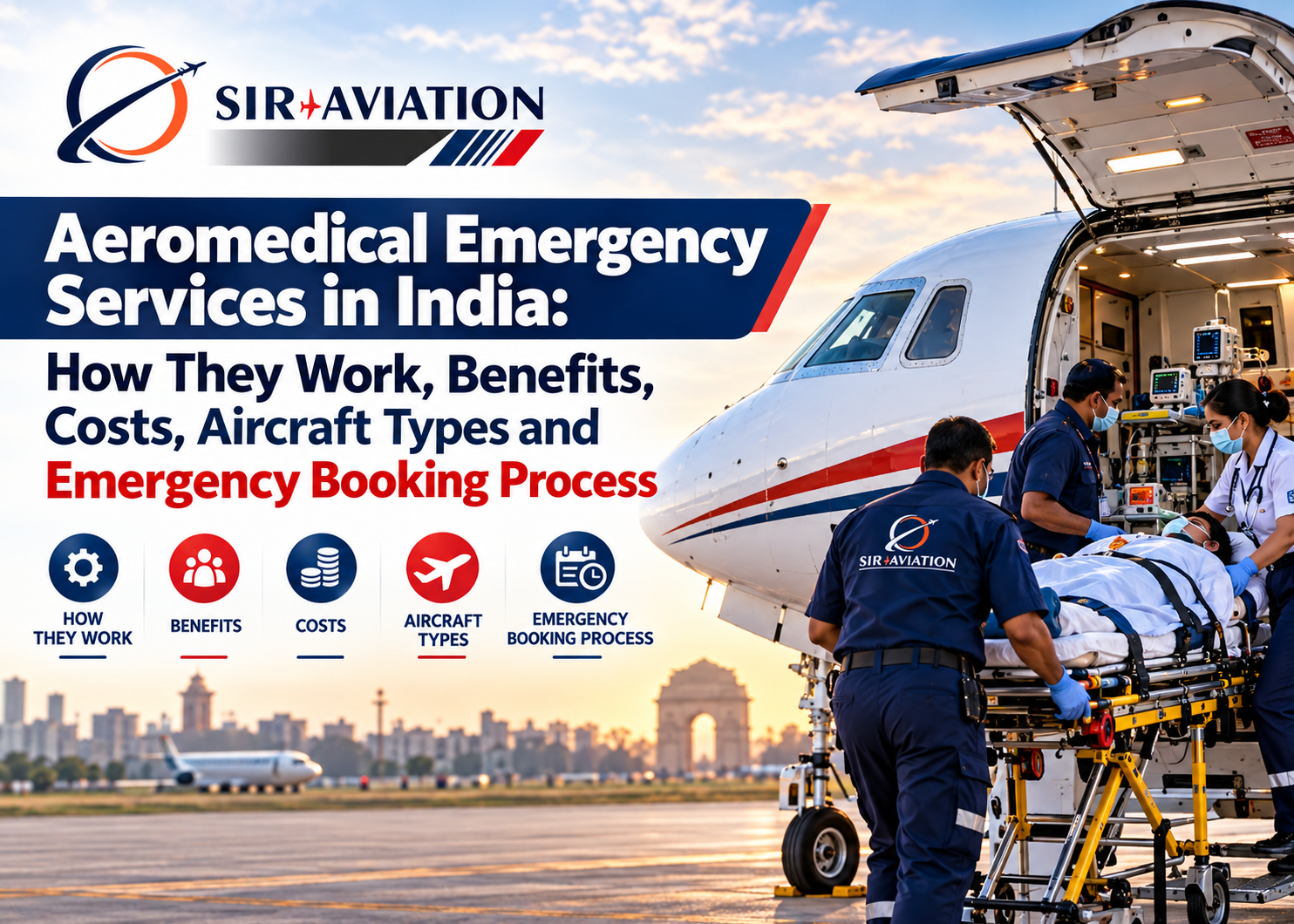
Medical emergencies require quick decisions, specialised treatment and reliable transportation. When ground ambulances cannot provide timely access to advanced healthcare facilities, aeromedical emergency services offer an alternative for transporting critically ill or injured patients. These services combine medical expertise, specialised aircraft and coordinated emergency operations to facilitate safe patient transfers across India and international destinations. SIR Aviation provides air ambulance solutions designed to support urgent medical transportation, hospital transfers and critical care requirements.
What Are Aeromedical Emergency Services?
Aeromedical emergency services involve transporting patients by specially equipped aircraft under the supervision of qualified medical professionals. These aircraft carry essential medical equipment, including oxygen systems, cardiac monitors, ventilators and emergency medicines.
The primary objective is to move patients between locations while maintaining appropriate medical care throughout the journey.
Unlike ordinary passenger transportation, aeromedical operations require coordination between aviation operators, medical teams, hospitals and ground ambulance providers.
Depending on the patient’s condition and transfer requirements, operators may use helicopters, fixed-wing aircraft or medically supported commercial flights.
Medical professionals assess each patient before departure to determine the appropriate transportation arrangements.
These services support emergency evacuations, inter-hospital transfers, specialised medical treatment and international patient repatriation.
When Are Aeromedical Emergency Services Required in India?
Medical transportation by aircraft becomes important when distance, geographical challenges or clinical urgency make conventional transportation unsuitable.
1. Critical Medical Emergencies
Patients suffering from severe trauma, cardiac complications, respiratory failure or neurological emergencies may require treatment at specialised hospitals.
When the required medical facilities are unavailable locally, an air ambulance can facilitate transportation to an appropriate healthcare institution.
However, medical professionals must assess the patient’s stability and determine whether air transportation is clinically suitable.
2. Inter-Hospital Patient Transfers
Hospitals sometimes refer patients to specialised institutions for advanced treatment, complex surgeries or intensive care.
Aeromedical transportation connects referring and receiving hospitals across cities and states.
For example, a patient undergoing treatment in a smaller city may require transfer to a specialist hospital in Delhi, Mumbai, Chennai or Bengaluru.
3. Emergency Evacuation from Remote Areas
Mountainous regions, islands and geographically isolated locations can create significant transportation challenges.
Helicopter ambulance services may help evacuate patients from suitable landing locations when road transportation is slow or impractical.
Actual operations depend on weather conditions, aircraft performance, landing permissions and medical assessments.
4. Neonatal and Paediatric Medical Transfers
Premature infants and critically ill children sometimes require specialised treatment at advanced healthcare institutions.
Medical aircraft can accommodate appropriately secured neonatal equipment, monitoring devices and trained paediatric healthcare professionals.
Each mission requires equipment and personnel suitable for the child’s clinical needs.
5. International Medical Repatriation
Patients receiving treatment overseas may need medically supervised transportation back to India.
Similarly, patients in India may require specialised medical treatment abroad.
International aeromedical operations involve medical clearance, immigration documentation, flight permissions and coordination between healthcare providers.
How Do Aeromedical Emergency Services Work?
Aeromedical transportation follows a structured process that combines clinical assessment, aviation planning and patient management.
Step 1: Emergency Request and Initial Assessment
The process begins when a hospital, family member or authorised representative contacts an aeromedical service provider.
The coordination team collects essential information, including:
- Patient’s age and current medical condition
- Present hospital and proposed destination
- Diagnosis and treatment requirements
- Oxygen or ventilator dependency
- Medical reports and attending doctor’s recommendations
- Emergency contact details
These details help determine the urgency and operational requirements of the transfer.
Step 2: Medical Evaluation and Flight Clearance
Qualified healthcare professionals review the patient’s condition before approving transportation.
They assess respiratory stability, cardiovascular status, neurological condition and ongoing medical treatment.
They also consider how cabin pressure, altitude and flight conditions could affect the patient.
Some medical conditions require additional stabilisation or treatment before flying. The medical team may recommend postponing transportation when the risks outweigh the benefits.
Step 3: Aircraft Selection and Flight Planning
The aviation coordination team identifies an appropriate aircraft based on distance, patient requirements and operational availability.
Fixed-wing aircraft generally suit longer journeys between airports, while helicopters may support shorter transfers involving suitable helipads.
The team evaluates flight duration, airport access, weather, fuel requirements and applicable aviation permissions.
Step 4: Medical Equipment and Crew Preparation
The medical team prepares equipment according to the patient’s condition.
A critically ill patient may require a ventilator, cardiac monitoring, infusion pumps, oxygen support and emergency medication.
The operator must also secure medical equipment properly and ensure compatibility with aircraft systems.
Healthcare professionals confirm that the required supplies and monitoring capabilities are available before departure.
Step 5: Ground Ambulance Coordination
Patient transportation involves more than the flight itself.
Ground ambulances transfer patients between hospitals and airports or helipads.
Coordination teams arrange appropriate vehicles at both ends, helping maintain continuity of medical care.
Step 6: In-Flight Patient Monitoring
During transportation, healthcare professionals monitor the patient’s vital signs and provide necessary clinical support.
They may monitor oxygen saturation, heart rate, blood pressure and respiratory function.
Medical interventions depend on the patient’s condition, the available equipment and the clinical team’s qualifications.
Step 7: Hospital Arrival and Medical Handover
After landing, a ground ambulance transports the patient to the receiving healthcare facility.
The medical transport team communicates relevant clinical information, treatment provided and changes in the patient’s condition.
The receiving hospital then assumes responsibility following an appropriate medical handover.
Types of Aircraft Used for Aeromedical Emergency Services
Aircraft selection directly affects flight duration, accessibility, medical equipment capacity and transportation costs.
Helicopter Air Ambulances
Helicopters provide flexibility for certain short-distance emergency transfers and difficult geographical locations.
They can operate from approved or otherwise authorised suitable landing areas, subject to operational restrictions.
Common applications include:
- Mountain and remote-area evacuations
- Short-distance medical transportation
- Transfers involving accessible hospital helipads
- Emergency response in difficult terrain
However, helicopters have limitations involving range, payload, weather and available cabin space.
Fixed-Wing Turboprop Aircraft
Turboprop aircraft support medical transportation between airports over medium distances.
Certain models, including appropriately configured King Air aircraft, can accommodate stretchers, medical professionals and emergency equipment.
Their operating characteristics may make them suitable for regional transfers where airport infrastructure permits operations.
Medical Jet Aircraft
Business jets configured for medical transportation generally offer higher cruising speeds and longer operating ranges.
They may accommodate specialised medical equipment, clinical personnel and patient stretchers.
Medical jets are frequently considered for long-distance transfers and selected international evacuation missions.
However, aircraft suitability depends on cabin configuration, runway requirements, medical equipment and patient needs.
Commercial Airline Medical Transportation
Some medically stable patients can travel on scheduled airlines with approved medical arrangements.
Depending on airline policies and medical clearance, options may include a medical escort or an authorised stretcher installation.
This arrangement differs from a dedicated air ambulance and may not suit patients requiring intensive monitoring or complex life-support equipment.
What Medical Equipment Is Available on Aeromedical Aircraft?
Aircraft used for critical care transportation may carry medical equipment selected for the individual patient’s needs.
Ventilators: Support breathing for patients who require assisted respiratory care.
Cardiac monitors: Track heart rhythm and other essential cardiovascular parameters.
Oxygen systems: Provide supplementary oxygen according to medical requirements.
Defibrillators: Support emergency response to certain life-threatening cardiac rhythms.
Infusion pumps: Deliver prescribed medicines and fluids at controlled rates.
Suction devices: Help healthcare professionals manage airway secretions when necessary.
Patient stretchers: Provide secure positioning and transportation arrangements.
Neonatal equipment: Supports eligible infant transfers when suitably configured and staffed.
Not every aircraft carries every device. The medical team must verify equipment availability, oxygen capacity and suitability before confirming a mission.
Major Benefits of Aeromedical Emergency Services in India
Faster Transportation Over Long Distances
Air transportation can significantly reduce the travelling portion of an intercity medical transfer.
For patients requiring specialist treatment, shorter transportation times may support more efficient access to healthcare facilities.
Nevertheless, total transfer time also includes preparation, ground ambulance journeys, airport procedures and hospital admission.
Access to Specialised Healthcare
Smaller towns and remote districts may lack particular surgical, diagnostic or intensive care facilities.
Aeromedical services can connect patients with hospitals offering the required expertise.
The receiving healthcare institution must confirm its ability to accept the patient before transportation.
Continuous Medical Supervision
Appropriately equipped medical aircraft allow healthcare professionals to continue monitoring and treatment during transit.
This arrangement can offer an important advantage over transportation without suitable medical support.
Better Coordination Between Hospitals
Professional medical transportation requires communication between the referring hospital, aviation team and receiving institution.
Effective coordination reduces avoidable handover difficulties and helps medical professionals prepare for the patient’s arrival.
Support for Difficult Geographical Conditions
Certain mountainous, coastal and isolated regions present challenges for ground ambulance operations.
Aircraft may provide an alternative where suitable aviation infrastructure and weather conditions allow safe operations.
International Patient Transportation
Cross-border medical flights support patients who need treatment, rehabilitation or repatriation in another country.
Coordinated arrangements may include medical escorts, aircraft preparation, documentation and onward hospital transportation.
Aeromedical Emergency Services Cost in India
The cost of medical air transportation varies considerably. Unlike standard airline tickets, dedicated medical flights require individual quotations based on operational and clinical requirements.
For planning purposes, domestic dedicated air ambulance missions may cost approximately ₹5 lakh to ₹20 lakh or more, depending on the aircraft, route and level of care.
Some shorter helicopter missions may cost approximately ₹2 lakh to ₹10 lakh, although complex missions can exceed this range.
These figures represent broad market estimates rather than fixed tariffs or confirmed SIR Aviation prices.
Factors Affecting Aeromedical Transportation Costs
1. Distance and Flight Duration
Longer routes usually increase aircraft operating costs, fuel consumption and crew requirements.
Positioning an aircraft from another airport may also affect the total quotation.
2. Aircraft Type
Helicopters, turboprop aircraft and medical jets have different operating expenses.
An aircraft requiring specialised medical modifications may involve additional costs.
3. Patient’s Medical Condition
Patients who require mechanical ventilation, intensive monitoring or specialised interventions may need additional resources.
4. Medical Team Requirements
The number and qualifications of accompanying medical professionals depend on the patient’s clinical condition.
5. Ground Ambulance Services
Transportation between hospitals and airports may form part of the total cost or appear as a separate charge.
6. Airport Charges and Permissions
Landing charges, handling fees, extended airport operating hours and necessary flight permissions can influence pricing.
Does Health Insurance Cover Air Ambulance Expenses?
Some health insurance policies cover medically necessary air ambulance transportation, subject to policy conditions and financial limits.
Other policies exclude these expenses or require prior authorisation.
Families should contact their insurers to confirm eligibility, documentation requirements and reimbursement procedures.
They should also request an itemised quotation before confirming transportation.
How to Book Aeromedical Emergency Services in India
Booking an emergency medical aircraft requires accurate information and prompt communication.
Step 1: Contact SIR Aviation
Families, hospitals or authorised representatives can contact SIR Aviation through its official service channels.
Explain the medical emergency, current location and intended destination.
For an immediate, life-threatening emergency outside a healthcare facility, contact emergency services on 112 rather than delaying urgent treatment while arranging a private flight.
Step 2: Provide Medical Documentation
Share the available diagnosis, recent medical reports, treatment details and the attending doctor’s assessment.
These records help medical professionals determine the appropriate transportation arrangements.
Step 3: Confirm the Receiving Hospital
The destination hospital should confirm that it can accept the patient and provide the required treatment.
Families should verify bed availability, specialist support and admission requirements before finalising the transfer.
Step 4: Review the Aircraft and Medical Plan
The coordination team assesses aircraft availability, route feasibility and appropriate medical support.
Confirm the proposed aircraft configuration, medical personnel, equipment and ground ambulance arrangements.
Step 5: Request a Written Cost Estimate
Ask for a quotation detailing aircraft charges, medical services, airport handling and transportation arrangements.
Clarify potential additional charges arising from delays, waiting periods or changes in medical requirements.
Step 6: Complete Required Formalities
Provide the identification documents, medical consent, authorisations and payment details required for the mission.
International transfers may require passports, visas, immigration documentation and additional permissions.
Step 7: Coordinate Departure and Arrival
Once medical clearance, aircraft availability and operational permissions are confirmed, the teams can finalise the transportation schedule.
The receiving hospital and ground ambulance providers should receive the relevant arrival information.
Important Safety Considerations Before Air Medical Transportation
Patient safety must remain the primary consideration throughout every medical flight.
Clinical stability: The treating doctor and transport medical team should assess the patient’s ability to tolerate the journey.
Aircraft suitability: Operators must consider aircraft configuration, medical equipment and available space.
Weather conditions: Poor visibility, strong winds and other adverse weather conditions can delay or prevent flights.
Qualified personnel: Medical escorts should possess the relevant skills for the patient’s condition and the aviation environment.
Oxygen and equipment planning: Teams must ensure adequate medical supplies for the anticipated journey, including reasonable contingencies.
Hospital coordination: The receiving facility must be prepared to continue appropriate treatment.
Air transportation does not automatically represent the safest option for every patient. Clinical judgement and flight safety requirements determine whether a mission should proceed.
Why Choose SIR Aviation for Aeromedical Emergency Services?
SIR Aviation provides medical air transportation solutions for domestic and international requirements.
The company offers coordination support for critical patient transfers, medical charter arrangements and specialised transportation needs.
Medical Transport Coordination
SIR Aviation focuses on coordinating aircraft, healthcare teams and ground transportation according to mission requirements.
Domestic and International Services
The company’s published services include domestic medical transportation, international patient repatriation and specialised medical transfer arrangements.
Critical Care Transportation
SIR Aviation offers arrangements involving medical equipment and trained healthcare personnel for patients requiring supported transportation.
Patient-Focused Planning
Every medical transfer requires attention to clinical requirements, travel conditions and communication between involved parties.
SIR Aviation aims to support these arrangements through coordinated aviation and medical transportation services.
Aircraft availability, medical capabilities, operational permissions and final departure arrangements require confirmation for each mission.
Conclusion
Aeromedical emergency services play an important role in connecting patients with specialised healthcare across India and international destinations. From helicopters and medical jets to critical care equipment and coordinated hospital transfers, each component contributes to effective medical transportation. Families should prioritise clinical suitability, qualified medical support, transparent pricing and operational safety. SIR Aviation offers medical air transportation solutions that help coordinate patient transfers according to individual requirements.
Frequently Asked Questions (FAQs)
How much do aeromedical emergency services cost in India?
Dedicated air ambulance flights in India may cost approximately ₹5 lakh to ₹20 lakh or more, depending on distance, aircraft type, medical support and operational requirements. Shorter helicopter transfers may cost less. Families should request an individual quotation covering aircraft, medical personnel, equipment and ground transportation.
Which aircraft are used for aeromedical emergency services?
Aeromedical transportation may involve helicopters, fixed-wing turboprop aircraft and specially configured medical jets. Helicopters suit certain remote-area and shorter-distance operations, while fixed-wing aircraft generally serve longer routes. Aircraft selection depends on the patient's medical condition, route, airport accessibility and required equipment.
How can I book aeromedical emergency services with SIR Aviation?
Contact SIR Aviation through its official website or emergency service channels. Provide the patient's medical condition, hospital location, destination and available medical reports. The coordination team can assess transportation requirements, aircraft availability, medical support and estimated costs before confirming the proposed transfer arrangements.