
How Air Ambulance Services in India Work During Emergencies
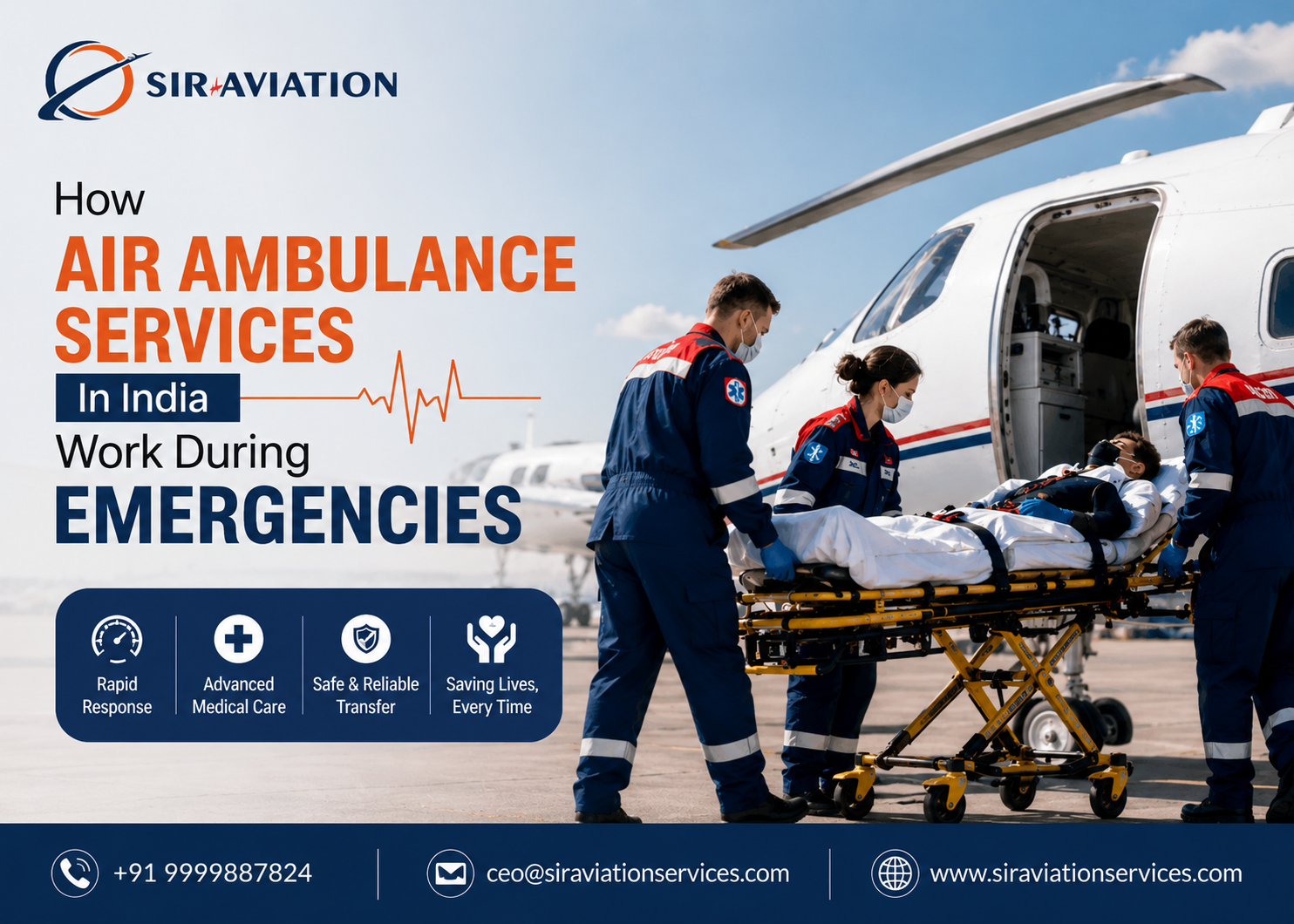
Medical emergencies often demand immediate action, especially when every minute can influence a patient’s chances of survival and recovery. Whether it is a severe accident, a cardiac emergency, a stroke, a natural disaster, or the urgent need for an organ transplant, timely transportation plays a crucial role in saving lives. Air ambulance services have emerged as a critical component of emergency healthcare infrastructure in India, providing rapid and specialized medical transportation when conventional road ambulances are unable to meet urgent requirements.
At SIR Aviation, emergency medical flights, patient transfers, and aircraft for organ transport operations are conducted with precision, speed, and a strong focus on patient safety. These specialized aviation services bridge geographical barriers and connect patients to advanced healthcare facilities without unnecessary delays.
The Growing Importance of Air Ambulance Services in India
India’s vast geographical landscape includes remote villages, mountainous regions, islands, congested urban centers, and areas with limited healthcare infrastructure. In many situations, reaching a specialized hospital by road can take several hours, which may not be practical during critical medical emergencies.
Air ambulance services solve this challenge by significantly reducing travel time and ensuring patients receive advanced medical attention during transit. Equipped with sophisticated medical equipment and staffed by trained healthcare professionals, air ambulances function as flying intensive care units capable of handling complex medical situations.
The demand for air ambulance services continues to grow due to:
- Rising awareness of emergency medical transport
- Increased incidence of critical illnesses
- Expansion of healthcare facilities across regions
- Organ transplantation requirements
- Disaster response operations
- Intercity and interstate patient transfers
What Is an Air Ambulance?
An air ambulance is a specially equipped aircraft designed to transport critically ill or injured patients while providing continuous medical care throughout the journey.
Unlike commercial flights, air ambulances are customized with advanced medical equipment that allows healthcare professionals to monitor and stabilize patients during transportation.
Air ambulances generally include:
- Fixed-wing aircraft
- Helicopter ambulances
- Charter aircraft modified for medical evacuation
Each aircraft is equipped according to the patient’s medical condition and transportation requirements.
How Air Ambulance Services Operate During Emergencies
The operation of an air ambulance involves a highly coordinated process involving aviation experts, medical professionals, hospitals, ground ambulance teams, and emergency coordinators.
Emergency Call and Assessment
The process begins when a patient, family member, hospital, insurance provider, or healthcare organization contacts the air ambulance service provider.
During the initial communication, essential information is collected, including:
- Patient’s medical condition
- Current location
- Destination hospital
- Required medical equipment
- Physician recommendations
- Urgency level
Medical experts immediately assess the patient’s condition to determine the most suitable mode of transport and onboard medical requirements.
Mission Planning
Once the case is approved, the operations team begins planning the mission.
This stage involves:
- Aircraft selection
- Route planning
- Airport coordination
- Ground ambulance arrangements
- Hospital communication
- Medical staffing allocation
Efficient planning ensures seamless movement from the patient’s location to the receiving medical facility.
Aircraft Preparation
Before departure, the selected aircraft undergoes extensive preparation.
Medical teams install and inspect critical care equipment such as:
- Ventilators
- Cardiac monitors
- Defibrillators
- Infusion pumps
- Oxygen systems
- Emergency medications
Every component is tested to ensure readiness before takeoff.
Ground Ambulance Coordination
Air ambulance services typically involve more than just air transportation.
Ground ambulances play a vital role in:
- Transferring patients from hospitals to airports
- Providing medical support during ground movement
- Coordinating with airport authorities
- Ensuring uninterrupted patient care
This integrated approach creates a smooth transition between healthcare facilities and aviation operations.
Medical Transfer and In-Flight Care
Upon arrival at the departure location, medical professionals assess the patient and safely transfer them onboard.
Throughout the flight, healthcare specialists continuously monitor:
- Blood pressure
- Oxygen saturation
- Heart rhythm
- Respiratory status
- Neurological condition
Any medical intervention required during the journey is performed immediately by the onboard medical team.
Arrival and Hospital Handover
After landing, the patient is transferred to a waiting ground ambulance and transported to the destination hospital.
A detailed medical handover is provided to the receiving healthcare team, ensuring continuity of treatment and minimizing risks associated with patient transfer.
Types of Medical Emergencies Requiring Air Ambulance Services
Air ambulance services are utilized across a wide range of medical scenarios.
Cardiac Emergencies
Heart attacks and severe cardiac conditions often require immediate intervention at specialized cardiac centers.
Air ambulances facilitate rapid transportation while ensuring continuous cardiac monitoring and emergency support.
Stroke Cases
Stroke treatment is highly time-sensitive. Quick access to neurologists and stroke centers significantly improves recovery outcomes.
Air ambulances help reduce transportation delays and support patients during transit.
Trauma and Accident Cases
Victims of road accidents, industrial injuries, and severe trauma often require advanced trauma care available only at specialized hospitals.
Air evacuation allows rapid transfer while maintaining critical care support.
Neonatal and Pediatric Emergencies
Newborns and children requiring specialized medical attention can be transported safely using neonatal and pediatric air ambulance setups equipped with dedicated life-support systems.
Organ Transplant Logistics
One of the most critical applications of aviation medical services is organ transportation.
Time is a decisive factor in transplant success. Specialized aircraft for organ transport are deployed to ensure donor organs reach transplant centers within the required viability window.
These operations involve:
- Precise scheduling
- Dedicated flight planning
- Real-time coordination
- Rapid airport clearances
- Continuous communication between transplant teams
Aircraft Used for Medical Transportation
Different emergencies require different aircraft configurations.
Fixed-Wing Aircraft
Fixed-wing aircraft are commonly used for long-distance patient transfers.
Benefits include:
- Greater range
- Higher cruising speed
- Enhanced patient comfort
- Ability to carry extensive medical equipment
They are suitable for interstate and international medical evacuations.
Helicopter Air Ambulances
Helicopters are valuable for:
- Mountain rescues
- Remote area evacuations
- Disaster response
- Urban emergency transport
Their ability to land near accident sites makes them particularly effective during urgent situations.
Dedicated Organ Transport Aircraft
Specialized aircraft used for organ transportation prioritize speed and operational flexibility.
These aircraft help transplant teams meet strict timelines that are essential for successful transplantation procedures.
Medical Equipment Available on Air Ambulances
Modern air ambulances are equipped with sophisticated medical systems comparable to hospital intensive care units.
Common onboard equipment includes:
- Multi-parameter monitors
- Mechanical ventilators
- Defibrillators
- Oxygen cylinders
- Syringe pumps
- Infusion pumps
- Suction units
- Emergency medications
- Airway management tools
The specific equipment carried depends on the patient’s medical condition and transport requirements.
Medical Professionals Onboard
A major advantage of air ambulance services is the presence of highly qualified healthcare professionals.
The onboard medical team may include:
Critical Care Physicians
Doctors trained in emergency and intensive care medicine manage complex medical situations during transit.
Flight Nurses
Flight nurses monitor patients continuously and assist with treatments and emergency procedures.
Paramedics
Paramedics provide additional support and ensure all emergency equipment remains operational throughout the journey.
Together, these professionals create a mobile intensive care environment capable of managing serious medical conditions.
Challenges Faced During Emergency Air Ambulance Operations
While air ambulance services offer significant advantages, they also encounter operational challenges.
Weather Conditions
Adverse weather can affect flight scheduling and route planning.
Experienced aviation teams monitor weather conditions carefully to ensure safety.
Airport Accessibility
Some remote regions may lack suitable airport infrastructure, requiring additional ground transportation planning.
Regulatory Approvals
Emergency flights often require rapid permissions and coordination with aviation authorities.
Efficient operations teams work closely with relevant agencies to secure necessary clearances.
Medical Stability
Certain patients require stabilization before transportation.
Medical teams carefully evaluate risks and implement appropriate treatment measures before departure.
The Role of SIR Aviation in Emergency Medical Transport
SIR Aviation plays a vital role in supporting emergency healthcare logistics through specialized aviation solutions.
The company focuses on:
- Emergency patient transportation
- Medical evacuation services
- Organ transportation flights
- Critical care air transfers
- Intercity medical charter operations
- Specialized aviation support for healthcare institutions
By combining aviation expertise with medical coordination, SIR Aviation helps healthcare providers and families respond effectively during time-sensitive emergencies.
Benefits of Choosing Air Ambulance Services
Air ambulance services offer several advantages over conventional transportation methods.
Faster Access to Specialized Care
Patients reach advanced medical facilities in significantly less time.
Continuous Medical Supervision
Healthcare professionals monitor and treat patients throughout the journey.
Reduced Travel Stress
Critically ill patients avoid prolonged road transportation.
Nationwide Connectivity
Air ambulances can connect remote regions with major healthcare centers across India.
Enhanced Organ Transport Efficiency
Dedicated aviation support improves the success rate of organ transplantation programs by minimizing transportation delays.
Future of Air Ambulance Services in India
The future of emergency medical aviation in India is promising. Increasing investments in healthcare infrastructure, airport development, and aviation technology are expected to strengthen the accessibility and efficiency of air ambulance services.
Advancements such as:
- Real-time medical monitoring
- Telemedicine integration
- Improved aircraft capabilities
- Faster emergency response systems
- Enhanced transplant logistics
will further improve patient outcomes and emergency healthcare delivery.
As awareness continues to grow, air ambulance services will remain an essential pillar of India’s emergency medical ecosystem, helping save lives when every second matters.
Conclusion
Air ambulance services have transformed emergency medical transportation in India by delivering rapid access to specialized healthcare during critical situations. From trauma care and cardiac emergencies to neonatal transport and organ transplantation, these services provide a reliable lifeline when conventional transportation is insufficient.
Organizations like SIR Aviation contribute significantly to this ecosystem through expertly coordinated medical flights, patient transfers, and aircraft for organ transport operations. By combining aviation excellence with medical expertise, air ambulance services continue to play a crucial role in improving survival rates and supporting healthcare delivery across the country.