
Complete Aviation Licensing Consultancy Guide
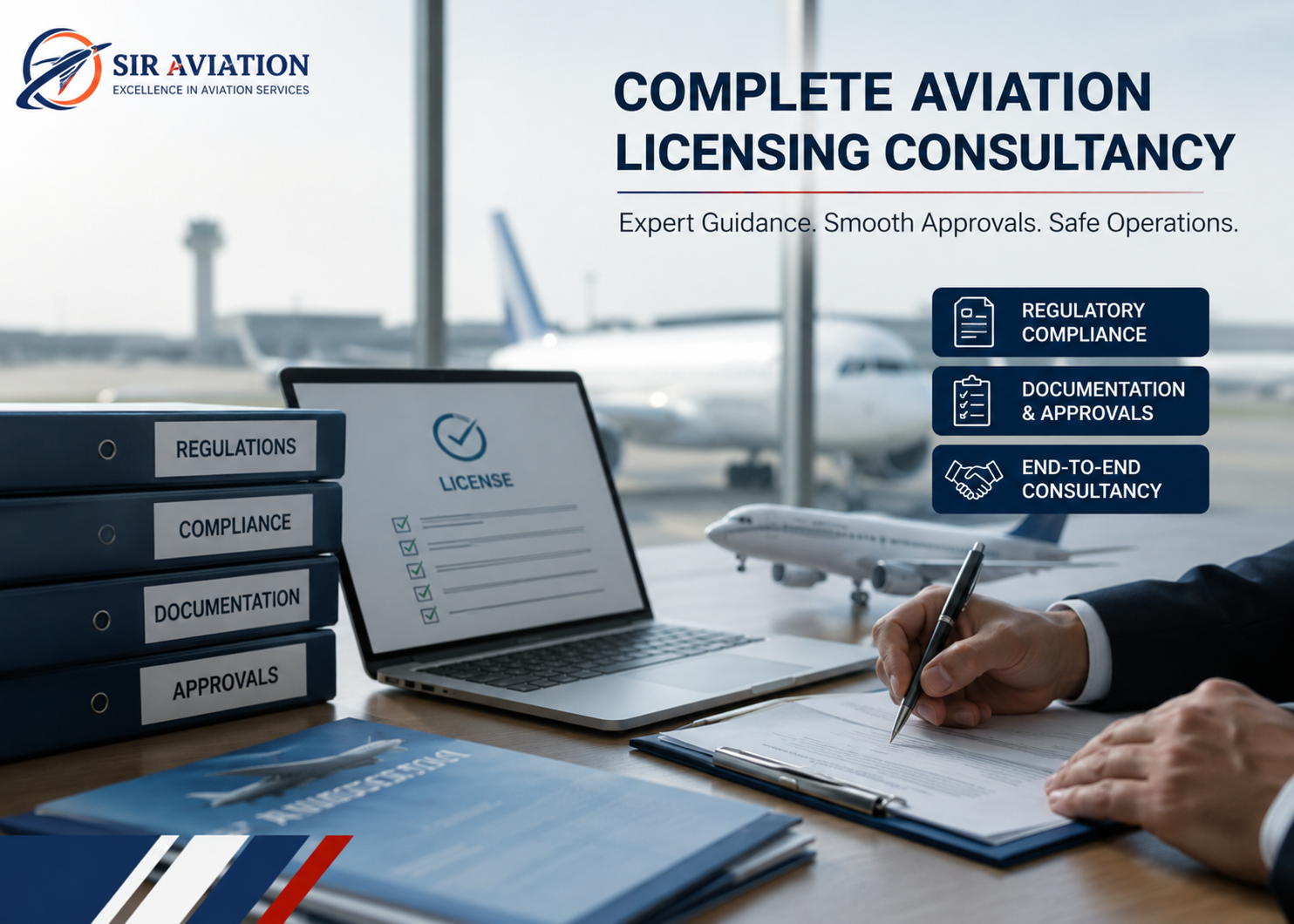
The aviation sector operates under strict regulatory frameworks that demand precision, compliance, and continuous documentation. Whether you are launching an aviation business, operating charter services, establishing a flying training organization, or expanding maintenance capabilities, aviation licensing consultancy plays a vital role in helping organizations secure approvals while meeting regulatory standards. SIR Aviation delivers professional consultancy services that simplify licensing procedures, reduce administrative challenges, and help aviation organizations move forward with confidence.
Why Aviation Licensing Matters
Every aviation operation must comply with national aviation regulations before commencing commercial activities. Licensing confirms that an organization, aircraft, facility, or aviation professional meets the required operational, technical, and safety standards established by regulatory authorities.
Operating without proper authorization can lead to financial penalties, project delays, suspension of operations, and legal complications. A properly planned licensing process protects both the organization and its customers while building trust among stakeholders.
Licensing is not simply a regulatory requirement. It forms the foundation of safe aviation operations, professional credibility, and long-term business growth.
What Is Aviation Licensing Consultancy?
Aviation licensing consultancy is a specialized professional service that assists aviation organizations, operators, investors, and aviation professionals in obtaining regulatory approvals required for legal operations.
Rather than navigating complex aviation regulations independently, organizations work with experienced consultants who understand licensing procedures, documentation requirements, technical compliance, and communication with aviation authorities.
The consultancy process generally includes:
- Regulatory assessment
- Documentation preparation
- Application management
- Technical compliance review
- Regulatory coordination
- Audit preparation
- Renewal assistance
- Operational advisory
The objective is to help applicants complete licensing procedures accurately while minimizing delays and compliance risks.
Industries That Benefit from Aviation Licensing Consultancy
Professional aviation consultancy supports a wide range of aviation sectors.
Aircraft Charter Companies
Charter operators require multiple approvals before offering commercial flight services. Consultants assist with documentation, operational manuals, aircraft compliance, crew requirements, and regulatory submissions.
Flying Training Organizations
Pilot training schools must obtain regulatory approval before enrolling students. Licensing consultants help prepare training manuals, infrastructure documentation, instructor qualifications, and operational procedures.
Aircraft Maintenance Organizations
Maintenance organizations require approvals demonstrating technical capability, qualified personnel, quality systems, and maintenance facilities.
Ground Handling Companies
Ground handling businesses require operational approvals covering equipment, manpower, safety systems, and airport compliance standards.
Aviation Startups
Entrepreneurs entering the aviation sector often require assistance with regulatory planning before investing in infrastructure. Consultancy helps reduce uncertainty during the establishment phase.
Aircraft Leasing Companies
Leasing organizations often require documentation support, aircraft registration coordination, and regulatory compliance assistance.
Corporate Aviation Departments
Large organizations operating private aircraft benefit from licensing consultancy to maintain operational compliance and manage documentation efficiently.
The Aviation Licensing Process
Although licensing requirements differ depending on the type of operation, most aviation approvals follow a structured process.
Initial Consultation
Consultants first evaluate the applicant’s objectives, business model, proposed operations, and licensing requirements.
This stage identifies:
- Applicable regulations
- Required approvals
- Documentation checklist
- Estimated timelines
- Technical requirements
Proper planning at the beginning prevents costly revisions later.
Documentation Preparation
Documentation forms one of the largest parts of aviation licensing.
Typical documentation includes:
- Company registration documents
- Business plans
- Operational manuals
- Safety management manuals
- Quality manuals
- Financial capability documents
- Aircraft information
- Personnel qualifications
- Infrastructure details
- Insurance documentation
Accuracy and consistency across documents significantly improve approval efficiency.
Compliance Assessment
Before applications are submitted, consultants evaluate whether operations satisfy regulatory expectations.
Compliance assessments often review:
- Safety procedures
- Technical standards
- Maintenance systems
- Crew qualifications
- Operational planning
- Security measures
- Emergency procedures
Identifying deficiencies early allows organizations to make improvements before inspections begin.
Application Submission
Once documentation has been verified, consultants prepare and submit applications according to regulatory procedures.
Professional submission reduces administrative errors and helps authorities review applications more efficiently.
Regulatory Coordination
Authorities frequently request additional information, clarification, or revised documentation during the review process.
Consultants coordinate communication, prepare responses, and ensure requested information is submitted correctly.
Inspection Preparation
Many aviation licenses require inspections before approval.
Consultants help organizations prepare for:
- Facility inspections
- Equipment verification
- Manual reviews
- Operational demonstrations
- Staff interviews
- Safety audits
Proper preparation increases confidence during regulatory inspections.
Final Approval
After successful evaluation, the regulatory authority issues the required license or approval, allowing operations to begin under approved conditions.
Common Aviation Licenses
Different aviation businesses require different approvals depending on their activities.
Some common licensing categories include:
Air Operator Certificate
Required for organizations conducting commercial air transport operations.
Flying Training Organization Approval
Necessary for institutions providing pilot training.
Aircraft Maintenance Organization Approval
Issued to approved maintenance providers.
Ground Handling Approval
Required for airport ground support operations.
Aircraft Registration
Aircraft must be registered according to national aviation regulations before operation.
Import and Export Permissions
Aircraft acquisition often involves regulatory approvals relating to import, customs, and registration.
Continuing Airworthiness Approvals
Organizations responsible for maintaining aircraft airworthiness require specialized approvals.
Aviation Security Approvals
Certain aviation businesses require compliance with aviation security regulations before commencing operations.
Challenges During Aviation Licensing
Many applicants underestimate the complexity of aviation regulations.
Some common challenges include:
Complex Documentation
Aviation manuals require technical accuracy and consistency across multiple documents.
Minor inconsistencies can delay approvals.
Regulatory Changes
Aviation regulations evolve regularly.
Organizations must remain updated with revised compliance requirements.
Technical Standards
Operational procedures, maintenance programs, safety systems, and training standards must align with regulatory expectations.
Inspection Readiness
Facilities, equipment, and personnel must be fully prepared before regulatory inspections.
Time Management
Licensing involves coordination among multiple departments, vendors, technical experts, and regulatory authorities.
Without proper planning, project timelines often extend beyond expectations.
Benefits of Working with Aviation Licensing Experts
Professional consultancy provides measurable advantages throughout the licensing process.
Faster Documentation Preparation
Experienced consultants know exactly what regulators expect, reducing unnecessary revisions.
Improved Compliance
Every application undergoes technical review before submission, lowering compliance risks.
Reduced Delays
Proper planning minimizes errors that commonly result in application resubmissions.
Professional Project Coordination
Licensing involves legal, technical, operational, and administrative activities.
Consultants coordinate these activities efficiently.
Better Audit Preparation
Organizations receive practical support before inspections and regulatory meetings.
Long-Term Regulatory Support
Many consultants continue assisting clients after licensing through renewals, amendments, and ongoing compliance management.
Aviation Licensing for New Aviation Businesses
Launching an aviation business involves more than purchasing aircraft or leasing facilities.
Successful licensing begins with strategic planning.
Key considerations include:
- Business structure
- Investment planning
- Operational scope
- Infrastructure selection
- Aircraft acquisition
- Recruitment
- Safety management systems
- Regulatory planning
Professional consultancy aligns each element with licensing expectations from the beginning.
Documentation Best Practices
High-quality documentation significantly improves licensing success.
Recommended practices include:
Maintain Accuracy
Every document should contain consistent operational information.
Keep Records Updated
Expired certificates, outdated manuals, or obsolete procedures create compliance issues.
Organize Files Properly
Well-structured documentation simplifies inspections and authority reviews.
Review Before Submission
Independent verification helps identify missing information before applications are filed.
Importance of Safety Management
Safety remains central to aviation regulation.
Authorities expect organizations to implement structured Safety Management Systems (SMS) that address:
- Hazard identification
- Risk assessment
- Safety reporting
- Internal audits
- Continuous improvement
- Emergency response planning
Consultants assist organizations in developing practical safety systems that satisfy regulatory expectations.
Regulatory Audits and Inspections
Inspections evaluate whether aviation organizations consistently follow approved procedures.
Inspectors may review:
- Operational manuals
- Employee qualifications
- Maintenance records
- Training documentation
- Aircraft records
- Safety reports
- Facility conditions
- Operational practices
Preparation significantly reduces inspection-related stress and improves confidence among staff.
License Renewals and Amendments
Licensing responsibilities continue after initial approval.
Organizations must manage:
- License renewals
- Operational amendments
- Fleet expansion approvals
- Personnel changes
- Facility modifications
- Manual revisions
- Regulatory reporting
Missing renewal deadlines may interrupt operations and create compliance concerns.
Professional consultancy ensures organizations remain prepared throughout the operational lifecycle.
Digital Transformation in Aviation Licensing
Many aviation authorities have introduced digital systems for application processing and documentation management.
Organizations increasingly benefit from:
- Electronic document management
- Digital application tracking
- Online regulatory submissions
- Electronic audit records
- Digital compliance monitoring
Maintaining organized digital records improves operational efficiency while simplifying future licensing activities.
Why Choose SIR Aviation?
SIR Aviation supports aviation organizations with practical consultancy built on industry knowledge, regulatory awareness, and attention to detail.
Clients choose SIR Aviation because of its commitment to:
- Professional licensing support
- Accurate documentation
- Regulatory compliance assistance
- Transparent communication
- Timely project coordination
- Customized consultancy solutions
- Ongoing operational support
Whether the objective is establishing a new aviation enterprise, expanding existing operations, or renewing regulatory approvals, SIR Aviation works alongside clients throughout every stage of the licensing process.
Selecting the Right Aviation Licensing Consultancy
Choosing the right consultancy partner directly influences licensing efficiency.
Consider these factors before making a decision:
- Aviation industry expertise
- Knowledge of applicable regulations
- Experience with similar projects
- Documentation capabilities
- Communication standards
- Project management approach
- Regulatory coordination experience
- Post-licensing support
A reliable consultancy provides more than paperwork assistance. It becomes a trusted partner throughout the organization’s regulatory journey.
Conclusion
Aviation licensing requires careful planning, technical accuracy, regulatory compliance, and well-prepared documentation. Every approval represents a significant milestone that enables organizations to operate legally, safely, and efficiently. Professional consultancy simplifies complex procedures while reducing administrative burdens and supporting long-term operational success. With experienced guidance from SIR Aviation, aviation businesses can confidently navigate licensing requirements, strengthen regulatory compliance, and build a solid foundation for sustainable growth.
FAQs
Who needs aviation licensing consultancy?
Aircraft operators, charter companies, flying training organizations, maintenance organizations, aviation startups, ground handling companies, and corporate aviation departments commonly require aviation licensing consultancy.
How long does the aviation licensing process take?
The timeline depends on the license type, documentation quality, regulatory reviews, inspections, and the complexity of the aviation operation. Proper preparation can help reduce delays.
What documents are generally required for aviation licensing?
Common documents include company registration records, operational manuals, safety manuals, quality manuals, aircraft information, personnel qualifications, financial documents, and compliance records.
Why should I choose SIR Aviation for aviation licensing consultancy?
SIR Aviation offers professional regulatory support, accurate documentation, compliance assistance, inspection preparation, and ongoing licensing support to help aviation organizations achieve approvals efficiently.