
Private Jet Charter Services: What Travelers Should Know Before Booking
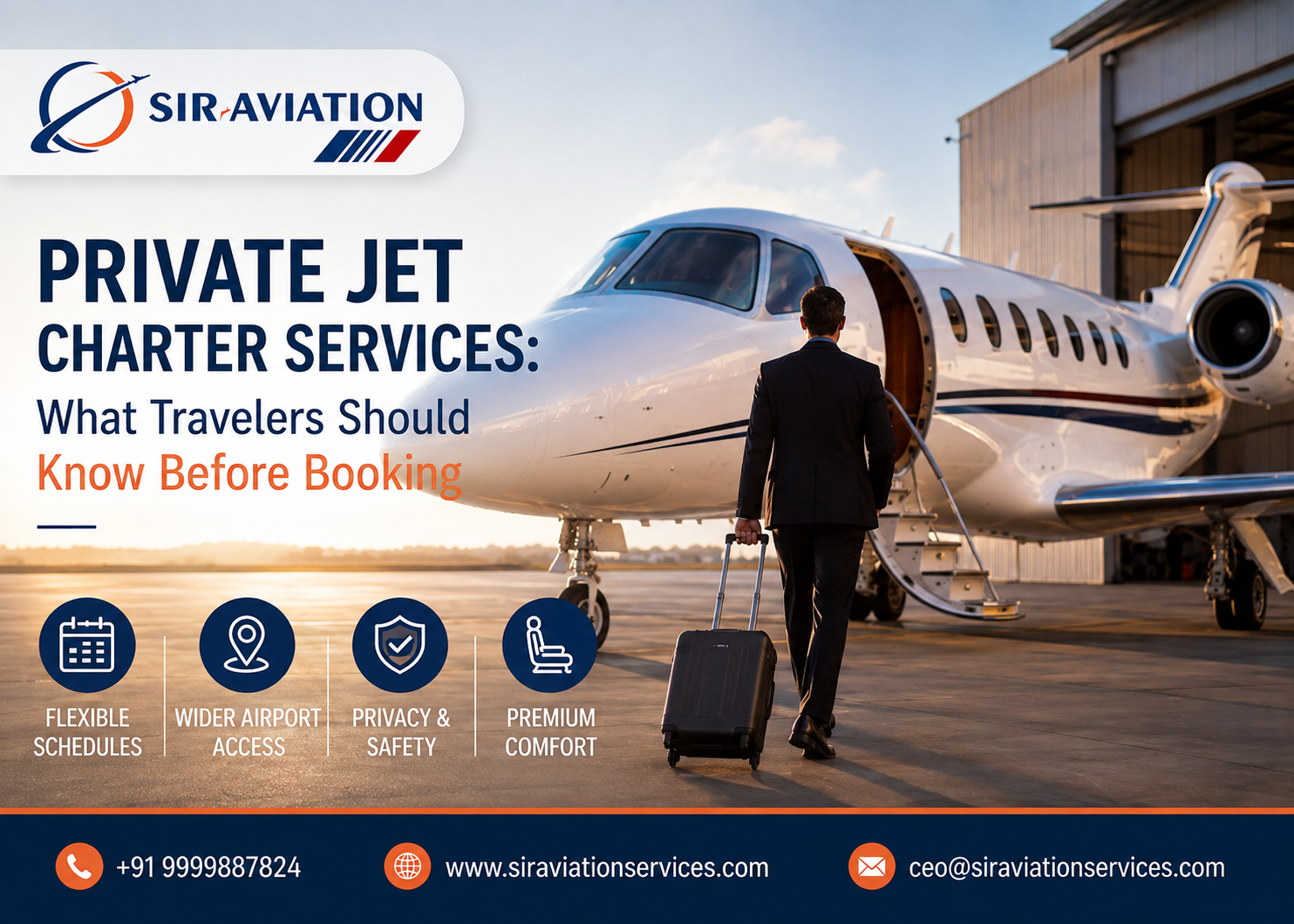
Private Jet Charter Services offer travelers a flexible and highly personalized alternative to scheduled commercial flights. Whether the journey involves an important business meeting, a family holiday, a corporate delegation, an urgent trip, or travel to a destination with limited airline connectivity, chartering a private aircraft can provide greater control over timing, routing, privacy, and comfort. However, booking a private jet involves more than choosing an aircraft and departure time. Travelers should consider aircraft suitability, airport access, pricing structure, operator credentials, baggage capacity, passenger requirements, and service expectations before confirming a flight.
What Are Private Jet Charter Services?
Private jet charter allows individuals, companies, groups, and organizations to hire an aircraft for a specific journey rather than purchasing seats on a scheduled airline.
The traveler generally determines the preferred departure location, destination, schedule, number of passengers, and service requirements. A charter provider then identifies an aircraft suitable for the requested route and passenger profile.
Depending on the journey, travelers may choose from light jets, midsize jets, super-midsize aircraft, heavy jets, turboprops, or other aircraft categories.
This model gives passengers considerably more flexibility than conventional airline schedules. Instead of adapting an itinerary to available commercial flights, travelers can build their flight arrangements around their own requirements.
Why Do Travelers Choose Private Jet Charter?
Convenience remains one of the strongest reasons for choosing private aviation. Commercial flights operate according to fixed schedules and predefined airport networks. Private aviation provides greater flexibility in both areas.
Business executives may need to attend meetings in several locations within a limited period. Families may prefer direct travel without lengthy connections. Corporate teams may want to travel together while maintaining privacy. Some passengers may simply value a quieter and more controlled environment.
Private charter can offer benefits such as:
- Flexible departure schedules
- Access to a wider selection of airports
- Greater privacy
- Personalized cabin arrangements
- Reduced airport waiting periods
- Direct routing where operationally possible
- Greater control over the travel experience
- Convenient travel for small groups and corporate teams
The actual benefits vary according to aircraft type, airport regulations, route, weather, and operational conditions.
Choose the Aircraft According to Your Journey
One of the most important booking decisions involves selecting the right aircraft. A larger jet does not automatically mean a better choice. The ideal aircraft depends on distance, passenger numbers, luggage, runway requirements, cabin preferences, and budget.
Light Jets
Light jets generally work well for shorter journeys and smaller passenger groups. They can provide an efficient option when passengers do not require a large cabin or extensive baggage capacity.
Their smaller size can also make them suitable for airports where larger aircraft face operational restrictions.
Midsize Jets
Midsize jets provide additional cabin space and range compared with many light aircraft. Business travelers and small groups often consider this category when they need a balance between comfort, capability, and operating cost.
Super-Midsize Jets
Super-midsize aircraft can provide greater range, larger cabins, and increased baggage capacity. They may suit longer domestic journeys and selected international routes.
Heavy and Long-Range Jets
Heavy jets are designed for passengers who require substantial range, cabin space, and enhanced onboard facilities. These aircraft are frequently considered for international travel, larger groups, and longer journeys.
Before selecting an aircraft, discuss your complete itinerary with the charter company rather than choosing purely from photographs or cabin appearance.
Consider the Number of Passengers
Passenger count directly affects aircraft selection.
Provide an accurate number of travelers at the quotation stage. Adding passengers after confirming the aircraft may create complications if the selected jet cannot legally or comfortably accommodate the larger group.
Travelers should also mention whether children or infants will be flying. Specific seating or safety requirements may apply depending on the aircraft and applicable aviation regulations.
For corporate travel, prepare the final passenger list as early as possible. International flights may require passport information and other documentation before departure.
Check Baggage Capacity Before Booking
Private aircraft do not offer unlimited baggage space. Capacity varies significantly between aircraft models.
A jet capable of carrying eight passengers may not necessarily accommodate eight passengers with several large suitcases each.
Inform the charter provider about unusual or oversized items before confirming the flight. These might include:
- Golf equipment
- Musical instruments
- Trade-show materials
- Professional equipment
- Large suitcases
- Sports equipment
- Product samples
Providing baggage details early helps the charter team recommend an aircraft with suitable storage capacity.
Airport Choice Can Make a Major Difference
One major advantage of private aviation is access to airports beyond the primary commercial hubs.
A smaller airport may place passengers closer to their actual destination, potentially reducing ground transportation time. For business travelers, this can make a significant difference when visiting industrial areas, manufacturing facilities, regional offices, or locations outside major metropolitan centers.
However, not every private aircraft can operate from every airport. Runway length, airport operating hours, aircraft performance, weather conditions, customs availability, parking restrictions, and local regulations can influence airport selection.
An experienced charter provider should evaluate these operational factors while planning the journey.
Look Beyond the Initial Charter Price
Private jet pricing involves several variables, so travelers should examine what a quotation actually includes.
The final charter cost can depend on:
- Aircraft category
- Flight duration
- Route
- Airport charges
- Crew expenses
- Aircraft positioning
- Ground handling
- Parking
- International permits
- Catering requirements
- Overnight crew arrangements
- Applicable taxes and fees
Ask whether the quotation includes all expected charges or whether certain costs could be added later.
Comparing quotations purely by the headline price can lead to an inaccurate comparison. One quotation may include operational expenses that another lists separately.
Ask About Aircraft Positioning
Aircraft positioning can affect charter pricing.
The selected aircraft may not already be located at the passenger’s departure airport. It might need to fly from another airport before collecting passengers. This movement is often called a positioning or repositioning flight.
The cost associated with positioning can influence the overall quotation.
Travelers with some flexibility in aircraft type or departure schedule may have additional options available. Discussing these possibilities with the charter company can help identify an efficient arrangement.
Verify Safety and Operator Credentials
Safety should remain central to every charter decision.
Travelers should work with professional aviation companies that follow applicable regulatory and operational requirements. It is reasonable to ask questions about the aircraft operator, crew qualifications, maintenance standards, insurance, and required certifications.
Price should never become the only factor when choosing a charter arrangement.
A professional provider should be able to explain who operates the aircraft and provide appropriate information about the flight arrangement.
Corporate travel departments may have additional internal aviation safety policies. If your company maintains specific operator or aircraft requirements, share them before requesting final confirmation.
Know What Cabin Experience to Expect
Private aircraft cabins differ significantly.
Some travelers imagine every private jet as a large aircraft with bedrooms, conference areas, and luxury lounges. In reality, cabin configurations depend heavily on aircraft category.
A light jet may have a compact cabin designed primarily for efficient short-distance transportation. Larger aircraft may provide standing-height cabins, enhanced seating, entertainment systems, work areas, sleeping configurations, and more extensive catering facilities.
Ask for information about the proposed aircraft, including:
- Cabin dimensions
- Seating configuration
- Passenger capacity
- Baggage capacity
- Lavatory facilities
- Wi-Fi availability
- Power outlets
- Catering possibilities
Knowing these details helps establish realistic expectations before departure.
Discuss Catering Requirements Early
Catering can range from beverages and light snacks to customized meals depending on the aircraft, airport, route, and passenger requirements.
Travelers with dietary restrictions should communicate them clearly. Vegetarian, vegan, gluten-sensitive, religious, allergy-related, or other dietary requests may require advance coordination.
Not every aircraft has the same galley facilities. Some meals may need to be served cold or prepared before departure.
For business delegations and longer journeys, arranging catering in advance can make the cabin experience considerably more convenient.
International Charter Requires Additional Planning
International private flights involve more operational planning than many domestic journeys.
Passengers may need valid passports, visas, travel authorizations, customs documentation, and other destination-specific paperwork.
The flight itself may also require overflight permissions, landing permits, airport slots, customs coordination, and ground handling arrangements.
Travelers should provide passenger documentation promptly when requested. Delayed information can affect the operator’s ability to complete necessary arrangements within the required timeframe.
Private aviation provides scheduling flexibility, but it does not remove immigration, customs, or aviation regulatory requirements.
Weather Can Still Affect Private Flights
Private aircraft offer flexibility, but they remain subject to weather and aviation safety requirements.
Fog, thunderstorms, strong winds, heavy rain, poor visibility, runway conditions, or other operational factors can affect departure times and routing.
In some situations, the crew may recommend another airport or departure time. These decisions are made according to safety and operational considerations.
Travelers with important meetings or events should keep reasonable scheduling flexibility whenever possible.
Ask About Ground Transportation
A private aviation journey does not necessarily end when the aircraft lands.
Ground transportation can be an important part of the overall itinerary, particularly for corporate executives, VIP passengers, international travelers, and families.
Ask whether airport transfers can be coordinated at departure and arrival locations. Depending on the airport, vehicles may collect passengers from a private terminal or another designated area.
Coordinating air and ground arrangements can create a smoother door-to-door travel experience.
Private Jet Charter for Business Travel
Private aviation can be particularly valuable for businesses where time and schedule control carry significant importance.
Executives may travel to several cities for meetings without depending on commercial flight timetables. Teams can also travel together and use cabin time for discussions where appropriate.
Private charter can support:
- Executive travel
- Corporate roadshows
- Investor meetings
- Site inspections
- Multi-city business trips
- Project team transportation
- Client visits
- Time-sensitive corporate travel
The value of charter aviation in these situations often comes from itinerary efficiency rather than luxury alone.
Private Jet Charter for Leisure Travel
Families and leisure travelers may have different priorities.
Convenient schedules, privacy, baggage requirements, destination accessibility, and cabin comfort can become more important than maximizing the number of meetings completed in one day.
Private charter can be useful for holiday destinations where scheduled airline connectivity requires multiple stops or long ground transfers.
Families should communicate special requirements, including children’s seating arrangements, additional baggage, sports equipment, or catering preferences, before confirming the aircraft.
What Should You Ask Before Confirming a Booking?
A clear conversation with the charter provider can prevent misunderstandings.
Before confirming your flight, ask:
- Which aircraft model or category will operate the journey?
- How many passengers can it accommodate?
- What baggage capacity is available?
- What does the quotation include?
- Are taxes and airport fees included?
- Who operates the aircraft?
- What documentation will passengers need?
- What cancellation terms apply?
- Can catering be arranged?
- Is ground transportation available?
- What happens if weather affects the flight?
- Are there airport operating restrictions?
Keep the final quotation, itinerary, cancellation terms, passenger requirements, and service details available for reference.
Avoid Booking Based Only on the Lowest Quote
Cost matters, but a very low quotation should not automatically determine the booking decision.
Aircraft availability, operator credentials, safety standards, cabin suitability, baggage capacity, airport compatibility, and service support all contribute to the overall value of a charter.
Travelers should compare like-for-like quotations.
For example, one company might quote a light jet while another recommends a midsize aircraft because of passenger baggage requirements. Although both options cover the same route, they do not provide identical capabilities.
A slightly higher quotation may sometimes provide an aircraft that better matches the actual mission.
Book Early When Possible
Private charter provides flexibility, but aircraft availability can become limited during busy travel periods.
Major sporting events, festivals, holiday periods, corporate events, exhibitions, and seasonal travel demand can affect aircraft and airport availability.
Early planning can provide a broader selection of suitable aircraft.
Last-minute charters may still be possible, but travelers could have fewer aircraft options or face additional operational limitations.
Why Professional Charter Support Matters
Private aviation involves coordination between passengers, aircraft operators, airports, ground handlers, crew members, regulatory authorities, and other service providers.
Professional charter support helps bring these elements together.
Travelers benefit when they can communicate their requirements to a team that considers the complete journey rather than simply quoting an aircraft.
SIR Aviation supports private aviation requirements by helping clients coordinate charter solutions based on passenger numbers, destination, schedule, aircraft suitability, and individual travel needs. Whether the requirement involves corporate travel, leisure transportation, executive movement, or customized aviation arrangements, careful planning helps create a more efficient charter experience.
Making an Informed Private Jet Charter Decision
Booking a private aircraft becomes much easier when travelers know what information to provide and what questions to ask.
Start with the fundamentals: departure point, destination, preferred schedule, passenger count, baggage requirements, and any special requests. Then evaluate the proposed aircraft, pricing structure, operational arrangements, safety considerations, and booking terms.
Private Jet Charter Services can provide exceptional flexibility, privacy, and travel efficiency when the aircraft and itinerary match the passenger’s actual requirements. Rather than choosing solely on aircraft appearance or headline price, focus on safety, suitability, transparent communication, and reliable operational planning.
With proper preparation and experienced aviation support, private charter can become a practical transportation solution for business executives, organizations, families, and travelers who value greater control over their journey.
FAQs
What information is required to book a private jet?
Travelers generally need to provide departure and destination locations, preferred travel date and time, number of passengers, baggage details, and special requirements. International travel may also require passport, visa, immigration, and other passenger documentation.
How is the cost of a private jet charter calculated?
Charter pricing can depend on aircraft type, flight time, route, aircraft positioning, airport fees, ground handling, crew expenses, parking, permits, taxes, catering, and other operational requirements. Travelers should request a clear quotation showing what is included.
Can Private Jet Charter Services accommodate customized travel requirements?
Yes. Depending on the aircraft and operational feasibility, charter arrangements can accommodate preferred schedules, specific airports, catering requests, ground transfers, multi-city itineraries, baggage requirements, and other personalized travel needs.