
How to Choose the Right Flying Training Organisation in India?
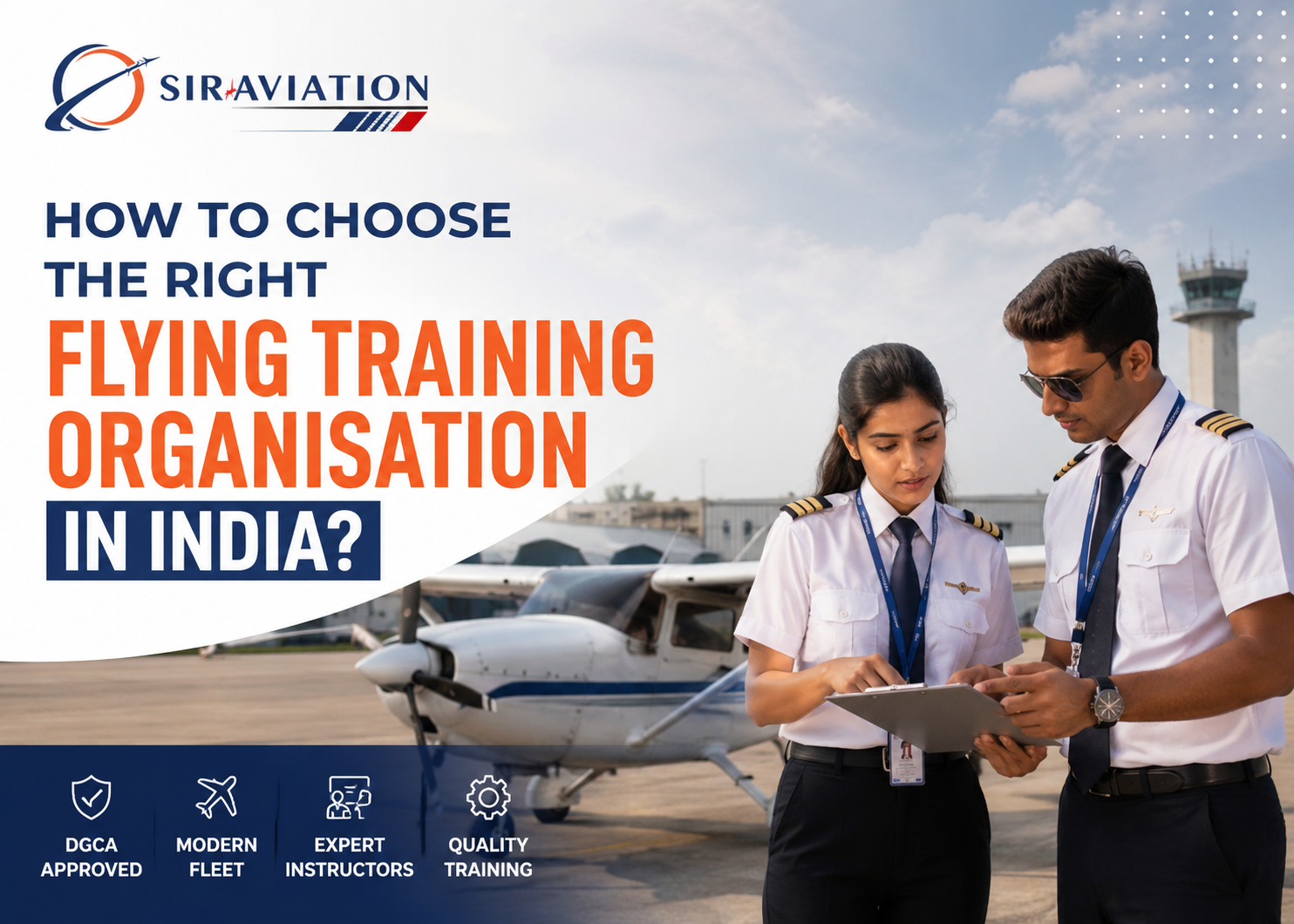
Choosing the right Flying Training Organisation is one of the most important decisions for anyone planning a professional aviation career in India. The quality of flight instruction, aircraft availability, instructor strength, safety practices, airport conditions, training continuity, and regulatory compliance can directly affect a student’s progress. With multiple flight schools offering different training environments and facilities, aspiring pilots need to evaluate each option carefully. A well-chosen training organisation can provide the structured flying exposure, discipline, technical knowledge, and operational confidence required to move steadily toward professional pilot qualifications.
Why Choosing the Right Flight Training Organisation Matters
Pilot training involves much more than accumulating the required flying hours. Students must develop sound aeronautical knowledge, decision-making ability, situational awareness, aircraft handling skills, communication proficiency, and professional discipline.
The training environment plays a major role in developing these capabilities. If aircraft remain unavailable frequently, instructors change repeatedly, maintenance delays become common, or flight scheduling lacks consistency, students may take longer to complete their training.
A properly structured training organisation focuses on continuity. It combines theoretical instruction with practical flying and ensures that students progress through different stages according to their proficiency.
The right choice can influence:
- Training quality and consistency
- Flying-hour accumulation
- Access to serviceable aircraft
- Instructor availability
- Safety awareness
- Examination preparation
- Operational exposure
- Training costs
- Course completion time
- Career readiness
Students should therefore assess a flight school beyond promotional claims and advertised course fees.
Check DGCA Approval and Regulatory Status
The first factor to verify is the organisation’s regulatory status. Flight training in India operates within the regulatory framework established by the Directorate General of Civil Aviation (DGCA).
Students should verify whether the organisation holds the required approvals for the training it provides. They should also check whether the aircraft, instructors, training systems, operational procedures, and facilities align with applicable regulatory requirements.
Regulatory approval provides an essential starting point, but students should not stop their evaluation there. Approval establishes regulatory eligibility; the actual training experience also depends on operational efficiency, aircraft availability, instructors, infrastructure, weather, and management practices.
Ask the organisation for clear information regarding its approval status, permitted training activities, aircraft fleet, operating base, and training structure before enrolling.
Evaluate the Aircraft Fleet
Aircraft availability directly affects flying continuity. A training organisation may have several enrolled students, but the actual number of operational training aircraft determines how efficiently flying schedules can move.
Ask how many aircraft are available for student training and how many are normally serviceable. It is also useful to examine the ratio between active students and operational aircraft.
Training fleets may include single-engine and, where applicable, multi-engine aircraft. The specific aircraft types can vary between organisations.
Students should evaluate:
Fleet Size
A larger fleet can provide better scheduling flexibility, particularly when one aircraft becomes unavailable because of maintenance.
Aircraft Serviceability
The number of aircraft listed by an organisation may differ from the number regularly available for training. Ask about actual operational availability.
Aircraft Condition
Well-maintained aircraft contribute to reliable training operations. Students should observe the general condition of aircraft during a campus or airfield visit.
Maintenance Support
Scheduled and unscheduled maintenance affects aircraft availability. An organised maintenance system can help reduce prolonged interruptions.
Aircraft should never be evaluated solely on appearance or age. Maintenance quality, regulatory compliance, serviceability, and operational reliability matter significantly.
Examine Instructor Availability and Quality
Flight instructors have a major influence on pilot development. They teach students how to operate aircraft while helping them build judgement, discipline, situational awareness, and safe flying habits.
Before selecting a training organisation, ask about its instructor team.
Important questions include:
- How many active flight instructors are available?
- What is the student-to-instructor ratio?
- How are students assigned to instructors?
- Can students maintain continuity with the same instructor?
- How are training progress and performance recorded?
- How frequently can students expect flying slots?
Frequent instructor changes can sometimes affect continuity because each instructor may need time to assess a student’s existing proficiency.
At the same time, exposure to different instructors at appropriate stages can provide additional perspectives. The organisation should have a structured system for instructor allocation and student progress monitoring.
Look at Flying Continuity
Flying regularly can help students retain skills and progress efficiently. Long gaps between training flights may require additional revision flights before moving to the next stage.
Ask prospective organisations how frequently students typically receive flying opportunities under normal operating conditions.
Several factors can influence continuity, including:
- Aircraft serviceability
- Instructor availability
- Weather conditions
- Airfield restrictions
- Student numbers
- Maintenance schedules
- Operational permissions
- Daylight availability
- Air traffic conditions
No organisation can guarantee uninterrupted flying because aviation operations depend on variables outside its control. However, an efficient scheduling system can reduce avoidable delays.
Students should ask for realistic information rather than relying on unusually short course-completion promises.
Assess the Training Airfield
The location and characteristics of the training airfield can significantly influence flight operations.
A very busy airport may expose students to controlled airspace and professional radio communication, but heavy commercial traffic can sometimes create scheduling or operational restrictions. A less congested training airfield may allow more frequent circuits and training sorties.
Consider factors such as:
Air Traffic Density
Heavy traffic can increase waiting times, while moderate traffic may provide valuable communication and operational exposure.
Runway Facilities
Check the runway configuration and other operational facilities available at the training base.
Airspace Availability
Suitable training areas near the airport can reduce unnecessary transit time and allow students to spend more of each sortie practising required exercises.
Weather Conditions
Weather patterns can affect the number of flyable days throughout the year. Visibility, rainfall, winds, temperature, fog, and seasonal conditions can all influence operations.
Students should consider how the location supports consistent training across different seasons.
Review Ground School Support
Strong theoretical knowledge supports safe and competent flying. Pilot training requires students to study subjects associated with aviation regulations, navigation, meteorology, technical knowledge, and other applicable examination areas.
Students should examine whether the organisation provides structured ground instruction alongside practical flight training.
Look for:
- Qualified ground instructors
- Structured class schedules
- Suitable classrooms
- Study resources
- Mock examinations
- Progress assessments
- Doubt-clearing sessions
- Integration between theoretical and flight instruction
Ground classes should help students connect theoretical concepts with practical cockpit situations.
For example, meteorology becomes more meaningful when students can relate weather concepts to actual flight planning. Navigation principles become clearer when applied during cross-country training.
Examine the Training Curriculum
A professional Flying Training Organisation should follow a structured training sequence rather than treating every flight as an isolated activity.
Students normally progress from basic aircraft familiarisation and handling exercises toward more advanced flight operations according to the approved syllabus and their individual proficiency.
Ask how the organisation tracks student progress. There should be a clear system for recording completed exercises, instructor observations, proficiency levels, weaknesses, and required corrective training.
Structured progression helps students identify what they have completed and what they need to improve before advancing further.
Consider Simulator Facilities
Depending on the training programme and organisation, simulator facilities can support certain elements of pilot training.
Simulators can allow students to practise cockpit procedures, instrument interpretation, navigation concepts, communication workflows, checklists, and selected abnormal situations in a controlled environment.
However, students should determine what type of simulator is available and how it fits into the approved training programme.
Do not assume that having a simulator automatically makes one organisation better than another. Evaluate its relevance, approval status where applicable, instructional use, and integration with actual flight training.
Analyse the Complete Training Cost
Course fees deserve careful evaluation because pilot training represents a significant financial commitment.
Avoid comparing organisations solely through a single advertised figure. Ask for a detailed cost structure.
The financial estimate may include:
- Flight training charges
- Ground school fees
- Instructor charges
- Simulator charges
- Registration or admission fees
- Examination-related expenses
- Study materials
- Uniform expenses
- Accommodation
- Transportation
- Medical-related expenses
- Licensing and administrative charges
- Additional flying hours when required
Students may require more than the minimum planned training hours to reach the required proficiency. Training performance varies from one student to another.
Ask whether quoted flying rates include applicable taxes and other associated charges. Transparent pricing makes financial planning easier and reduces the possibility of unexpected expenses.
Be Careful With Unrealistic Completion Promises
Flight training depends on many operational factors. Weather disruptions, maintenance requirements, student performance, instructor availability, airspace restrictions, examinations, and administrative processes can affect timelines.
For this reason, students should treat extremely aggressive completion promises carefully.
Instead of asking only, “How quickly can I finish?”, ask:
“How does the organisation maintain regular flying schedules?”
This question provides better insight into operational efficiency.
A credible training organisation should explain the factors affecting course duration rather than promising a fixed timeline that may not reflect actual aviation conditions.
Visit the Training Facility Before Enrolling
Whenever possible, visit the training base personally.
A physical visit provides information that websites, brochures, advertisements, and telephone conversations may not fully communicate.
Observe the:
- Aircraft fleet
- Flight line activity
- Classroom facilities
- Student environment
- Training infrastructure
- Administrative setup
- Instructor availability
- General operational discipline
Speak with existing students where appropriate. Ask practical questions about aircraft availability, frequency of flying, instructor interaction, accommodation, scheduling, and administrative support.
Do not base your decision on one student’s opinion. Experiences can vary considerably. Look for recurring patterns across several conversations.
Check Safety Culture
Safety should remain central to every aviation training operation.
Students can observe safety culture through everyday practices rather than promotional statements. Look at how instructors conduct briefings, how personnel follow procedures, how aircraft movements are managed, and whether students receive clear operational instructions.
A strong safety culture encourages students to respect limitations and follow procedures consistently.
Good pilot training does not encourage unnecessary risk-taking. It develops disciplined decision-making and teaches students when conditions require a flight to be delayed, modified, or cancelled.
These habits remain valuable throughout a professional flying career.
Evaluate Student Support Systems
Pilot training includes multiple administrative and academic requirements. Students may need assistance with documentation, examinations, training records, scheduling, medical requirements, and licensing processes.
An organised support system can reduce confusion and help students focus on training.
Ask whether dedicated staff assist students with training-related documentation and administrative coordination.
Clear communication also matters. Students should know whom to contact regarding flight scheduling, academic matters, fees, documentation, or operational queries.
Consider Accommodation and Daily Logistics
Students who move to another city for pilot training should examine accommodation and transportation arrangements carefully.
Distance between accommodation and the training base can affect daily routines. Early-morning reporting times are common in aviation training, so reliable transportation becomes important.
Evaluate:
- Distance from accommodation to the airfield
- Transportation availability
- Meal arrangements
- Internet access
- Local living expenses
- Security arrangements
- Study environment
These factors may seem secondary, but pilot training requires concentration and discipline. Comfortable, practical living arrangements can support consistent study and training routines.
Ask About Cross-Country Flying Opportunities
Cross-country flying develops navigation skills, flight planning ability, weather assessment, communication proficiency, fuel planning, and operational decision-making.
Ask how the organisation conducts cross-country training and what types of routes students normally experience.
Exposure to different airports and operational environments can help students become more adaptable. However, all training must remain aligned with the applicable syllabus, approvals, operational conditions, and instructor supervision requirements.
The value of cross-country training comes from structured planning and execution rather than distance alone.
Compare Training Organisations Using the Same Criteria
Students often find it difficult to compare flight schools because every organisation presents information differently.
Create a standard comparison sheet and evaluate each organisation using identical criteria.
Compare:
- Regulatory approval
- Operational aircraft
- Aircraft-to-student ratio
- Instructor strength
- Student-to-instructor ratio
- Flying frequency
- Ground school facilities
- Training airfield
- Simulator availability
- Safety practices
- Course fee structure
- Accommodation
- Student support
- Estimated training continuity
- Administrative assistance
Using the same parameters makes it easier to identify meaningful differences between organisations.
Do Not Choose Solely Based on the Lowest Fee
Cost matters, but the lowest advertised fee does not necessarily result in the lowest overall training expenditure.
Suppose an organisation charges slightly less per flying hour but provides irregular aircraft availability. Extended training duration could increase accommodation, transportation, living, and revision-flight expenses.
Another organisation might charge a higher rate but provide stronger training continuity.
Students should therefore assess overall value rather than only the initial quotation.
Value comes from the relationship between training quality, aircraft availability, instructor access, operational consistency, infrastructure, safety, and total expenditure.
Look for Transparency
Transparency is a strong indicator of professional administration.
A prospective student should receive clear answers regarding fees, aircraft availability, course structure, expected timelines, documentation, accommodation, and operational limitations.
Be cautious when important questions receive vague responses.
Students should also read admission documents carefully before making payments. Review payment terms, refund conditions, training charges, additional-hour costs, accommodation policies, and other applicable conditions.
Written information provides greater clarity than verbal assurances.
Think Beyond Licence Completion
The objective of flight training should extend beyond accumulating the required hours or completing licensing formalities.
Professional aviation requires discipline, communication skills, procedural accuracy, decision-making ability, technical knowledge, and a strong safety mindset.
The training organisation should help students develop habits that support future professional flying.
Students should therefore ask themselves:
“Will this training environment help me become a capable and disciplined pilot?”
That question can be more valuable than simply asking which organisation offers the cheapest package.
How SIR Aviation Can Support FTO Planning
SIR Aviation operates within India’s aviation services sector and supports aviation-related requirements, including matters associated with flight training operations and Flying Training Organisation development.
Establishing and operating an FTO involves regulatory planning, infrastructure, aircraft, operational systems, documentation, manpower, safety processes, and coordination across multiple requirements. A structured approach can help stakeholders plan these elements more effectively.
For aspiring pilots, evaluating the operational strength of a training organisation remains essential. For aviation entrepreneurs and organisations planning to establish flight training operations, regulatory and operational preparation requires equally careful attention.
Questions to Ask Before Paying the Admission Fee
Before making a final decision, ask the organisation specific questions about its operations.
Find out how many students are actively training and how many aircraft are currently operational. Ask about instructor numbers, average flying frequency, maintenance arrangements, ground classes, fee inclusions, additional-hour charges, accommodation, and administrative support.
Request written information wherever possible.
Also ask what happens when training gets interrupted because of maintenance, weather, or instructor availability. The organisation’s response can reveal how effectively it manages operational disruptions.
Avoid making an immediate payment merely because a limited-time offer creates pressure. Pilot training represents a major educational and financial commitment and deserves careful evaluation.
Final Thoughts
Choosing the right flight training organisation requires careful comparison of regulatory status, aircraft availability, instructors, safety culture, flying continuity, airfield conditions, ground training, costs, infrastructure, and student support. A low fee or attractive completion estimate should never become the only deciding factor.
Aspiring pilots should verify information, visit training facilities where possible, speak with current students, review written terms, and compare multiple options using consistent criteria. The right training environment should support not only licence requirements but also the discipline, knowledge, judgement, and professional standards required for a long-term aviation career.
FAQs
How should I choose a Flying Training Organisation in India?
Check its DGCA approval status, operational aircraft, instructor availability, flying frequency, safety practices, training infrastructure, airfield conditions, fee structure, ground classes, student support, and overall training continuity. Visiting the facility before admission can also help you make a more informed decision.
Is aircraft availability important when selecting a Flying Training Organisation?
Yes. Aircraft availability can directly affect flying frequency and training continuity. Students should check the number of operational aircraft rather than relying only on the total fleet advertised by the organisation.
Should I select a Flying Training Organisation based on fees?
Fees should form part of the decision, but they should not become the only criterion. Compare the total expected cost alongside aircraft availability, instructor strength, safety, training quality, flying continuity, infrastructure, and possible living expenses.