
Aircraft Joy Ride Booking: Cost, Duration, and Safety
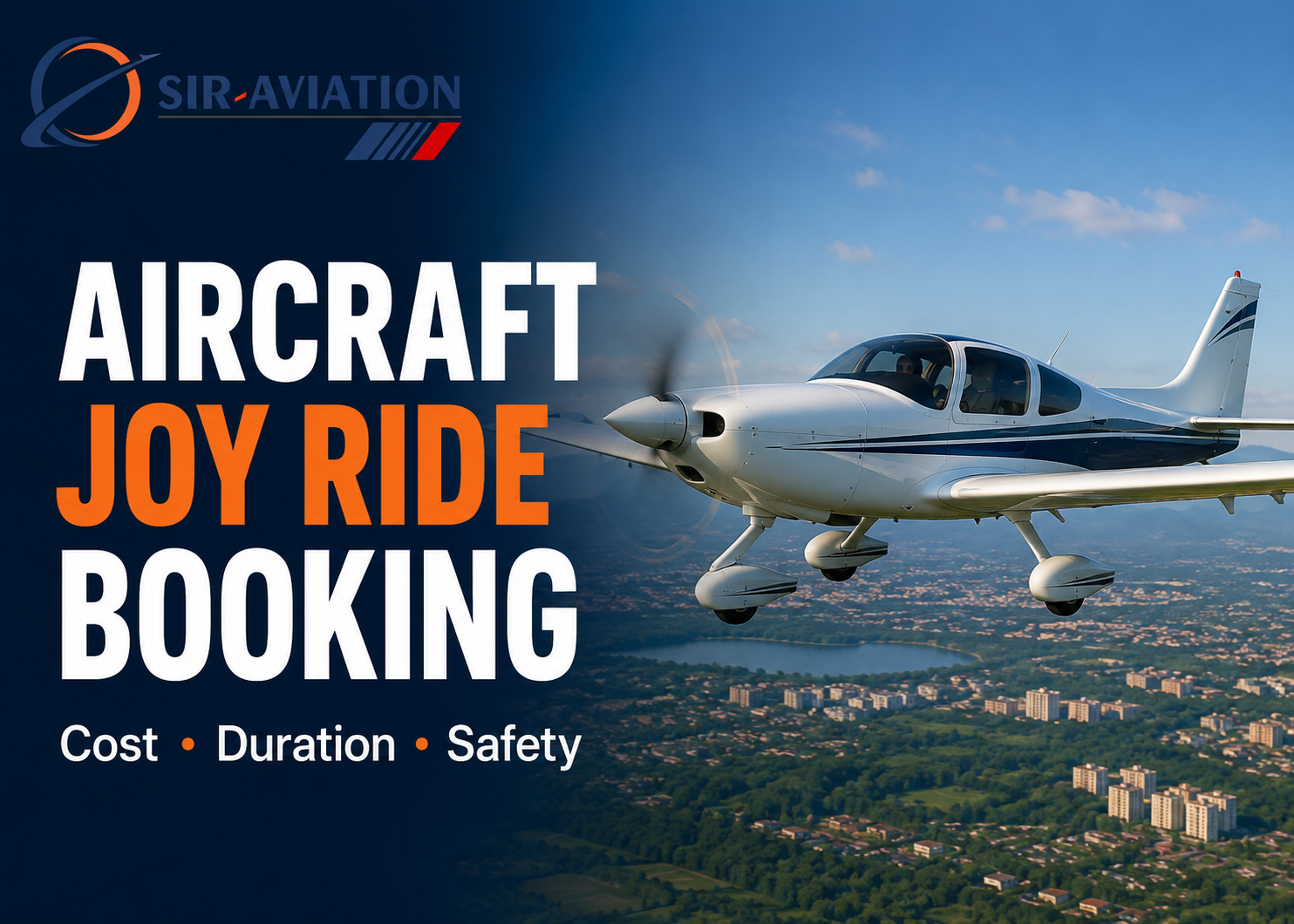
Aircraft Joy Ride Booking gives travellers, families, couples, photographers, aviation enthusiasts, and corporate groups an opportunity to see a familiar destination from an entirely different perspective. Unlike an airline journey, the flight itself is the experience. A light aircraft or helicopter follows a planned sightseeing circuit, allowing passengers to enjoy aerial views without arranging long-distance travel. SIR Aviation helps clients evaluate suitable aircraft, routes, schedules, and operating requirements so that each enquiry begins with clear expectations about price, flying time, passenger limits, and safety.
What Is an Aircraft Joy Ride?
An aircraft joy ride is a short recreational flight operated primarily for sightseeing or the pleasure of flying. It normally departs from and returns to the same aerodrome, helipad, or authorised operating location. Depending on local permissions and aircraft availability, the experience may use a fixed-wing aeroplane or helicopter.
How Much Does an Aircraft Joy Ride Cost?
There is no single nationwide fare. Indian joy-ride prices vary considerably by city, aircraft category, duration, seating configuration, airport charges, and operator. A short shared-seat flight in a light aeroplane may cost several thousand rupees per passenger. A privately booked helicopter or exclusive aircraft usually costs much more and may be quoted for the complete aircraft rather than each seat.
Main Factors That Influence Price
Aircraft type: A small piston aeroplane generally has a different operating cost from a turbine helicopter or business aircraft. Fuel consumption, maintenance reserves, crew requirements, insurance, and utilisation all affect the rate.
Flight duration: Many operators build packages around defined airborne periods, such as 10, 15, 20, 30, or 60 minutes. A longer circuit consumes more fuel and operating time, so the price normally rises accordingly.
Shared or private booking: Shared-seat arrangements divide costs among passengers but may require a minimum load or fixed departure schedule. An exclusive booking offers privacy and greater coordination flexibility, although the client pays for the aircraft capacity reserved.
Airport and helipad charges: Landing fees, parking, ground handling, passenger facilitation, and security costs differ between locations. A major metropolitan airport may carry higher operational charges than a smaller aerodrome.
Duration: Air Time Versus Total Experience
A “15-minute joy ride” usually describes approximate flight time, not the complete visit. Passengers may spend 45 to 90 minutes or longer at the operating location because check-in, identity verification, weighing, security procedures, safety briefing, boarding, engine start, air traffic clearance, and disembarkation occur outside the advertised airborne period.
Short 10-to-15-minute flights work well for first-time passengers and quick landmark circuits. A 20-to-30-minute experience permits a broader route and more time to settle into the flight. Longer options may suit photographers, dedicated enthusiasts, or travellers seeking coverage of several viewing points. Route feasibility still depends on airspace and operational conditions.
Passengers should ask how the operator measures duration. Some quotations refer to chock-to-chock time, meaning the period from aircraft movement before departure until it stops after landing. Others refer to airborne time. Helicopter billing may use engine-running time. Clarifying the definition makes two apparently similar offers easier to compare.
Choosing Between an Aeroplane and a Helicopter
A fixed-wing aeroplane offers the classic sensation of taking off from a runway, banking over a landscape, and viewing the terrain through side windows. Light aeroplanes can be cost-effective for longer sightseeing circuits when an appropriate airport is available. Cabin size, window position, wing location, and seating arrangement influence visibility.
A helicopter can operate from suitable approved locations and may offer excellent downward and lateral views. It can fly sightseeing patterns suited to relatively compact areas, subject to permissions. Helicopter packages often command higher prices because of operating costs, availability, and infrastructure requirements.
How the Booking Process Works
Begin by sharing the city or region, preferred date, flexible alternatives, number of adults and children, approximate passenger weights, and desired flight length. Mention the occasion and any special request at the first stage. Accurate details allow SIR Aviation to assess realistic options rather than present a generic package that may not fit the group.
The next stage normally involves checking aircraft availability, operator suitability, base location, route feasibility, and local permissions. Once an option is identified, review the aircraft category, passenger capacity, proposed duration, reporting point, inclusions, exclusions, payment schedule, and cancellation terms.
Before paying, confirm whether the price applies per person or to the whole aircraft. Check minimum passenger requirements for shared departures and whether an infant occupies a seat under the applicable policy. Provide correct names, ages, identification details, weights, and any medical or mobility information requested for operational planning.
After confirmation, passengers receive reporting instructions and restrictions. The crew makes the final operational decision on route, loading, departure, delay, or cancellation. A confirmed reservation secures a planned service; it cannot override weather, air traffic, technical, regulatory, or security requirements.
Safety Standards Passengers Should Check
Safety begins with a properly authorised operator. Commercial flying in India falls within the regulatory framework administered by the Directorate General of Civil Aviation. The DGCA’s operator-certification material makes clear that compliance is assessed before an Air Operator Certificate or Permit is issued. Passengers should ask who will operate the aircraft and verify that the operation uses appropriate approvals, qualified crew, maintained aircraft, and valid insurance.
Avoid choosing solely through the lowest price or an attractive social-media video. A responsible booking process should identify the actual operator, aircraft type, operating base, and cancellation rules. It should also explain that the pilot may change the route or decline departure for safety reasons.
Every passenger must attend the pre-flight briefing. It commonly covers seat belts, doors, emergency exits, headsets, movement near the aircraft, loose objects, prohibited items, and crew commands. Passenger safety-information cards are an established regulatory requirement for passenger aircraft operations. Listen even if you fly frequently because exits and procedures vary by aircraft.
Never approach an aircraft until directed. Propellers and helicopter rotors can be difficult to judge when turning. Secure scarves, caps, bags, cameras, and other loose objects. Around a helicopter, follow the crew’s specified approach path, remain within view of trained personnel, and never walk towards the tail.
Weather, Delays, and Cancellations
Pleasure flights depend heavily on suitable visibility, cloud base, wind, precipitation, and local conditions. A clear view is part of the product, but safe aircraft operation remains the controlling consideration. Even when the weather appears acceptable from the ground, conditions along the route or at altitude may prevent departure.
Air traffic congestion, temporary flight restrictions, VIP movement, runway availability, technical inspections, or security directions can also delay a sortie. Build flexibility into celebration plans and avoid placing a non-refundable event immediately after the expected landing time.
Read the weather-cancellation policy before payment. Ask whether the booking will be rescheduled, converted into credit, or refunded if the operator cancels. Also check what happens if the customer arrives late, fails to carry identification, exceeds a disclosed weight limit, or decides not to fly after reporting.
Passenger Fitness, Comfort, and Restrictions
Most healthy passengers can enjoy a short flight, but individual suitability matters. Inform the booking team about pregnancy, recent surgery, heart or respiratory conditions, severe motion sickness, mobility limitations, or any condition that could affect safe boarding and flight. Seek advice from a qualified medical professional when uncertain; booking staff cannot replace medical assessment.
Wear comfortable clothing and closed, secure footwear. Avoid heavy meals and alcohol before departure. If prone to motion sickness, choose a forward-facing seat when available, look outside towards the horizon, and discuss appropriate medication with a medical professional beforehand. Do not take a new medicine merely for the flight without suitable advice.
Weight limits protect aircraft performance and balance. Operators may request each passenger’s accurate weight and assign seats accordingly. This is an operational calculation, not a judgement. Baggage is often prohibited or tightly restricted, especially in small aircraft. Cameras and phones may be allowed only when securely held and used according to crew directions.
Children may face minimum-age, seating, restraint, identification, or guardian requirements. Noise levels can also be significant. Ask whether child-sized hearing protection or an approved restraint is available. Never assume that an infant can travel on an adult’s lap simply because that arrangement is familiar elsewhere.
Getting Better Value From the Experience
Value involves more than selecting the longest flight. A well-chosen 20-minute circuit with strong visibility, convenient reporting, clear window access, and reliable coordination may feel more rewarding than a longer route affected by haze or poor seating.
Always ask whether a proposed route includes the landmarks you expect and whether seating allocation may affect each passenger’s view during flight operations.
Request a route description while accepting that it remains provisional. For photography, ask about window reflections, wing obstruction, seating, lens restrictions, and whether commercial shooting needs permission. Wear dark clothing to reduce reflections and keep equipment minimal. Never obstruct controls, exits, or another passenger’s space for a photograph.
Compare offers on equal terms: aircraft type, private or shared basis, measured duration, passenger capacity, taxes, airport fees, positioning, cancellation rights, and included services. A cheaper headline rate may exclude material charges or provide less actual flying time.
Why Plan the Flight With SIR Aviation?
An enjoyable flight depends on coordination behind the visible experience. SIR Aviation supports clients by translating a personal idea into an operationally workable request. The team can assess aircraft options, passenger needs, intended location, duration, availability, and relevant operating constraints before presenting a proposal.
Clear communication remains central throughout the process. Clients need realistic information about cost components, reporting time, identity documents, baggage restrictions, weather dependence, and cancellation conditions. Industry partners need accurate passenger details and timely decisions. Bringing these elements together reduces uncertainty and supports a smoother experience.
SIR Aviation also serves professional and institutional enquiries, including employee engagement, tourism concepts, corporate hospitality, familiarisation flights, and aviation-related events. Each requirement receives individual review because aircraft availability, aerodrome access, permissions, and local conditions differ.
Final Booking Checklist
Before confirming, verify the operating company, aircraft category, total payable cost, taxes, flight-time definition, passenger capacity, weight limitations, route basis, reporting time, identification requirement, cancellation policy, and weather procedure. Disclose relevant mobility or health concerns and obtain written confirmation of special arrangements.
Aircraft Joy Ride Booking should feel exciting from the first enquiry, but informed planning makes that excitement easier to enjoy. Treat published prices and routes as starting points, compare offers carefully, and allow the operator’s safety decisions to take priority. With a suitable aircraft, transparent terms, accurate passenger information, and realistic scheduling, SIR Aviation can help turn a short flight into a memorable aerial experience.
Frequently Asked Questions
How long does a typical joy ride last?
Common airborne packages range from about 10 to 30 minutes, although longer flights may be available. The complete experience takes longer because check-in, security, weighing, briefing, boarding, and air traffic clearance happen before take-off. Confirm whether the quoted duration means airborne, chock-to-chock, or engine-running time.
Is an aircraft joy ride safe for first-time passengers?
A properly authorised flight operated by qualified crew in a maintained aircraft follows established operational and safety procedures. First-time passengers must disclose relevant health concerns, attend the briefing, wear restraints, secure loose items, and obey crew instructions. Weather, technical, or airspace concerns may require delay, rerouting, or cancellation.
What documents and details are needed for booking?
Passengers generally need government-issued photo identification matching the confirmed name. The booking team may request age, weight, contact information, and relevant medical or mobility details. Requirements vary by location and operator, so review the confirmation carefully and carry original documents if instructed. Incorrect details can prevent boarding.