
International Air Ambulance Service: Costs, Medical Support and Booking Process Explained
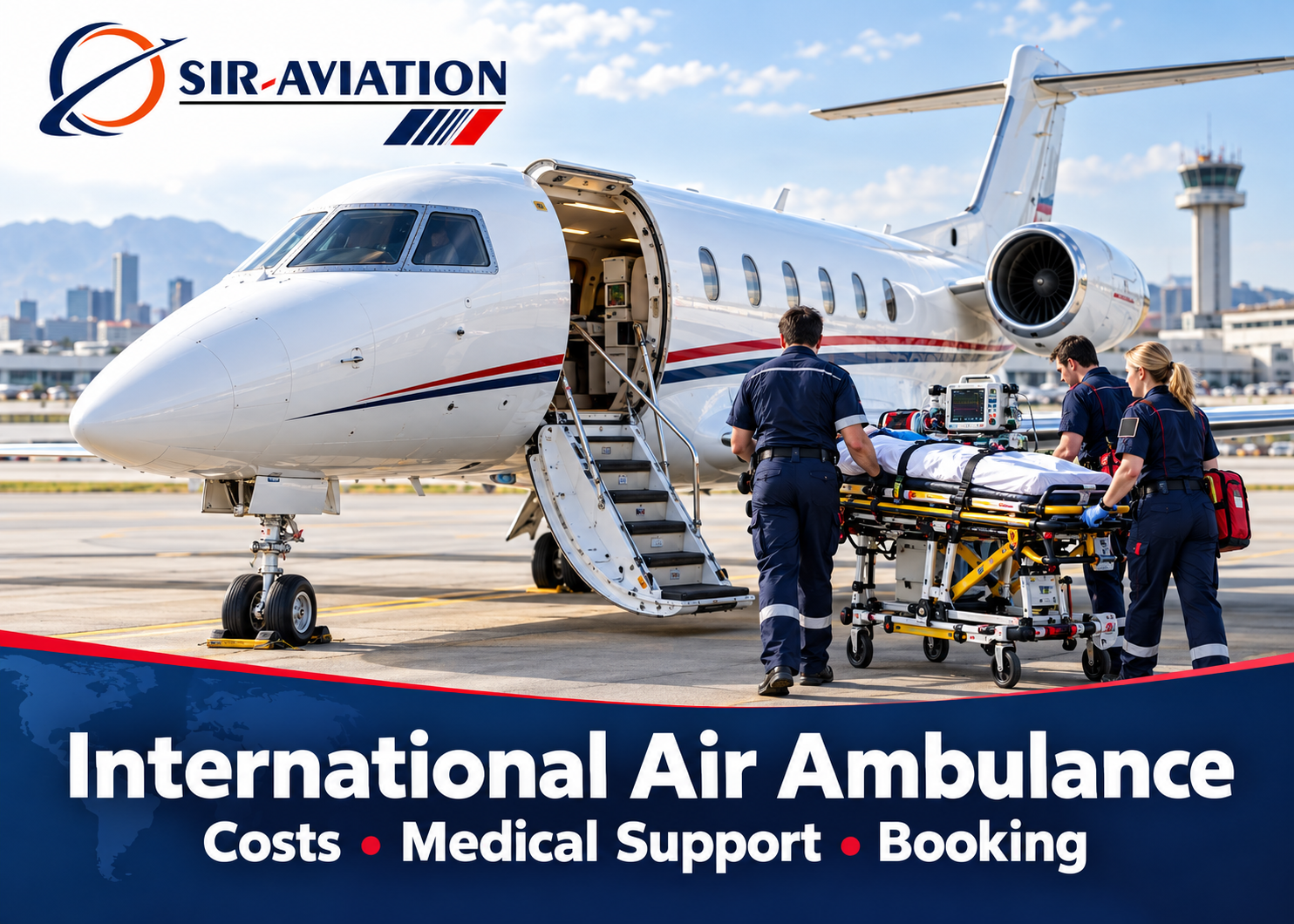
An international air ambulance service helps patients cross borders when their condition requires medical supervision, specialised equipment or assistance beyond ordinary passenger travel.
Families usually need clear answers about costs, medical support, hospital coordination and departure arrangements. Each decision affects the patient’s journey and continuity of care.
For enquiries with SIR Aviation, preparing recent medical reports and destination details can help establish the requirements before discussing aircraft options or estimated charges.
What Is an International Air Ambulance Service?
An international air ambulance transports a patient between countries with medical personnel and equipment appropriate to the assessed clinical requirements.
The arrangement may involve a dedicated medical aircraft, an approved commercial airline stretcher or a medical escort accompanying a seated passenger.
These options serve different needs. A patient requiring intensive monitoring may need a dedicated aircraft, while a stable patient may qualify for commercial travel.
The UK Civil Aviation Authority recognises that air ambulances can transport some patients requiring intensive care, subject to individual medical assessment.
Medical Evacuation and Medical Repatriation
Medical evacuation generally involves transferring someone to a location where they can receive appropriate treatment when suitable care is unavailable locally.
Medical repatriation involves returning a patient to their home country for continued treatment, rehabilitation or family support.
The purpose of the transfer helps determine the receiving hospital, transport arrangements and insurance questions that families should address before booking.
When Might a Patient Need International Medical Transport?
An overseas medical transfer may become necessary after a serious illness, an accident, hospitalisation abroad or a decision to continue treatment closer to home.
Possible situations include:
- A patient needs specialist treatment unavailable at the current location.
- A hospital recommends transfer to another clinical facility.
- A recovering patient cannot manage an ordinary flight independently.
- A patient requires respiratory support or continuous monitoring during travel.
- A family seeks medically supervised repatriation after treatment abroad.
A diagnosis alone does not determine suitability. The treating and transport medical teams must assess the patient’s condition, journey length and anticipated care requirements.
For an immediate medical emergency, seek local emergency treatment first. International transport planning should support the patient’s care without delaying urgent stabilisation.
How Much Does an International Air Ambulance Service Cost?
There is no single international air ambulance price. The total depends on the route, aircraft positioning, medical requirements and services included.
A short international sector and a long intercontinental transfer involve very different operating demands. Distance alone cannot provide a reliable quotation.
The CDC notes that some medical evacuations can exceed US$100,000. This illustrates potential financial exposure; it does not establish a standard fare.
Families should request a written, case-specific estimate after the provider reviews the medical information and proposed journey.
Distance, Routing and Fuel Stops
Longer routes typically require more flying time, fuel and crew resources. Some journeys also need technical stops or an overnight crew rest.
Compare the complete journey, including ground transfers and stopovers. The shortest airborne route may not produce the most practical hospital-to-hospital arrangement.
Aircraft Type and Positioning
Aircraft selection depends on range, cabin space, airport access and the medical configuration required for the patient.
An aircraft may need to fly from its operating base to the departure airport. Ask whether the quotation includes this positioning sector.
Medical Team and Equipment
A transfer requiring a critical care team, ventilation and multiple infusion pumps differs substantially from a journey requiring observation and mobility assistance.
The medical assessment should determine staffing and equipment. Families should avoid selecting a lower care level purely to reduce the price.
Ground Ambulances and Airport Handling
Airport handling, patient loading arrangements and ground ambulances can contribute to the total.
Check whether both road transfers include suitable medical personnel, oxygen and equipment for the patient’s condition.
Urgency and Operational Availability
Urgent requests may limit aircraft choices and require rapid coordination across several organisations.
However, payment alone cannot guarantee immediate departure. Medical acceptance, aircraft availability, permissions and receiving hospital readiness must align.
What Should a Written Quotation Include?
A clear quotation helps families compare equivalent services and identify charges that may arise after confirmation.
Ask for written details covering:
- Departure and arrival locations.
- Aircraft type and proposed routing.
- Medical crew composition.
- Planned equipment and oxygen provision.
- Ground ambulance arrangements at both ends.
- Airport handling and patient loading support.
- Permissions and administrative charges.
- Accompanying passenger allowance.
- Payment schedule and quotation validity.
- Cancellation, postponement and additional waiting charges.
Ask whether the price covers hospital-to-hospital transport or only the flight. Confirm separately whether destination hospital admission and treatment charges remain payable.
Also establish what happens financially if the patient’s condition changes before departure and the medical team revises the transport plan.
What Medical Support Can Patients Receive During the Flight?
The onboard care package should reflect the patient’s assessed needs, including foreseeable changes during the journey.
Depending on the aircraft configuration and agreed scope, equipment may include:
- A transport ventilator.
- A patient monitor and defibrillator.
- Medical oxygen and delivery equipment.
- Infusion or syringe pumps.
- Suction equipment.
- Emergency medicines and airway supplies.
- A secured stretcher and patient restraint system.
Equipment availability must be confirmed for the specific mission. Families should never assume every aircraft carries an identical medical setup.
Who Accompanies the Patient?
The team may include a doctor, nurse, paramedic or other appropriately qualified professional, depending on the clinical requirements and applicable arrangements.
Ask who will lead clinical care and whether the team has relevant transport experience for the patient’s condition.
Adult critical care, paediatric transport and neonatal transfers require different capabilities. Specialist cases need explicit confirmation of suitable staff and equipment.
Why Preflight Assessment Matters
A medical review considers the patient’s recent progress, respiratory needs, circulation, treatment and ability to tolerate the planned transfer.
The team must also account for cabin conditions, flight duration, loading, ground travel and access to care during stopovers.
A treating doctor’s recommendation supports planning, but the transport team and aircraft operator must also accept the proposed arrangement.
Continuity of Care Throughout the Journey
Patient care involves more than the airborne sector. Collection, loading, arrival and hospital handover all require coordination.
The plan should identify who assumes clinical responsibility at each stage and how teams will communicate changes.
Dedicated Air Ambulance, Airline Stretcher or Medical Escort?
The appropriate option depends on medical suitability, route availability, urgency and airline acceptance.
| Transport option | Potential suitability | Main consideration |
|---|---|---|
| Dedicated air ambulance | Patients requiring substantial medical support or a tailored transfer | Aircraft capability and clinical acceptance |
| Commercial airline stretcher | Selected patients who must remain lying down | Airline approval, route and stretcher availability |
| Seated medical escort | Stable patients who can travel seated with professional assistance | Medical suitability and airline requirements |
A commercial option may reduce costs in suitable cases, but it cannot replace a dedicated aircraft when the required care exceeds airline capabilities.
Air India requires advance arrangements and medical clearance for stretcher travel, with availability restricted to its operated sectors. Other airlines apply their own conditions.
International Air Ambulance Booking Process
A structured booking process connects medical decisions with flight planning, documentation and hospital arrangements.
Step 1: Share the Patient’s Location and Transfer Requirement
Provide the current hospital, departure city, destination country and reason for transfer.
Include the treating doctor’s contact details and the receiving hospital’s details, if available. Identify one family representative to coordinate updates.
Explain any known urgency, mobility limitations or ongoing respiratory support when making the initial enquiry.
Step 2: Submit Recent Medical Records
Send the latest clinical summary, relevant investigation results, medication details and current support requirements through the agreed secure channel.
Older discharge documents may not reflect the patient’s present condition. The transport team may request updated observations or direct discussion with the treating doctor.
Accurate information helps prevent unsuitable aircraft selection and unexpected changes after the quotation.
Step 3: Complete the Medical Assessment
The medical team evaluates transport suitability and determines the required crew, equipment and care arrangements.
If the patient needs further stabilisation, departure may require postponement. A revised clinical assessment may also change the transport method.
For commercial travel, the airline may require its own Medical Information Form, commonly called MEDIF, and supporting medical documentation.
Step 4: Confirm the Receiving Hospital
The destination hospital should confirm acceptance, appropriate facilities and the intended admission arrangements before departure.
Families should identify the receiving consultant or department and clarify any deposit or financial requirements.
An available aircraft does not establish hospital readiness. Both arrangements require separate confirmation.
Step 5: Review the Transfer Plan and Quotation
Check the proposed aircraft, routing, medical team, ground transfers and financial terms.
Ask the coordinator to distinguish confirmed arrangements from items awaiting approval. Clarify the consequences of delays, changed routing or additional medical requirements.
Step 6: Complete Travel and Operational Requirements
The responsible teams coordinate applicable permissions, airport arrangements and patient travel documentation.
Requirements vary by nationality, destination, transit point and transport method. Families should confirm the case-specific checklist before committing to a departure time.
Step 7: Reconfirm Readiness and Complete the Transfer
Before collection, the teams should reconfirm the patient’s condition, hospital acceptance, ambulance timing and operational readiness.
At the destination, the medical team should hand over relevant records, treatment information and any changes during transport.
Which Documents May Be Required?
The document checklist depends on the countries involved, patient nationality and chosen transport arrangement.
Commonly requested documents include:
- Valid passport and applicable entry permission.
- Recent medical summary and investigation reports.
- Treating doctor’s transfer recommendation.
- Patient consent or appropriate representative authorisation.
- Receiving hospital acceptance details.
- Insurance information and claim authorisation, where relevant.
- Airline medical forms for commercial travel.
- Documents for an accompanying family member.
Additional documentation may apply to children, particular medical equipment or controlled medicines. Confirm these requirements through the relevant operator and authorities.
A medical transfer does not automatically remove immigration requirements. Check entry and transit arrangements early to avoid preventable delays.
Does Insurance Cover International Air Ambulance Costs?
Insurance coverage depends on the policy wording, medical necessity, exclusions and the insurer’s approval process.
The CDC distinguishes travel health insurance from medical evacuation coverage and advises travellers to examine the benefits relevant to overseas treatment and transport.
Before confirming a privately arranged transfer, ask the insurer:
- Does the policy cover the proposed evacuation or repatriation?
- Is prior authorisation required?
- Must an approved assistance company arrange transport?
- Does coverage include the requested destination?
- What limits, exclusions or excess payments apply?
- Will the insurer pay directly or reimburse eligible expenses?
Keep written approvals, quotations, medical recommendations and invoices. A verbal assurance may leave important financial questions unresolved.
How Long Does It Take to Arrange Departure?
There is no universal booking timeline. Readiness depends on medical clearance, aircraft availability, hospital acceptance, documentation and operational approvals.
A straightforward route may require fewer arrangements than a journey involving several countries, technical stops or specialist equipment.
Ask for two separate estimates: the expected departure window and the total hospital-to-hospital journey time.
Request updates if either estimate changes. Ground transfers, loading and handover can add substantial time beyond the scheduled flight duration.
Can a Family Member Travel With the Patient?
An accompanying relative may travel when seating, aircraft payload, medical access and immigration arrangements permit.
Confirm this before booking. The patient’s care requirements may limit cabin space or the number of accompanying passengers.
Ask about baggage restrictions, travel documents and onward transport. A relative’s flight acceptance does not automatically include accommodation or access to the destination hospital.
Questions to Ask Before Choosing a Provider
A useful discussion should establish who operates the flight, who provides clinical care and who coordinates the complete transfer.
Ask for the aircraft operator’s identity, relevant operating authorisation and a clear explanation of the medical arrangements.
Also request a named coordinator, an escalation contact and written confirmation of the agreed service scope.
For an enquiry with SIR Aviation, prepare the latest medical summary, departure and destination details, hospital contacts and insurance information.
These details create a stronger basis for discussing feasible arrangements, estimated costs and the next booking steps.
Conclusion
International patient transport requires coordinated medical care, aviation planning and clear financial terms. The right arrangement depends on the patient’s condition and destination requirements.
Before confirming a booking, review the medical plan, hospital acceptance, complete quotation and documentation checklist. Clear answers help families make informed decisions under pressure.
Frequently Asked Questions
Can an international air ambulance service transport a ventilated patient?
Some dedicated aircraft can transport ventilated patients with suitable equipment and qualified staff. Acceptance depends on clinical assessment, aircraft capability and the planned route.
How can I book an international air ambulance service to bring a patient to India?
Share recent medical reports, the overseas hospital location and destination details. Confirm receiving hospital acceptance, medical clearance, travel documentation and the written transfer plan.
Is a dedicated air ambulance necessary for every international patient transfer?
No. Selected stable patients may qualify for an airline stretcher or seated medical escort. The medical assessment and airline acceptance determine suitability.