
How Does Private Air Charter Service in India Work? Costs, Booking Process and Key Benefits
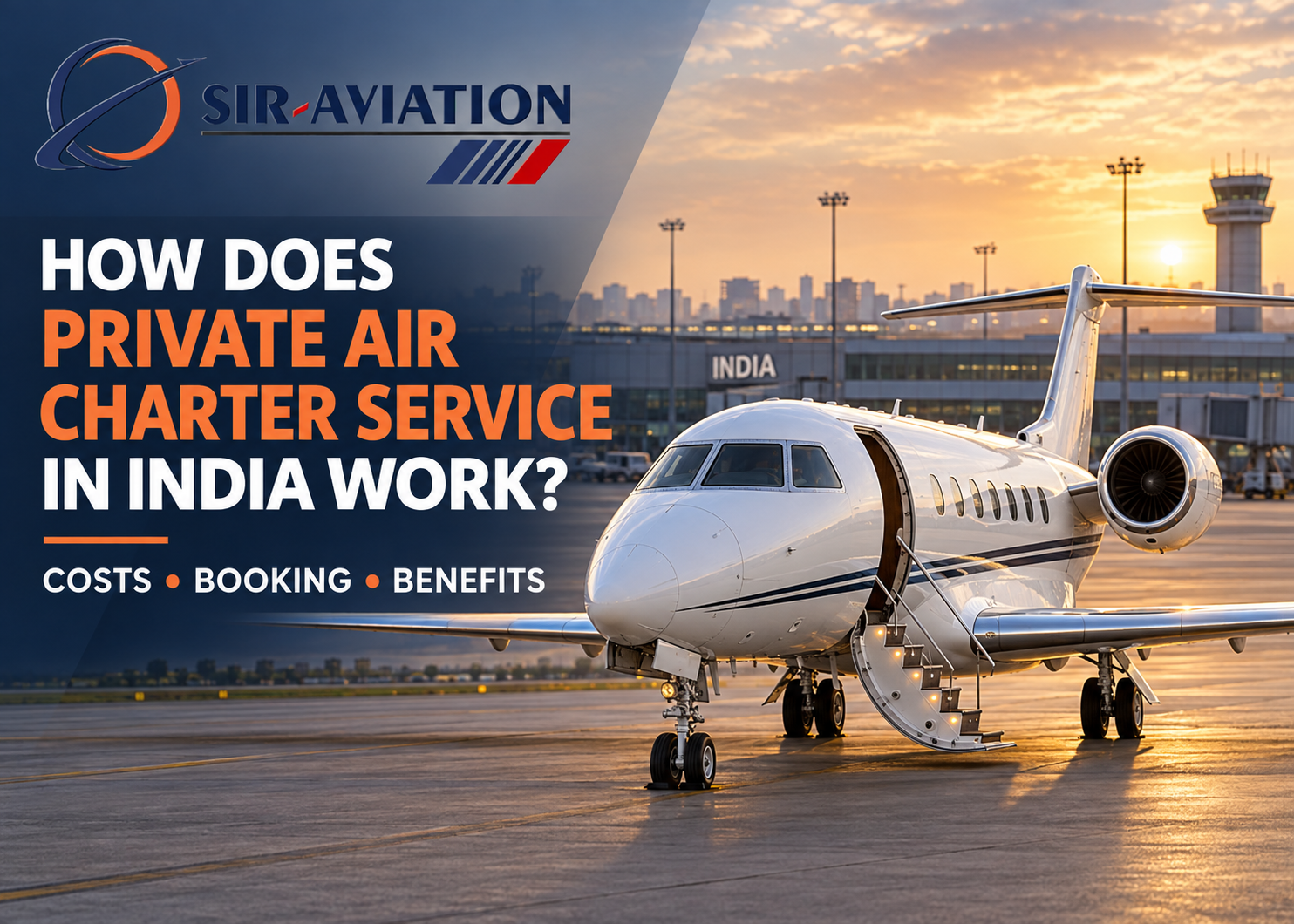
For travellers who value control over timing, routing and privacy, Private Air Charter Service in India offers a practical alternative to scheduled commercial flights. Instead of purchasing separate seats on a fixed service, the customer hires an aircraft for a specific journey. The departure time, origin, destination, passenger requirements and onboard preferences are planned around the mission, subject to aircraft availability, airport permissions, operating limits and weather conditions. This flexibility supports business travel, family journeys, group movement, urgent visits, remote-area access and carefully coordinated multi-city itineraries.
Behind the passenger’s smooth experience sits detailed operational planning. The charter team evaluates the route, baggage, runway suitability, crew limits, fuel needs, airport hours, parking and regulatory requirements before confirming the flight.
What Is a Private Air Charter?
A private air charter is an on-demand flight arranged for an individual, family, company or group. The customer reserves the complete aircraft rather than travelling on a published airline schedule. The Directorate General of Civil Aviation defines a charter operation as an operation for hire and reward in which the departure time, departure location and arrival locations are negotiated with the customer for the entire aircraft; individual passenger tickets are not sold for that operation. India’s non-scheduled operators work within the applicable permit and safety framework established by the DGCA.
Charter aircraft range from compact turboprops and light jets to midsize jets, long-range aircraft and helicopters. Each category serves a different mission. A turboprop can be efficient for a short sector and may use airports with shorter runways. A light jet offers speed and comfort for small groups. Larger jets provide greater cabin space, baggage capacity and range. Helicopters help connect locations where a suitable runway is unavailable, subject to landing permissions and operating conditions.
Air traffic control, slots, weather, runway performance, local permissions and crew limitations still apply. The advantage lies in designing a feasible flight around the traveller priorities.
How the Charter Process Works
1. Share the Travel Requirement
The process begins with a clear enquiry. The traveller provides the intended departure and destination, preferred date and time, number of passengers, baggage quantity and whether the trip is one-way, return or multi-city. Details such as pets, mobility support, special catering, oversized equipment or a tight onward connection should be mentioned immediately.
Precise information supports a realistic aircraft recommendation. Six passengers with cabin bags may fit a smaller aircraft, while the same group carrying bulky equipment may need a larger baggage hold.
2. Assess the Route and Airports
The provider checks whether the requested airports can support the proposed aircraft. Runway length, elevation, surface condition, operating hours, fire category, navigation facilities and fuel availability may affect the choice. At busy airports, slots and parking can become decisive. At smaller airfields, permission, ground handling or daylight-only operations may shape the schedule.
The team may suggest a nearby airport if it reduces cost or congestion. Ground-transfer time and airport access should form part of the comparison.
3. Match the Aircraft to the Mission
Aircraft selection balances safety, range, passenger comfort, baggage capacity and price. The provider considers whether the aircraft can complete the sector nonstop under expected conditions. Heat, runway length, passenger load and baggage can change performance. A model that looks suitable on distance alone may require a fuel stop or payload restriction.
Customers should ask about seating, cabin dimensions, lavatory provision, baggage capacity and expected flight time. SIR Aviation compares aircraft according to the mission, with operational suitability leading the decision.
4. Review the Quotation
Once a suitable option is identified, the customer receives a quotation. A sound quote should state the route, dates, aircraft type, passenger limit, price, taxes, inclusions, exclusions, payment schedule and cancellation conditions. It should also explain whether the amount may change because of waiting time, route deviation, airport charges, de-icing, foreign permits, extended parking or changes requested after confirmation.
A lower headline figure may exclude positioning, handling or taxes included elsewhere. Ask how long the aircraft remains on hold and what happens if the preferred slot is unavailable.
5. Confirm the Flight and Passenger Details
After accepting the quote, the customer signs the charter agreement and makes payment according to the stated terms. The provider collects passenger names and identification details required for the journey. International travel also requires valid passports, visas and any destination-specific documents. The traveller remains responsible for carrying correct documentation, while the charter team coordinates the operational manifest.
Names should match identity documents exactly. Record dietary needs, mobility assistance, infant travel, pets and sensitive baggage in writing.
6. Complete Operational Planning
The operations team prepares the flight plan, coordinates slots and permissions, confirms crew, organises handling and monitors weather. It also checks airport notices and operational restrictions. For an international charter, overflight permits, landing permits, customs, immigration and ground arrangements add further layers.
Safety considerations can still require a delay, different airport, fuel stop or cancellation.
7. Arrive, Board and Fly
Passengers generally arrive closer to departure than they would for a scheduled airline, although reporting time varies by airport and flight type. Security and identity checks still apply. Some airports use a dedicated terminal or general aviation facility, while others process charter passengers through designated areas in the main terminal.
After clearance, passengers board and receive a safety briefing. Baggage handling and onward transport can be coordinated in advance.
How Much Does a Private Charter Cost in India?
There is no universal fare because charter pricing follows the aircraft and mission, not merely the number of occupied seats. Indicative market quotations for domestic flying may begin around ₹1.5 lakh to ₹3 lakh per flying hour for certain turboprops or very light aircraft, while light and midsize jets may range broadly from about ₹3 lakh to ₹6 lakh or more per hour. Larger, premium or long-range aircraft can cost substantially more. Helicopter quotations vary widely according to type, location, positioning and landing arrangements.
These figures are broad planning references, not offers from SIR Aviation. Availability, fuel prices, taxes, airport fees, seasonal demand and route conditions can move the final amount considerably. A formal quotation based on the exact itinerary is the only dependable way to establish cost.
Before accepting a price, ask the provider to separate unavoidable operating costs from optional services. This makes alternatives easier to assess. A departure from a secondary airport may reduce parking or congestion expenses, yet add a longer road transfer. A larger aircraft may remove a fuel stop, but its higher hourly rate may outweigh the time saved. Similarly, a same-day return may cost less than keeping aircraft and crew overnight. The most economical plan emerges from comparing complete itinerary options, not negotiating one isolated rate.
Flying Time and Minimum Billing
Flight duration is a major component, but operators may apply a daily minimum utilisation. A short sector can therefore be billed above its actual airborne time. Taxi time may also form part of chargeable flight time under the quotation terms. Ask how time is calculated and whether minimum billing applies.
Aircraft Positioning
The chosen aircraft may need to fly empty from its base to the departure airport or return after dropping passengers. These positioning legs affect price because the aircraft, crew and fuel are still in use. Selecting an aircraft already near the origin can reduce this expense.
Airport, Handling and Parking Charges
Landing fees, navigation charges, ground handling, passenger services and parking differ by airport. Congested metropolitan airports can cost more, particularly when extended parking is required. If the aircraft cannot remain at the destination, it may reposition elsewhere and return later, adding flying time.
Crew, Night Halt and Waiting Time
A return journey spanning several hours or days may involve crew accommodation, transport, allowances and aircraft waiting charges. Crew duty limitations may require additional pilots or a revised departure time. These rules protect operational safety and must take priority over convenience.
Taxes and Additional Services
Applicable GST and other statutory charges should be identified in the quote. Tax treatment can depend on how the service is supplied, so customers should rely on the provider’s invoice and seek professional tax advice where input-credit or corporate accounting questions arise. Special catering, ground transport, satellite connectivity, additional handling, pets or unusual baggage may carry separate charges.
Empty-Leg Opportunities
An empty leg occurs when an aircraft must reposition without passengers. A traveller whose route and timing match that movement may receive a lower price. The trade-off is limited flexibility: the aircraft, departure point, destination and time are largely predetermined, and the movement may change if the original charter changes. Empty legs suit flexible travellers but are less dependable for critical appointments.
Choosing the Right Aircraft
Turboprops can offer strong value on short regional sectors and may use airports unsuitable for some jets. Light jets suit smaller groups seeking speed and privacy, although compact baggage holds require careful checking. Midsize and large jets provide more cabin room, range and capacity for longer missions at a higher cost. Helicopters can connect industrial sites, pilgrimage regions and places distant from airports, but operations depend heavily on weather, visibility, helipad suitability, permissions and weight limits. The correct category is the smallest aircraft that safely and comfortably fulfils the mission.
Key Benefits of Private Charter Travel
Greater Control Over Time
The strongest advantage is schedule control. Travellers choose a preferred departure window and can design a return around meetings, events or site visits. This reduces unnecessary hotel stays and long airport waits. It can also make two or more cities feasible within one working day when the route and airport operations permit.
Access to More Airports
Charter aircraft can use selected regional airports that have little or no scheduled airline connectivity. This may place passengers closer to factories, project sites, family destinations or tourist areas. The result can be a shorter total journey even when the flight itself uses a smaller, slower aircraft.
Privacy and Productive Space
A private cabin offers discretion for executives, public figures, families and teams handling sensitive matters. Colleagues can discuss work more freely, subject to sensible information-security practices. The quieter environment also supports rest or preparation between commitments.
Efficient Group Movement
When several people need to travel together, a charter keeps the group on one schedule. Sports teams, production crews, delegations and corporate groups can coordinate baggage, ground transport and arrival timing more effectively. The total price may also be assessed against the combined cost of flexible commercial fares, accommodation and lost working hours.
Personalised Arrangements
Catering, cabin preferences, assistance and ground transfers can often be tailored within operational limits. Personalisation does not mean every request is guaranteed, but early communication gives the provider more time to arrange suitable support.
Reduced Exposure to Network Disruption
A direct charter can avoid connections and the knock-on effects associated with a multi-flight airline itinerary. It remains exposed to weather, air traffic restrictions and technical issues, yet fewer journey segments can reduce certain points of failure.
Safety and Operator Verification
Price should never replace due diligence. Customers should work with a provider that can identify the actual operator and explain the aircraft’s legal operating status. DGCA publishes requirements for Air Operator Certificates and Permits, including non-scheduled services. The operating aircraft, qualified crew, maintenance arrangements and applicable approvals must align with the proposed mission.
Ask for the operator’s name, aircraft type and registration. Be cautious if a seller conceals the operator, requests payment to an unrelated account or offers an implausibly low price.
Safety also affects schedule decisions. Weather, runway conditions, air traffic restrictions or a technical observation may delay or alter a flight. A responsible provider communicates the issue and presents feasible alternatives rather than pressuring the crew to proceed.
When Does Chartering Make Practical Sense?
Private chartering can be appropriate when time has unusually high value, commercial connections are poor, several travellers share one itinerary or the destination lies far from a major airport. It is also useful for urgent corporate travel, entertainment and sports movements, family groups, election-related logistics where legally permissible, and specialist missions requiring careful coordination.
It may offer less value for a solo traveller on a heavily served route with a flexible schedule. In such cases, a commercial business-class ticket may meet the need at a fraction of the cost. A trustworthy charter discussion should test the journey requirement instead of assuming a private aircraft is always the best answer.
How to Book with SIR Aviation
Share the origin, destination, date, timings, passenger count and baggage details with SIR Aviation. The team evaluates the route and aircraft options, then provides a quotation. If necessary, another aircraft category, nearby airport or adjusted timing may improve the plan.
Review the agreement before payment and submit accurate passenger documents promptly. For a group, keep one authorised contact available for schedule updates. Follow the reporting time and baggage instructions issued for the airport.
Early enquiries create more choice around festivals, major events and busy travel periods. Short-notice flights depend on aircraft and permission availability.
Making a Confident Charter Decision
A successful charter begins with a defined mission and transparent quotation. Evaluate the complete journey, verify the operator, read the contract and provide passenger information early.
SIR Aviation helps travellers coordinate private flights around practical priorities while keeping operational feasibility at the centre of the plan. With clear communication and realistic expectations, private aviation can turn a complicated itinerary into a direct, efficient and comfortable journey.
Frequently Asked Questions
Can the departure time change after a private charter is booked?
Passengers can request a change, but approval depends on aircraft availability, crew duty limits, airport slots, permissions and the next planned movement. A timing change may also create extra charges. Inform the provider as early as possible and obtain revised confirmation in writing before changing ground arrangements.
How many passengers can travel on a charter aircraft?
Capacity depends on the aircraft’s approved seating configuration and mission conditions. Private aircraft may accommodate a few passengers or larger groups. Passenger weight, baggage, runway length, temperature and route distance can affect usable capacity, so the final manifest must remain within operational limits.
Is a private charter always faster than a commercial flight?
It often reduces reporting time, connections and ground travel by using a convenient airport, but it is not automatically faster on every route. Weather, permissions, airport congestion and aircraft type influence the result. Compare the complete door-to-door journey, not flight duration alone, before deciding.