
Aircraft Aeromedical Services in India: What Are the Benefits, Costs, Safety Measures and Booking Procedures?
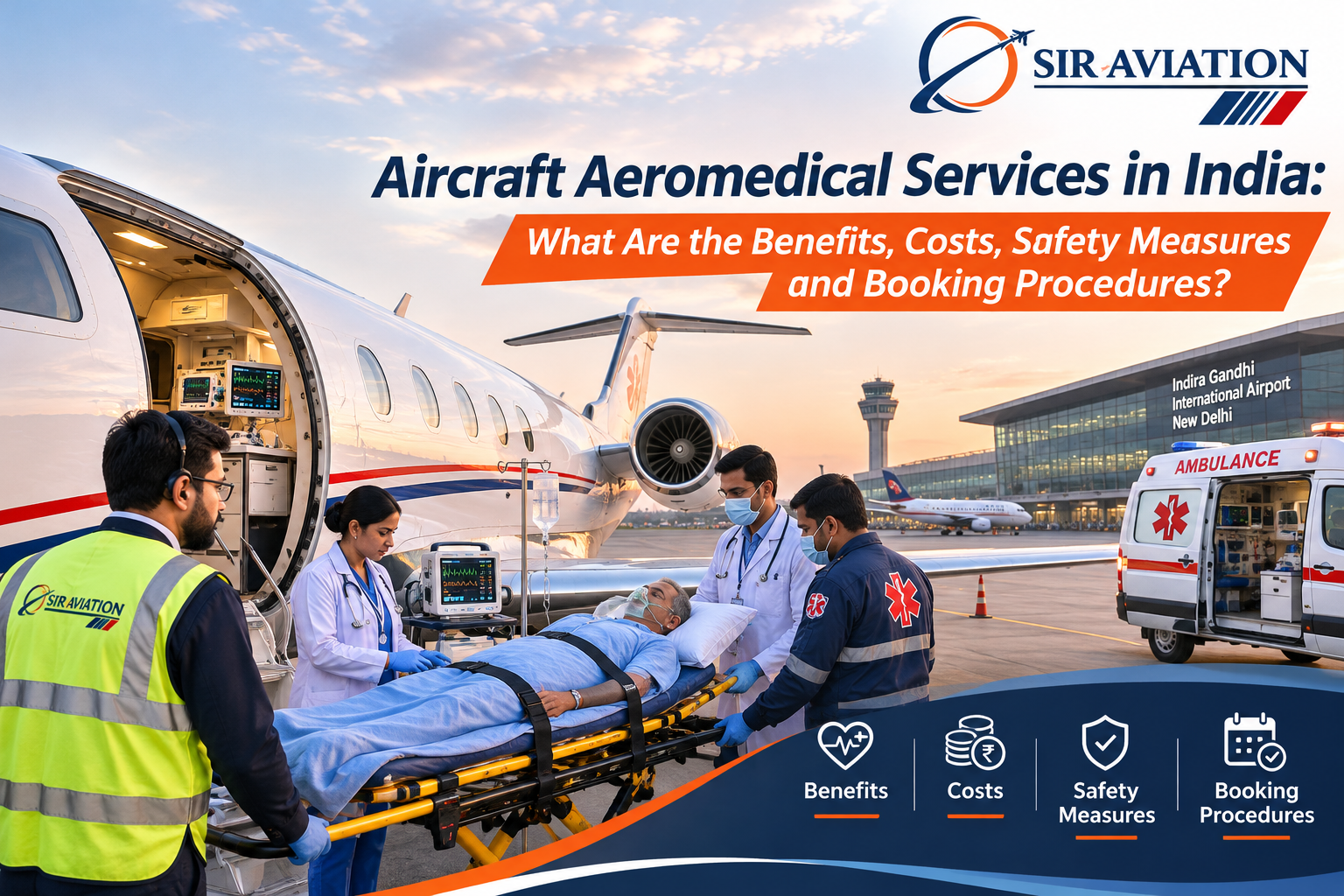
Medical emergencies often demand immediate access to specialised healthcare facilities, particularly when patients require treatment unavailable at nearby hospitals. Aircraft aeromedical services provide an important transportation option for critically ill patients, accident victims and individuals requiring specialised medical care across different locations in India. These services combine aviation capabilities with professional medical assistance to support patient transfers while maintaining appropriate clinical supervision throughout the journey.
Whether transporting patients between major hospitals or arranging emergency evacuations from remote regions, aeromedical transportation can reduce travel time and improve access to essential healthcare.
What Are Aircraft Aeromedical Services in India?
Aircraft aeromedical services involve transporting patients aboard aircraft equipped with medical equipment and supported by appropriately qualified healthcare professionals.
Unlike conventional passenger flights, dedicated aeromedical operations accommodate patients who may need continuous monitoring, oxygen assistance, ventilator support or other medical interventions during transportation.
These services generally involve coordination between aviation operators, medical personnel, hospitals and ground ambulance providers.
Depending on the patient’s condition and geographical requirements, transportation may involve helicopters, turboprop aircraft or specially configured medical jets.
The primary objective is to provide medically appropriate transportation while ensuring continuity of care between the referring and receiving healthcare facilities.
When Are Aircraft Aeromedical Services Required?
Aeromedical transportation becomes particularly relevant when conventional ground transportation cannot adequately meet a patient’s medical or logistical requirements.
Common situations include:
-
Critical medical emergencies: Patients requiring urgent access to specialised treatment facilities.
-
Inter-hospital transfers: Patients moving between hospitals for advanced medical procedures or intensive care.
-
Accident-related injuries: Individuals suffering serious trauma who require specialist medical intervention.
-
Remote-area evacuations: Patients located in mountainous regions, isolated communities or areas with limited road connectivity.
-
International medical repatriation: Patients requiring medically supervised transportation between countries.
-
Organ-related medical logistics: Certain time-sensitive medical transportation operations requiring specialised coordination.
Healthcare professionals must evaluate whether air transportation offers an appropriate clinical benefit before confirming the transfer.
Types of Aircraft Used for Aeromedical Transportation
Different aircraft offer distinct operational advantages. Selecting the appropriate aircraft depends on distance, medical requirements, airport accessibility and operational conditions.
1. Helicopter Air Ambulances
Helicopters are particularly useful for certain short-distance emergency transfers and remote-area evacuations.
Their vertical take-off and landing capabilities provide operational flexibility where suitable landing facilities exist.
Helicopters may support medical evacuations from mountainous regions and locations with limited access to conventional airports.
However, weather conditions, terrain, landing permissions and medical equipment capacity can restrict their operations.
2. Fixed-Wing Turboprop Aircraft
Turboprop aircraft are commonly suitable for regional and interstate patient transfers.
Certain models can accommodate medical stretchers, monitoring systems and accompanying medical personnel.
They can provide a practical option for transporting patients between cities with suitable airport infrastructure.
3. Medical Jet Aircraft
Specially configured jets support longer-distance patient transfers and certain international medical evacuation requirements.
Their speed, cabin configuration and operating range can benefit medically complex journeys.
However, their operating costs are generally higher than those of smaller aircraft.
What Are the Major Benefits of Aircraft Aeromedical Services?
Faster Access to Specialised Healthcare
Air transportation can significantly reduce the flying portion of a journey compared with lengthy road travel.
This advantage becomes particularly important when patients require access to neurological, cardiac, trauma or other specialist healthcare facilities.
However, overall transportation time also depends on aircraft availability, airport access and ground ambulance arrangements.
Continuous Medical Supervision
Dedicated aeromedical flights can accommodate qualified medical professionals who monitor patients throughout transportation.
Depending on the medical requirements, the team may include doctors, critical care nurses, paramedics or other specialists.
Appropriate equipment allows the medical team to respond to changes in the patient’s condition during the journey.
Improved Access to Remote Locations
Certain Indian regions face geographical challenges that complicate emergency medical transportation.
Mountains, difficult roads and considerable distances can create obstacles for conventional ambulances.
Where suitable aviation facilities and permissions exist, aircraft can provide an alternative transportation solution.
Specialised Patient Transportation
Patients requiring stretchers, oxygen, ventilators or continuous clinical monitoring may be unable to travel safely on ordinary passenger services.
Dedicated aeromedical aircraft can accommodate medical equipment appropriate to the aircraft configuration and patient’s clinical requirements.
Coordinated Hospital Transfers
Aeromedical transportation can integrate aviation operations with hospital admissions, medical handovers and ground ambulance movements.
Effective coordination helps reduce avoidable interruptions during the patient transfer process.
How Much Do Aircraft Aeromedical Services Cost in India?
Aeromedical transportation costs vary considerably according to aircraft selection, route distance, medical requirements and operational complexity.
There is no single fixed price applicable to every medical aviation mission.
For preliminary budgeting, the following broad market estimates may be useful.
| Aeromedical service | Indicative cost |
|---|---|
| Shorter helicopter medical transfer | ₹2 lakh–₹10 lakh |
| Dedicated domestic fixed-wing air ambulance | ₹5 lakh–₹20 lakh or more |
| International medical transportation | Individually quoted according to route and requirements |
These figures are approximate planning estimates, not fixed tariffs or confirmed SIR Aviation prices. Actual quotations may fall outside these ranges.
Factors Affecting Aeromedical Transportation Costs
Flight distance: Longer routes generally involve higher fuel consumption, aircraft operating expenses and crew requirements.
Aircraft selection: Helicopters, turboprop aircraft and medical jets have different operating costs.
Medical equipment: Ventilators, patient monitors, oxygen systems and specialised clinical equipment can influence the overall quotation.
Medical personnel: The number and qualifications of accompanying healthcare professionals affect medical service costs.
Aircraft positioning: Transporting an available aircraft from another location can add substantial expenses.
Airport and ground arrangements: Landing charges, handling fees and ground ambulances may contribute to the final cost.
Families should request a written quotation identifying included services, exclusions and additional charges before confirming transportation.
What Safety Measures Are Followed During Aeromedical Transportation?
Patient safety depends on both medical preparation and professional aviation operations.
1. Pre-Flight Medical Assessment
Medical professionals evaluate the patient’s clinical condition before approving transportation.
They assess vital signs, oxygen requirements, existing medical conditions and potential complications associated with flying.
Some patients require additional stabilisation before travelling.
2. Appropriate Medical Equipment
Depending on the patient’s condition, aircraft may require:
-
Portable ventilators and oxygen delivery systems.
-
Cardiac monitors and pulse oximeters.
-
Emergency medication and infusion pumps.
-
Stretchers with appropriate restraint systems.
-
Resuscitation equipment and medical supplies.
Equipment must be suitable for aviation use, properly secured and supported by adequate power and oxygen reserves.
3. Qualified Medical Personnel
The medical team’s composition should reflect the patient’s clinical requirements.
Critically ill patients may need professionals experienced in intensive care, airway management and emergency medicine.
Medical personnel must also be familiar with patient care in an aircraft environment.
4. Aircraft Safety and Regulatory Compliance
Commercial aeromedical aviation operations must comply with applicable Directorate General of Civil Aviation (DGCA) requirements.
The aviation operator must hold appropriate authorisation, maintain aircraft airworthiness and follow applicable flight operating procedures.
Aircraft operating approval alone does not establish the suitability of the medical team or equipment, so both aspects require verification.
5. Flight Planning and Weather Assessment
Pilots assess weather conditions, route suitability, aircraft performance and airport requirements before departure.
Medical urgency does not override mandatory aviation safety limitations.
6. Hospital-to-Hospital Coordination
The transferring hospital must communicate relevant medical details to the receiving facility.
Ground ambulance arrangements should support continuity of treatment before departure and following arrival.
What Is the Booking Procedure for Aircraft Aeromedical Services in India?
Arranging aeromedical transportation requires several coordinated steps.
Step 1: Contact an Aeromedical Transportation Provider
Contact an aviation service provider such as SIR Aviation and explain the transportation requirements.
Provide the patient’s location, destination and urgency of travel.
Step 2: Share Relevant Medical Information
Submit available clinical reports, the patient’s medical condition and details of ongoing treatment.
The provider can coordinate an assessment of suitable medical transportation arrangements.
Step 3: Obtain Medical Clearance
Appropriately qualified medical professionals determine whether the patient can safely undertake the proposed journey.
They may recommend stabilisation, additional equipment or changes to the transportation plan.
Step 4: Confirm Aircraft Availability
The aviation team assesses available aircraft, route feasibility, airport access and operational permissions.
Aircraft selection must accommodate both patient requirements and aviation safety considerations.
Step 5: Review the Transportation Quotation
Request a breakdown of aircraft charges, medical services, ground transportation and other applicable expenses.
Clarify payment conditions, cancellation terms and possible additional charges.
Step 6: Coordinate Hospital and Ground Ambulance Arrangements
Confirm that the receiving hospital has accepted the patient and that suitable accommodation or treatment facilities are available.
Arrange ground ambulances at both ends where required.
Step 7: Confirm Flight Details
Once medical approval, operational clearances and financial arrangements are complete, the provider can confirm the proposed flight schedule.
Departure remains subject to applicable aviation and medical safety requirements.
What Documents Are Required for Aeromedical Flight Booking?
Documentation requirements depend on the patient’s condition, route and type of medical transportation.
Commonly requested documents include:
-
Patient identification details.
-
Available medical records and recent clinical reports.
-
Treating physician’s assessment.
-
Medical fitness-to-fly documentation, where applicable.
-
Referring and receiving hospital information.
-
Patient or authorised representative’s consent.
-
Insurance and payment information.
-
Passport, visa and other travel documents for international transfers.
Additional documentation or approvals may apply to particular medical conditions or international operations.
How Can You Choose a Reliable Aeromedical Service Provider?
Selecting an aeromedical transportation provider requires careful consideration of clinical capabilities, aviation safety and operational experience.
Before confirming a service, ask whether the provider can arrange an appropriately authorised aircraft and a medical team suited to the patient’s condition.
Evaluate the proposed medical equipment, emergency response procedures and hospital coordination process.
Transparent pricing is equally important. A suitable provider should explain the scope of services and clarify any additional expenses.
Families should also confirm how flight delays, weather restrictions and unexpected changes in the patient’s condition will be handled.
The lowest quotation may not represent the most appropriate option when critical medical requirements are involved.
Why Consider SIR Aviation for Aeromedical Transportation Enquiries?
SIR Aviation provides an avenue for discussing specialised aviation requirements, including aeromedical transportation arrangements in India.
Patients’ families, hospitals and healthcare coordinators can contact SIR Aviation to discuss proposed routes, patient transportation needs, aircraft options and operational feasibility.
The process involves reviewing medical requirements, examining suitable aviation arrangements and identifying relevant cost considerations.
Actual services, medical support, aircraft availability and flight schedules require individual confirmation.
Conclusion
Aircraft aeromedical services offer an important transportation option for patients requiring specialised medical attention across different locations in India.
Successful transfers depend on clinical suitability, appropriate aircraft selection, qualified medical personnel, aviation safety and coordinated hospital arrangements.
Before making a booking, families should review medical recommendations, compare service capabilities and obtain transparent quotations.
For aeromedical transportation enquiries, contact SIR Aviation to discuss your requirements and available arrangements.
FAQs
How much do aircraft aeromedical services cost in India?
Dedicated domestic fixed-wing air ambulance transfers may cost approximately ₹5 lakh to ₹20 lakh or more. Costs depend on route distance, aircraft type, medical personnel, equipment and operational arrangements. Each transfer requires an individual quotation.
Which aircraft are suitable for emergency medical transportation?
Helicopters can support certain shorter transfers and remote-area evacuations. Turboprop aircraft frequently suit interstate journeys, while medical jets may accommodate longer routes. The patient's medical condition determines the required aircraft configuration.
Can critically ill patients travel by aeromedical aircraft?
Yes, some critically ill patients can travel aboard suitably equipped aircraft with appropriate medical supervision. However, medical professionals must assess the patient's condition, stabilisation requirements and potential risks before approving transportation.
Are aeromedical transportation services available across India?
Aeromedical services may be arranged between many Indian cities and certain remote locations. Availability depends on suitable aircraft, airports or landing facilities, medical support, weather conditions and applicable operational permissions.
How quickly can an aeromedical flight be arranged?
Preparation time varies according to aircraft availability, patient condition, medical equipment requirements and aviation clearances. Some urgent arrangements may proceed within hours, but immediate departure cannot be guaranteed.
Is medical supervision available throughout an aeromedical flight?
Appropriately arranged aeromedical flights can include doctors, nurses or paramedics who monitor the patient throughout transportation. The medical team's composition depends on the patient's condition and the agreed service arrangements.
Does health insurance cover aeromedical transportation in India?
Some health insurance policies provide air ambulance benefits, subject to coverage limits, medical necessity requirements and exclusions. Policyholders should obtain confirmation from their insurer before assuming that transportation expenses qualify for reimbursement.
Can family members accompany patients during aeromedical transportation?
Family members may accompany patients when the aircraft configuration, available seating, weight limitations and medical requirements permit. The aviation provider must confirm passenger accommodation before departure.
How can I book aircraft aeromedical services through SIR Aviation?
Contact SIR Aviation with the patient's medical condition, current hospital, intended destination and available medical records. The team can discuss transportation requirements, suitable aircraft arrangements, operational feasibility and indicative costs before confirming the next steps.