
How Does an On-Demand Charter Flights Service Work, and When Should You Book One?
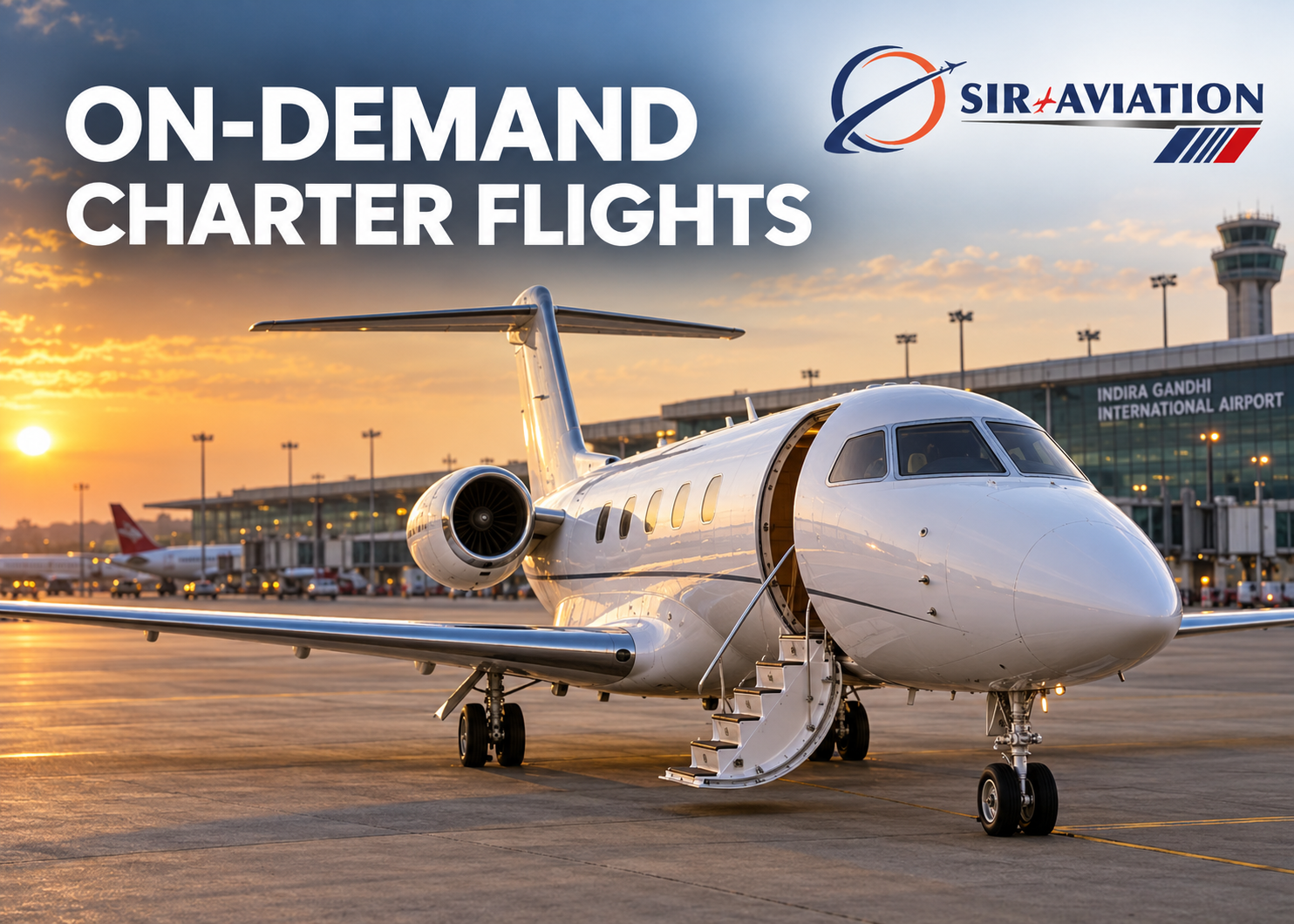
An on-demand charter flights service allows individuals, businesses, organisations, and government bodies to hire an entire aircraft for a specific journey. Instead of following an airline’s fixed timetable, passengers choose their preferred departure time, destination, aircraft category, and travel requirements. SIR Aviation coordinates each stage of the journey, from evaluating the flight request and identifying a suitable aircraft to arranging operational approvals and passenger support.
Charter flights offer greater control over air travel. They can connect locations that scheduled airlines do not serve directly, accommodate urgent departures, support specialised missions, and provide a private environment. However, chartering an aircraft involves several operational and commercial factors. Knowing how the process works can help passengers make suitable choices and avoid unnecessary costs.
What Is an On-Demand Charter Flight?
An on-demand charter flight is a privately arranged flight operated according to the customer’s specific travel request. The customer hires the complete aircraft rather than purchasing an individual seat on a scheduled airline.
The flight does not operate according to a published commercial schedule. Its timing, route, passenger capacity, baggage arrangements, and onboard requirements depend on aircraft availability, airport conditions, regulatory permissions, weather, and operational feasibility.
Charter aircraft may include:
- Piston aircraft for short regional journeys
- Turboprops for efficient travel to smaller airports
- Light jets for short and medium-distance business trips
- Midsize jets offering additional cabin space and range
- Heavy jets for long-distance or international travel
- Helicopters for short routes and difficult-to-reach locations
- Air ambulances equipped for medical transportation
- Cargo aircraft for urgent or specialised consignments
The appropriate option depends on the route, passenger count, baggage volume, required range, airport infrastructure, and purpose of travel.
How Does an On-Demand Charter Flights Service Work?
The booking process usually begins with a detailed travel request. A charter service provider reviews the requirement and recommends aircraft that can perform the journey safely and efficiently.
1. The Passenger Shares the Travel Requirement
The customer provides essential journey details, including:
- Departure city or airport
- Destination
- Preferred travel date and time
- Number of passengers
- One-way or return requirement
- Expected baggage quantity
- Passenger mobility needs
- Catering preferences
- Requirement for ground transport
- International travel information
- Special security or privacy requests
Accurate information at this stage helps the charter team recommend a suitable aircraft and prepare a realistic quotation.
A passenger travelling with large equipment, several suitcases, sports gear, medical devices, or delicate cargo should disclose these details before confirming the aircraft. Cabin and baggage capacities vary considerably across aircraft models.
2. The Charter Team Checks Aircraft Availability
The charter provider searches its operational network for aircraft available near the departure location. Positioning matters because the selected aircraft may need to fly from another airport to collect the passengers.
Several factors influence availability:
- Aircraft maintenance schedules
- Crew duty-time restrictions
- Existing flight commitments
- Airport operating hours
- Aircraft positioning
- Route permissions
- Weather conditions
- Parking availability
- Slot restrictions
A flight that appears straightforward may require careful coordination behind the scenes. For instance, a late-night departure could depend on whether the airport permits night operations and whether the crew has sufficient legal duty hours remaining.
3. A Suitable Aircraft Is Selected
Aircraft selection is based on operational suitability rather than appearance alone. The provider considers runway length, passenger load, flight distance, fuel requirements, baggage capacity, cabin configuration, and weather forecasts.
A light jet may be ideal for a small group flying between major cities, while a turboprop may perform better on a shorter runway near a regional destination. A large group could require a business jet with more seating or a dedicated passenger aircraft.
Choosing an oversized aircraft can raise the cost without providing a meaningful benefit. Selecting an aircraft that is too small may create problems involving baggage, range, comfort, or technical stops. A reliable charter team balances safety, practicality, comfort, and price.
4. The Customer Receives a Charter Proposal
Once suitable options are available, the charter provider prepares a quotation. It may include aircraft type, passenger capacity, estimated flight duration, departure details, and applicable commercial terms.
Charter pricing can cover:
- Aircraft flying time
- Crew expenses
- Fuel
- Airport landing charges
- Ground handling
- Aircraft positioning
- Navigation charges
- Parking
- Crew accommodation
- Catering
- Permit fees
- Applicable taxes
- Additional ground services
Customers should review what the quotation includes and whether any costs remain subject to change. International flights, weather diversions, extended parking, itinerary changes, de-icing, and prolonged waiting periods can create additional expenses.
5. The Booking Is Confirmed
After the customer accepts the proposal, the parties complete the charter agreement and payment process. The customer submits passenger information and identity documents within the required timeframe.
For domestic travel, passengers generally need valid government-issued identification. International flights require valid passports, visas, and any destination-specific documents. Rules can differ based on nationality, route, purpose of travel, and immigration requirements.
Passenger names and details must match official documents. Late changes can affect permits, manifests, clearances, catering, and ground handling arrangements.
6. Operational Planning Begins
Following confirmation, flight operations teams coordinate the practical details. These may include:
- Flight planning
- Crew assignment
- Fuel arrangements
- Airport slots
- Landing and overflight permissions
- Ground handling
- Passenger manifests
- Customs and immigration coordination
- Catering
- Ground transportation
- Weather monitoring
- Security procedures
Domestic charter flights may require less administrative preparation than international journeys. Cross-border operations can involve diplomatic permissions, overflight permits, visa requirements, customs procedures, and destination-specific restrictions.
Operational approval always remains subject to aviation regulations, aircraft status, airport conditions, and weather.
7. Passengers Receive Flight Information
Before departure, passengers receive the reporting time, terminal or designated entry point, baggage instructions, aircraft information, and contact details for local coordination.
Private charter passengers can often use a dedicated terminal or fixed-base operator at airports where such facilities are available. This may reduce queues and simplify boarding. However, security screening and identification checks still apply.
Reporting requirements differ between airports. Passengers should follow the time provided by the charter operator rather than assume that every private flight permits a last-minute arrival.
8. The Flight Operates According to the Approved Plan
Passengers board after completing the required security and documentation procedures. The flight then operates according to the approved route and schedule.
Private chartering provides scheduling flexibility, but it cannot override air traffic restrictions, weather conditions, regulatory directions, crew limitations, or airport closures. Safety and legal requirements always take priority over the requested departure time.
When Should You Book a Charter Flight?
Charter travel can be appropriate when scheduled airline options do not meet the journey’s timing, routing, privacy, capacity, or operational requirements.
When Time Has Significant Value
Business leaders, technical teams, medical professionals, project managers, and government representatives may need to reach a destination within a narrow timeframe. Scheduled flights can involve long layovers, unsuitable departure times, or multiple connections.
A charter aircraft may fly directly between two practical airports, helping passengers reduce transit time. Travellers can also schedule departure around meetings, site visits, or operational commitments.
Chartering becomes particularly useful when several employees must travel together. The group can use the cabin for confidential discussions, preparation, or rest.
When Scheduled Airlines Do Not Serve the Route Directly
Many industrial sites, remote districts, pilgrimage locations, mining areas, resorts, and regional business centres lie far from major commercial airports. Reaching them through scheduled airlines may require connections followed by long road journeys.
Smaller charter aircraft can use certain regional airports that large commercial aircraft cannot serve. A helicopter may provide the final connection where airport access remains limited.
The provider must still check runway conditions, airport category, operating hours, fuel availability, navigation facilities, and local permissions before confirming the route.
When Travel Is Urgent
Unexpected situations sometimes require rapid aircraft deployment. Examples include:
- Medical transportation
- Movement of critical technical teams
- Delivery of urgent components
- Emergency corporate travel
- Family emergencies
- Recovery of stranded passengers
- Time-sensitive government movement
- Disaster-response support
Availability becomes the deciding factor for urgent bookings. Passengers should share complete information immediately so the charter team can assess feasible options without repeated delays.
When Privacy and Confidentiality Matter
Public figures, senior executives, celebrities, sports teams, diplomats, and families may prefer a more controlled travel setting. Charter flights reduce exposure to crowded terminals and provide a private cabin.
The service can also support confidential business discussions during the journey. However, passengers must still complete mandatory security, immigration, and identification procedures.
When Travelling as a Group
Chartering may make logistical sense for corporate delegations, sports teams, wedding parties, event groups, film crews, or religious groups. Instead of managing separate tickets and varying arrival times, the organiser can coordinate the journey through one aircraft and schedule.
The cost should be evaluated for the entire aircraft rather than compared with the price of one airline ticket. When divided among multiple passengers, the per-person difference may become more reasonable, especially if the charter avoids hotel stays, connections, or lengthy surface transport.
When Carrying Special Baggage or Equipment
Musicians, athletes, film crews, engineers, medical teams, and exhibition organisers may carry items that require careful planning. Scheduled airlines may impose size, weight, or handling limitations.
A charter provider can recommend an aircraft based on cargo-door dimensions, baggage-compartment capacity, weight limits, and loading requirements. Aircraft suitability must be confirmed before payment because cabin size does not necessarily indicate baggage capacity.
Hazardous materials remain subject to strict aviation rules and cannot be accepted merely because the aircraft has been privately chartered.
When a Medical Transfer Is Required
An air ambulance may be necessary when a patient requires timely transport between cities, hospitals, or countries. Such flights can carry medical equipment and qualified personnel based on the patient’s condition.
Medical flights require coordination among the aviation team, doctors, hospitals, ambulance providers, ground handlers, and the patient’s family. The treating medical team must determine whether the patient is fit to fly and what support is necessary during the journey.
A standard passenger charter should not be treated as a substitute for a properly equipped medical aircraft when clinical supervision is required.
How Early Should You Book?
Booking early generally provides more aircraft choices and may reduce positioning costs. For planned business travel, family journeys, events, or group movement, customers should begin enquiries as soon as their schedule becomes reasonably certain.
Peak periods can limit availability. These include festivals, wedding seasons, major sporting events, political activity, large corporate events, and holiday travel periods.
International flights usually require additional time because permits, visas, customs arrangements, airport slots, and overflight approvals may be involved. Some routes and countries process permissions more slowly than others.
Last-minute charter flights can still be arranged when a suitable aircraft and crew are available. However, urgent booking does not guarantee immediate departure. The operator must complete every mandatory safety and regulatory requirement.
What Determines the Cost of a Charter Flight?
Charter flight pricing depends on the entire operation, not only the distance between two cities.
The main cost factors include:
- Aircraft type and seating capacity
- Flight duration
- Aircraft positioning
- One-way or return itinerary
- Airport charges
- Ground handling fees
- Crew requirements
- Overnight parking
- International permits
- Taxes and regulatory fees
- Catering requirements
- Passenger waiting time
- Route diversions
- Seasonal demand
A one-way passenger journey may still require the aircraft to return to its base without passengers. This empty positioning sector can form part of the quotation.
An empty-leg flight may occasionally offer a lower price when an aircraft already needs to operate a particular route. However, empty legs provide limited flexibility and may change if the primary charter itinerary changes.
What Should You Check Before Confirming a Booking?
Passengers should select a provider that follows appropriate aviation, operational, and safety procedures. Before confirming, ask for clear information about:
- The proposed aircraft category
- Passenger and baggage capacity
- Operating carrier details
- Quotation inclusions and exclusions
- Cancellation terms
- Rescheduling conditions
- Refund provisions
- Required passenger documents
- Airport reporting instructions
- Operational limitations
- Support available during the journey
Avoid choosing an aircraft solely because it has the lowest quoted price. A proper comparison should consider aircraft suitability, routing, included charges, operational capability, and service support.
Why Choose SIR Aviation?
SIR Aviation assists clients with private passenger charters, corporate movement, urgent travel, group flights, specialised aviation requirements, and route planning across India and other approved destinations.
The team evaluates the passenger’s schedule, route, group size, baggage, airport requirements, and service expectations before suggesting an aircraft. It also coordinates with operators and relevant service partners to support a smooth journey from enquiry to arrival.
Every charter remains subject to aircraft availability, weather, airport feasibility, permissions, regulatory requirements, and final operational approval. Clear communication helps passengers make practical decisions while preserving safety and compliance.
Conclusion
An on-demand charter flight provides control over timing, routing, privacy, and aircraft selection. It can be valuable for urgent journeys, business travel, remote destinations, group movement, medical transfers, and specialised missions. The best results begin with accurate travel details, suitable aircraft selection, transparent pricing, and proper operational planning. SIR Aviation helps coordinate these elements so passengers can arrange efficient air travel that suits their schedule and purpose.
Frequently Asked Questions
Can an on-demand charter flight be booked at short notice?
Yes, short-notice bookings may be possible if a suitable aircraft, crew, airport slot, and required permissions are available. Domestic journeys may take less time to arrange than international flights. Safety checks, passenger documentation, and regulatory procedures cannot be skipped.
Is chartering an aircraft more expensive than flying commercially?
Charter flights usually cost more than individual airline tickets because the customer hires the complete aircraft. The value lies in flexible scheduling, direct routing, privacy, group coordination, access to regional airports, and time savings. The per-passenger cost may become more practical for larger groups.
What information is required to request a charter quotation?
Provide the departure point, destination, travel date, preferred time, number of passengers, return schedule, baggage details, and special requirements. International travel may require nationality and passport information. Accurate details allow the charter team to recommend an appropriate aircraft and prepare a clearer quotation.