
Importance of Organ Transplant Air Transport in India
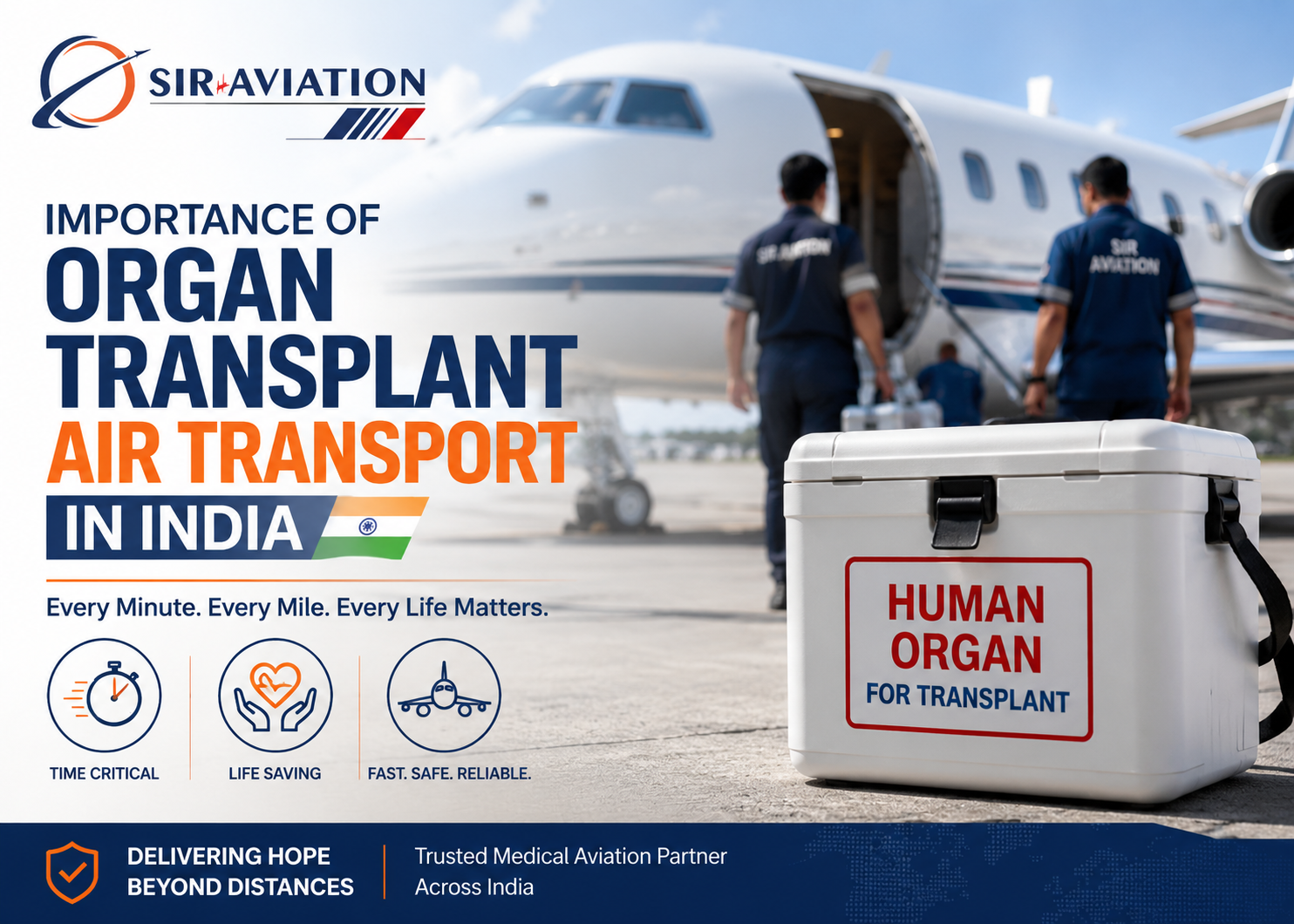
Every minute matters when a donor organ becomes available. The success of organ transplant air transport depends on speed, precision, coordination, and reliable aviation support. A delay of even a few hours can affect the quality of an organ and reduce the chances of a successful transplant. Across India, where donor and recipient hospitals are often located in different cities or states, air transport has become a critical link in saving lives. SIR Aviation plays an important role in making these time-sensitive missions possible through dependable medical air transportation services designed for urgent organ transfers.
Why Time Is the Biggest Challenge
Unlike standard medical supplies, donor organs have a limited preservation window. Once an organ is retrieved from a donor, it must reach the transplant hospital within a specific period.
General preservation times include:
- Heart: 4–6 hours
- Lungs: 4–6 hours
- Liver: 8–12 hours
- Pancreas: 12–18 hours
- Kidney: Up to 24–36 hours
These narrow time frames leave no room for transportation delays. Heavy road traffic, long travel distances, and commercial airline limitations can make ground transportation impractical for many cases. Dedicated aviation support significantly reduces travel time and increases transplant success rates.
The Growing Need for Organ Transport in India
India has made remarkable progress in organ donation awareness and transplant procedures. Hospitals across metropolitan cities now perform complex transplant surgeries on a regular basis. However, donors and recipients are rarely located in the same city.
A donated heart in Chennai may be urgently required in Hyderabad. A liver retrieved in Delhi may need to reach Jaipur within hours. Without rapid transportation, valuable organs could become unusable.
As healthcare infrastructure expands, dependable air transportation has become an essential component of India’s transplant ecosystem.
How Organ Transport by Air Works
Transporting a donor organ involves much more than simply flying from one airport to another. Every movement follows carefully planned medical and logistical procedures.
The process generally includes:
1. Donor Identification
Once a suitable donor is identified, medical teams verify organ compatibility with potential recipients.
2. Surgical Retrieval
Specialized transplant surgeons retrieve the organ while preserving its condition using internationally accepted medical protocols.
3. Medical Packaging
The organ is placed in sterile containers with temperature-controlled preservation solutions. Packaging follows strict safety standards to maintain viability.
4. Airport Coordination
Ground teams coordinate immediate transfer from the hospital to the airport while obtaining all necessary aviation permissions.
5. Air Transportation
A dedicated aircraft or medically configured charter transports the organ directly to the destination city without unnecessary delays.
6. Hospital Delivery
Upon landing, local medical teams immediately transport the organ to the recipient hospital for transplant surgery.
Every step is synchronized to ensure the shortest possible transport time.
Why Air Transport Is Essential
Faster Than Road Transport
India’s road networks can experience unpredictable traffic congestion, especially in large metropolitan areas. Air transport bypasses these delays and connects distant cities efficiently.
Supports Long-Distance Organ Transfers
India’s geographical size often requires transporting organs across hundreds or even thousands of kilometers. Aircraft make these long-distance transfers achievable within critical preservation windows.
Improves Patient Outcomes
Reduced transportation time helps preserve organ quality, increasing the likelihood of successful transplantation and patient recovery.
Enables Better Donor Matching
Fast transportation allows hospitals to accept organs from a wider geographical area instead of limiting matches to nearby locations.
Green Corridors and Aviation Coordination
One of India’s most remarkable medical innovations is the creation of Green Corridors.
A Green Corridor is a specially coordinated traffic route where local authorities clear roads between hospitals and airports to allow uninterrupted movement of donor organs.
When combined with air transportation, Green Corridors significantly reduce total travel time.
Successful coordination involves:
- Airport authorities
- Air traffic control
- Hospital transplant teams
- Local police departments
- Ambulance providers
- Aviation operators
The combined efforts of these organizations help save lives every day.
Challenges in Organ Air Transport
Although aviation has transformed transplant logistics, several operational challenges remain.
Weather Conditions
Fog, heavy rainfall, or storms may impact flight schedules. Experienced operators continuously monitor weather conditions and prepare alternate routing whenever possible.
Airport Slot Availability
Busy airports require careful coordination for immediate aircraft movement, particularly during peak traffic hours.
Regulatory Approvals
Medical flights often require urgent permissions, documentation, and operational clearances that must be processed quickly.
Continuous Communication
Every stakeholder must remain connected throughout the mission. Real-time communication minimizes delays and ensures smooth coordination.
Professional aviation providers are trained to manage these complex situations efficiently.
How SIR Aviation Supports Organ Transportation
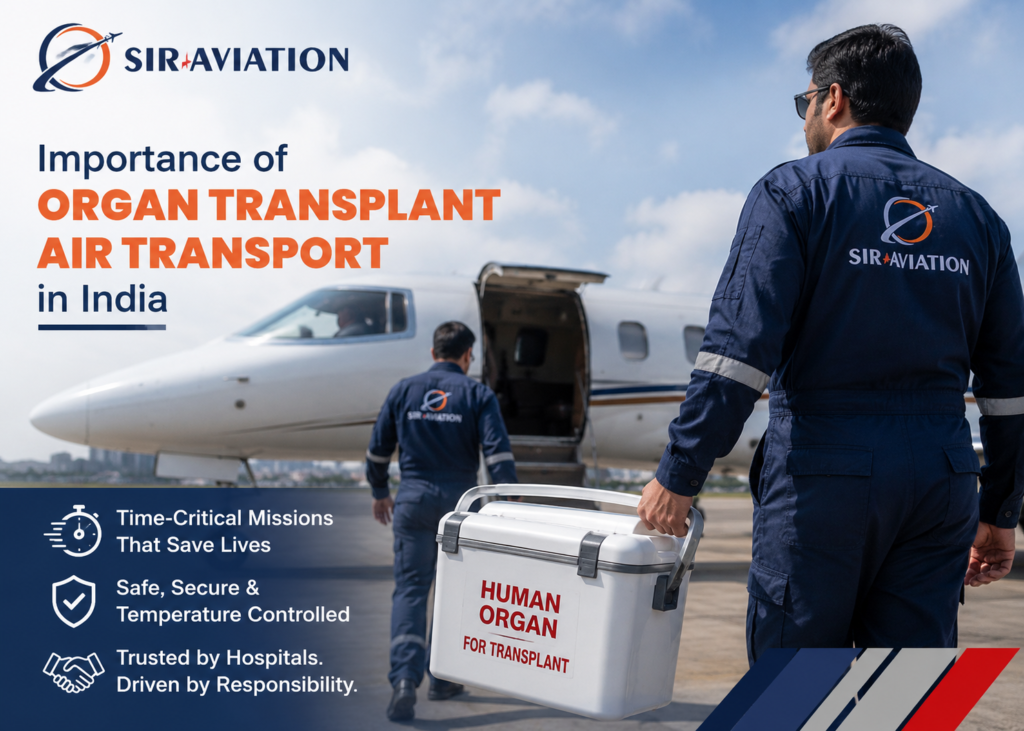
SIR Aviation understands that organ transportation is unlike any other aviation assignment. Every mission demands speed, precision, and flawless execution.
The company’s operational approach focuses on:
- Rapid aircraft deployment
- Dedicated flight planning
- Continuous coordination with hospitals
- Efficient airport handling
- Experienced operational teams
- Reliable medical logistics support
- Safety-first aviation standards
Every mission is treated as a life-saving priority where every minute counts.
Technology Improving Organ Air Transport
Medical aviation continues to evolve with advanced technology that enhances reliability and efficiency.
Modern developments include:
Real-Time Flight Tracking
Medical teams can monitor aircraft location throughout the journey, improving planning and coordination.
Temperature Monitoring Systems
Advanced preservation containers continuously monitor internal temperatures, ensuring organs remain within required conditions.
Digital Communication Platforms
Hospitals, aviation teams, and emergency coordinators can share updates instantly throughout the transport process.
Flight Planning Software
Modern aviation systems identify the fastest and safest flight routes while considering weather, air traffic, and airport operations.
These innovations contribute to higher transplant success rates.
Safety Standards During Transportation
Patient safety begins long before transplant surgery.
Reliable organ transport follows strict protocols such as:
- Sterile medical packaging
- Temperature-controlled preservation
- Secure cargo handling
- Accurate labeling
- Chain-of-custody documentation
- Continuous monitoring throughout transportation
Maintaining these standards protects both the organ and the transplant process.
The Human Impact Behind Every Flight
Every organ transport mission represents hope for multiple families.
A donor family makes an extraordinary decision during a difficult time. Medical professionals work tirelessly to retrieve and preserve organs. Aviation teams race against time to deliver them safely. Surgeons prepare recipients for life-changing procedures.
Behind every successful transplant lies a coordinated effort involving dozens of professionals working with one shared purpose—saving a life.
This collaboration highlights the true importance of dependable aviation support.
The Future of Organ Transport in India
India’s healthcare system continues to strengthen its transplant capabilities.
Future developments may include:
- Expanded organ-sharing networks
- Faster aviation coordination
- Dedicated medical aviation infrastructure
- Enhanced digital communication systems
- Greater use of advanced preservation technology
- Improved regional connectivity for transplant centers
As organ donation awareness continues to increase, efficient transportation will remain a cornerstone of successful transplant programs.
Choosing the Right Aviation Partner
Healthcare institutions require aviation partners capable of handling highly sensitive medical missions.
Key qualities include:
- Immediate response capability
- Experienced flight operations
- Regulatory compliance
- Nationwide operational reach
- Strong coordination with hospitals
- Reliable aircraft availability
- Commitment to safety and precision
Selecting an experienced aviation provider can make a measurable difference when every second counts.
Why SIR Aviation Is a Trusted Name
SIR Aviation is committed to supporting India’s healthcare system through dependable medical aviation solutions. With a focus on speed, operational excellence, and coordinated logistics, the company helps bridge the distance between donors and recipients.
Every successful mission reflects the dedication of aviation professionals working alongside medical teams to ensure organs reach transplant centers safely and on time.
Conclusion
The importance of organ transplant air transport extends far beyond transportation. It represents the connection between hope and survival. Efficient aviation services reduce travel time, preserve organ quality, support complex transplant networks, and improve patient outcomes across India.
As organ donation continues to grow, reliable air transportation will remain one of the most critical elements of the transplant process. Through efficient coordination, experienced operations, and an unwavering commitment to timely medical logistics, SIR Aviation continues to support life-saving missions that give patients a second chance at life.
FAQs
Why is organ transplant air transport important in India?
India's vast geography often requires organs to be transported across long distances. Air transport significantly reduces travel time and improves transplant success rates.
Which organs are commonly transported by air?
Hearts, lungs, livers, kidneys, and pancreases are commonly transported by air because they have limited preservation periods before transplantation.
How does SIR Aviation support organ transplant air transport?
SIR Aviation provides dedicated aviation logistics, rapid flight planning, airport coordination, and timely transportation to help ensure donor organs reach transplant hospitals safely and efficiently.
What factors affect successful organ transplant air transport?
Critical factors include rapid response, proper medical packaging, temperature control, flight availability, airport coordination, weather conditions, and continuous communication between hospitals and aviation teams.