
Safe Air Transport for Transplant Organs in India
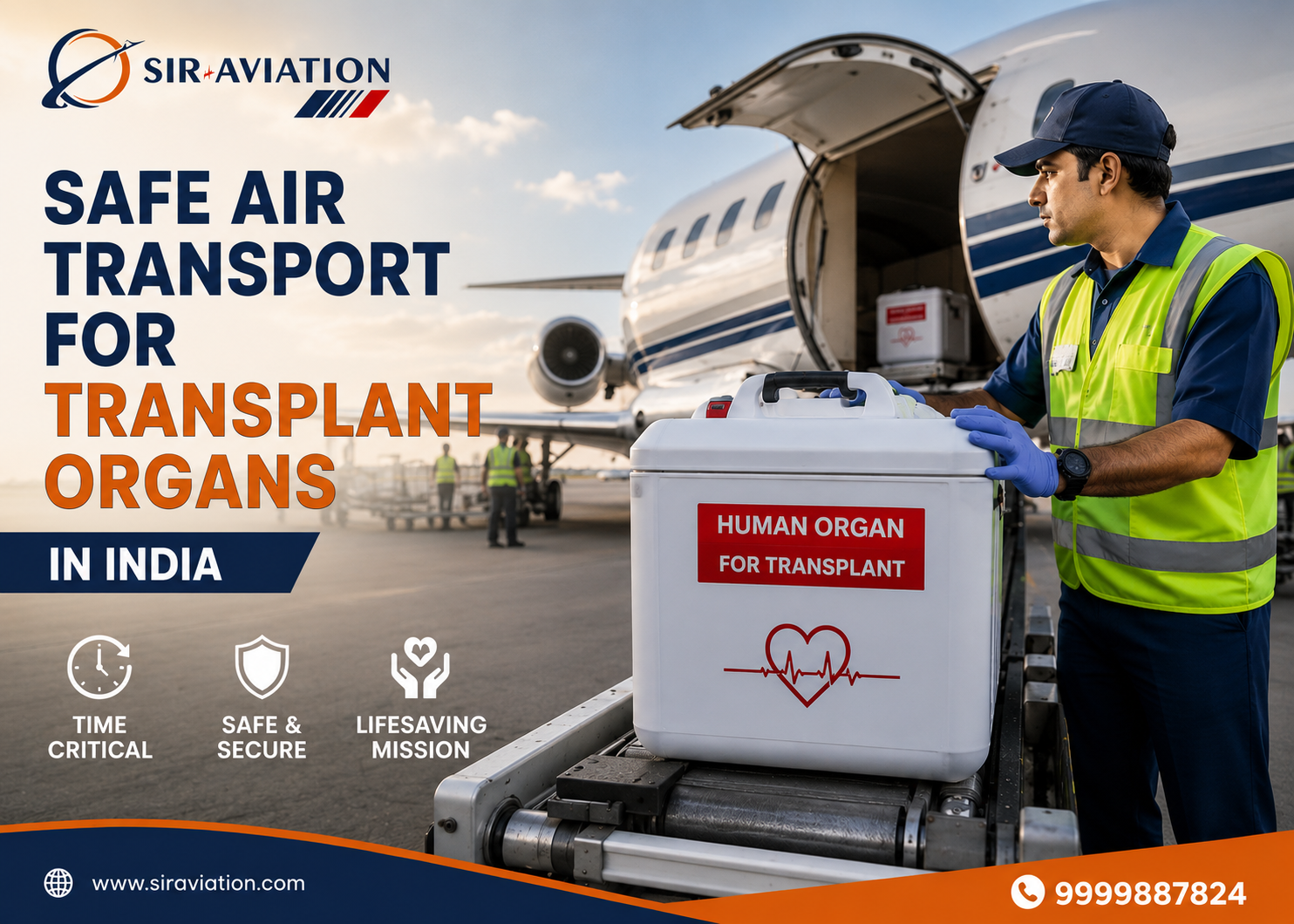
Every successful organ transplant depends on one critical factor—time. Even when a compatible donor is available, the opportunity can be lost if the organ does not reach the recipient quickly and safely. This is why air transport for transplant organs has become an essential part of India’s healthcare and aviation ecosystem. Reliable aviation services bridge the distance between hospitals, ensuring that life-saving organs travel under carefully controlled conditions while maintaining strict timelines.
India has witnessed remarkable progress in organ donation and transplant procedures. As hospitals expand transplant programs across different states, the demand for dependable air transportation continues to grow. Moving an organ from one city to another often requires precision planning, seamless coordination, and aviation expertise that goes far beyond conventional charter operations.
SIR Aviation supports these time-sensitive medical missions by providing dependable aviation solutions designed for urgent healthcare requirements. Every flight is planned with safety, speed, and operational excellence as the highest priorities.
Why Organ Transportation Requires Specialized Aviation Services
Unlike ordinary cargo, transplant organs are biological assets with extremely limited preservation times. Every minute between retrieval and transplantation directly affects the organ’s viability and the patient’s chance of recovery.
Medical teams carefully preserve organs using approved storage methods, but transportation still remains one of the most critical phases of the transplant process. Road travel alone may not always meet the required timelines, particularly when organs need to cross multiple states or travel between distant cities.
Air transportation significantly reduces travel time while enabling hospitals to coordinate transplant procedures with greater confidence.
A dedicated aviation service offers several advantages:
- Faster travel between cities
- Reduced transportation delays
- Better coordination with transplant teams
- Flexible scheduling
- Direct access to regional airports
- Higher operational reliability
These advantages contribute directly to improved transplant success rates.
The Importance of Time in Organ Transportation
Each transplanted organ has a recommended preservation period known as cold ischemia time. During this period, the organ remains suitable for transplantation if stored correctly.
Approximate preservation windows include:
| Organ | Approximate Preservation Time |
|---|---|
| Heart | 4–6 hours |
| Lungs | 4–6 hours |
| Liver | 8–12 hours |
| Pancreas | 12–18 hours |
| Kidney | 24–36 hours |
These timelines illustrate why rapid transportation is essential. Delays caused by traffic congestion, weather-related diversions, or logistical complications can significantly reduce the chances of successful transplantation.
Professional aviation planning minimizes these risks by selecting efficient flight routes and coordinating every stage of the mission.
Growing Demand for Organ Air Transportation Across India
India’s healthcare network has expanded rapidly, with advanced transplant centers operating in cities including Delhi, Mumbai, Chennai, Hyderabad, Bengaluru, Kolkata, Ahmedabad, Pune, and several emerging medical hubs.
However, donor organs are not always located near recipients. A donor in one state may provide an organ for a patient hundreds or even thousands of kilometers away.
This geographical challenge has increased the need for dependable aviation support.
Hospitals now rely on specialized flight operations capable of responding quickly whenever transplant teams receive organ allocation approval.
As organ donation awareness improves nationwide, aviation services are expected to play an even larger role in supporting medical logistics.
How Air Transport for Transplant Organs Works
Organ transportation follows a carefully coordinated sequence involving multiple healthcare and aviation professionals.
The process generally includes:
Organ Retrieval
Medical specialists retrieve the organ from the donor hospital while following strict preservation protocols.
Packaging
The organ is placed inside sterile containers with approved preservation solutions and temperature-controlled packaging.
Documentation
Hospitals prepare all necessary medical documentation, transport permissions, and recipient details before dispatch.
Airport Coordination
Ground teams coordinate directly with aviation operators to ensure rapid transfer from the hospital to the aircraft.
Flight Operations
The aircraft departs according to the approved flight plan while maintaining constant communication with medical coordinators.
Final Delivery
Upon landing, ground transportation immediately transfers the organ to the transplant hospital where the surgical team is prepared for implantation.
Every stage must operate without unnecessary delays.
Safety Measures During Organ Transportation
Patient lives depend on maintaining organ quality throughout transportation.
Professional aviation operators implement multiple safety measures, including:
Temperature Control
Organs remain inside validated preservation containers designed to maintain appropriate temperatures during transport.
Secure Handling
The medical cargo receives priority handling throughout loading, unloading, and aircraft operations.
Flight Monitoring
Operational teams continuously monitor aircraft progress and coordinate with receiving hospitals.
Weather Assessment
Flight planning includes weather evaluations to reduce operational risks.
Emergency Planning
Alternative airports and contingency procedures remain available if unexpected situations occur.
These practices ensure that medical teams receive organs in optimal condition.
Role of Aviation Professionals in Medical Missions
Successful transplant transportation requires more than experienced pilots.
Each mission involves collaboration among:
- Flight operations specialists
- Dispatch coordinators
- Airport authorities
- Medical logistics teams
- Ground transportation providers
- Hospital transplant coordinators
- Air traffic control personnel
Every participant contributes to maintaining the required timeline while ensuring regulatory compliance.
This coordinated approach reduces delays and improves operational efficiency.
Challenges in Organ Transportation Across India
Although aviation significantly improves transportation speed, several operational challenges remain.
Airport Availability
Some regions have limited airport infrastructure, requiring careful planning for final ground transportation.
Weather Conditions
Heavy rainfall, fog, or storms may affect flight schedules and require alternate routing.
Air Traffic Management
Busy metropolitan airports often require close coordination to minimize waiting times.
Regulatory Approvals
Medical transport flights may involve documentation, airport permissions, and coordination with multiple authorities.
Geographic Distance
India’s vast geographical size makes efficient aviation planning essential for long-distance transplant missions.
Experienced aviation providers prepare extensively for these situations before every mission.
Importance of Reliable Flight Scheduling
Transplant surgeries involve multiple synchronized teams working simultaneously.
A delay in aircraft departure can affect:
- Operating theatre schedules
- Surgical teams
- Recipient preparation
- Hospital resources
- Organ preservation time
Dedicated charter operations provide greater flexibility than commercial airline schedules because flights can be planned according to medical urgency rather than fixed airline timetables.
This flexibility supports better coordination between hospitals and aviation teams.
Aircraft Used for Organ Transportation
Different aircraft types may be selected depending on mission requirements.
Common options include:
Light Jets
Suitable for rapid travel between major cities.
Turboprop Aircraft
Ideal for regional connectivity and airports with shorter runways.
Mid-Size Jets
Appropriate for longer domestic missions requiring higher speed.
Aircraft selection depends on factors such as:
- Flight distance
- Airport infrastructure
- Weather conditions
- Mission urgency
- Operational availability
Choosing the right aircraft helps optimize travel time.
Technology Supporting Organ Transportation
Modern aviation technology enhances mission reliability through:
- GPS flight tracking
- Digital flight planning
- Weather monitoring systems
- Airport communication networks
- Operational control centers
- Real-time coordination with hospitals
These technologies improve visibility throughout the transportation process and support informed decision-making during critical missions.
Why Dedicated Charter Flights Are Preferred
Commercial airlines follow fixed schedules and standard baggage procedures.
Medical organ transportation often requires:
- Immediate departure
- Flexible routing
- Direct airport coordination
- Reduced transit handling
- Faster loading procedures
- Customized operational planning
Dedicated charter flights meet these requirements more effectively while reducing unnecessary delays.
For transplant missions, every saved minute may increase the likelihood of successful transplantation.
SIR Aviation Commitment to Medical Air Transport
SIR Aviation recognizes the importance of supporting India’s healthcare infrastructure through dependable aviation services.
Medical transportation demands operational precision, disciplined flight planning, and continuous coordination with hospitals and authorities.
Every mission is managed with attention to:
- Flight readiness
- Operational efficiency
- Safety protocols
- Time-sensitive execution
- Professional communication
- Reliable logistics coordination
By maintaining high operational standards, SIR Aviation contributes to the movement of critical medical cargo when timing matters most.
Best Practices for Successful Organ Air Transportation
Hospitals and aviation operators achieve better outcomes by following structured operational practices.
Important considerations include:
- Early flight coordination
- Complete medical documentation
- Verified packaging procedures
- Airport clearance planning
- Backup operational plans
- Continuous communication among all stakeholders
- Accurate arrival scheduling
Consistent execution of these practices improves efficiency throughout the transportation chain.
Future of Organ Air Transport in India
India’s transplant ecosystem continues to evolve with stronger hospital networks, increased organ donation awareness, and better inter-state coordination.
Future developments may include:
- Faster airport medical corridors
- Improved aviation infrastructure
- Greater use of digital logistics platforms
- Enhanced coordination between hospitals
- Expanded regional airport connectivity
- Advanced preservation technologies
These improvements have the potential to shorten transportation times while supporting higher transplant success rates across the country.
As healthcare institutions continue expanding transplant capabilities, aviation will remain an indispensable link connecting donors, hospitals, and recipients.
Conclusion
Safe organ transportation is built on speed, precision, planning, and unwavering coordination. Every successful transplant reflects the combined efforts of healthcare professionals, aviation experts, airport authorities, and logistics teams working toward a shared purpose. Reliable air transport for transplant organs enables hospitals to overcome geographical barriers while protecting the quality of life-saving organs throughout the journey. SIR Aviation remains committed to delivering dependable aviation support for critical medical missions, helping healthcare providers move transplant organs safely, efficiently, and within the narrow time frames that matter most.
FAQs
Why is air transport for transplant organs important?
Air transport significantly reduces travel time between donor and recipient hospitals, helping preserve organ viability and improving the chances of a successful transplant.
Which organs are commonly transported by air in India?
Kidneys, hearts, lungs, livers, and pancreases are among the most commonly transported organs using specialized aviation services.
How are transplant organs kept safe during air transportation?
They are placed in sterile, temperature-controlled preservation containers and handled using strict medical and aviation protocols throughout the journey.
Why are dedicated charter flights preferred for organ transport?
Dedicated charter flights provide flexible scheduling, faster departures, direct routing, and minimal handling delays, making them ideal for time-critical transplant missions.
How does SIR Aviation support air transport for transplant organs?
SIR Aviation provides reliable, time-sensitive aviation solutions with careful flight planning, operational coordination, and safety-focused execution to support urgent organ transportation across India.